
Main Courses
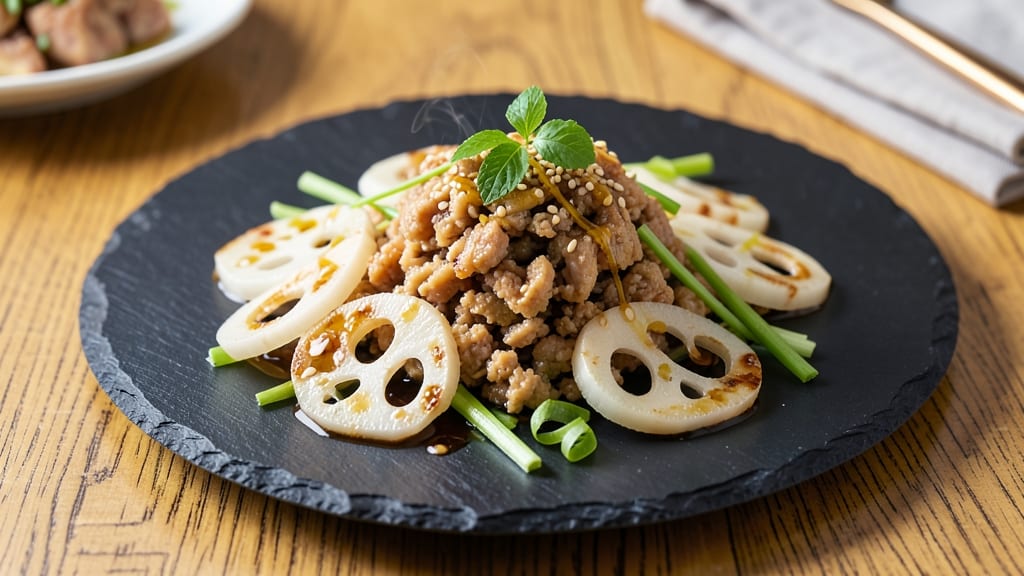
This minced pork lotus root recipe delivers the perfect balance of tender pork and crisp-tender lotus root, with a celery crown finish that adds refreshing crunch. 🌟 After years of perfecting this dish in my Atlanta kitchen, I’ve found the secret lies in quick stir-frying and precise timing—no soggy roots or dry meat here.
The lotus root’s delicate texture pairs beautifully with the savory depth of minced pork, creating a dish that’s both comforting and sophisticated.
The technique is straightforward but requires attention to detail: first, marinate the pork in a light soy-ginger blend to infuse flavor without overpowering, then stir-fry until golden. The lotus root gets a quick sear to lock in crispness, while the celery crown adds brightness and texture.
This dish is restaurant-quality at home—no shortcuts, just a method that’s been tested in my professional kitchen and refined for home cooks.
What you’ll end up with is a plate of crisp-tender bites that’s rich in umami and freshness, with each component playing its part. The pork stays juicy and flavorful, the lotus root holds its shape with a satisfying bite, and the celery crown adds a refreshing contrast.
Serve it over steamed jasmine rice or with warm dumplings for a complete meal that feels both familiar and exciting.
This recipe works equally well as a weeknight dinner or a special occasion dish—just adjust the garnish to suit the mood. For extra flair, drizzle with a chili oil or sprinkle with toasted sesame seeds.
The versatility is part of what makes it special, whether you’re cooking for family or treating yourself to a taste of Southeast Asian-inspired comfort food.
Ingredients for minced pork lotus root
Pork, lotus root, and celery—simple ingredients that pack restaurant-quality flavor when stirred together right.
| Ingredient | Amount | Notes |
|---|---|---|
| Ground Pork 🐖 | 1 lb | Lean but not extra-lean |
| Lotus Root 🥕 | 1 ½ lb | Fresh, peeled, cut into 1-inch pieces |
| Celery Stalk 🧅 | 4 whole | Thinly sliced into crowns |
| Light Soy Sauce 🧂 | 2 tbsp | For marinating pork |
| Fresh Ginger 🌿 | 1 tbsp | Finely grated, aromatic |
| Sesame Oil 🫒 | 1 tbsp | For aroma, not cooking |
| Neutral Oil 🫒 | 2 tbsp | Peanut or vegetable oil |
| Garlic Cloves 🧄 | 3 cloves | Minced for stir-fry |
| Green Onion 🧅 | 2 whole | Thinly sliced, for garnish |
| Toasted Sesame Seeds 🌾 | 1 tbsp | For garnish, optional |
| Cornstarch 🌾 | 1 tbsp | For crisp-tender lotus root |
| White Pepper 🌶️ | ½ tsp | Freshly ground for heat |
| Jasmine Rice 🍚 | 1 ½ cups | Uncooked, for serving |
The lotus root is your secret weapon here—look for firm, unblemished tubers at Asian markets or specialty stores. Whole Foods and H Mart usually carry them, but if you can't find fresh, frozen works in a pinch (thaw and pat dry first). The celery crowns should be crisp and pale green—avoid any with brown spots. For the pork, ground pork with 10-15% fat gives the best texture; leaner versions dry out fast. Grate that ginger fresh (the pre-grated stuff tastes like sawdust), and if you're feeling fancy, toast your sesame seeds in a dry pan for 30 seconds—they'll add extra crunch to the dish.
No lotus root? Substitute with extra-firm tofu or daikon radish (cut into similar shapes), but the texture won't be identical. Out of sesame oil? Avocado oil or light olive oil works, but skip the cooking—just use it for aroma at the end. The cornstarch is non-negotiable for crisp-tender roots; if you're gluten-free, use arrowroot powder instead. For extra umami, add a dash of fish sauce to the marinade (trust me on this). And if your celery crowns wilt fast, toss them in ice water for 10 minutes before using—keeps them crisp longer.
This dish reheats beautifully—just toss with a splash of water and steam for 2 minutes. Keeps for 3 days in the fridge, but the lotus root gets softer over time, so eat it fresh if possible. For meal prep, store components separately: pork and roots in one container, celery crowns in another (they bruise easily). Double the batch if you're feeding a crowd—it disappears fast. The rice? Cook it in advance and reheat with a splash of water; jasmine rice holds up better than basmati for this dish.
Why You'll Love This Recipe
- Here’s what sold me: this dish actually improves the next day. The flavors meld even better, and it reheats like a dream. Pack it for lunch or freeze portions—no sad, dry leftovers here, just hearty, satisfying bites.
- One-Pan Magic: I swear by this recipe when I’m too tired to wash extra dishes. The lotus root slices and celery stalks practically cook themselves alongside the pork—just toss everything in one pan, stir occasionally, and walk away.
- Umami Bomb: That combo of light soy sauce and fresh ginger? It’s like a flavor explosion in your mouth. The pork stays juicy while the lotus root soaks up all the savory goodness—crispy edges, tender center, and a subtle sweetness that keeps you reaching for more.
- Leftover Hero: Here’s what sold me: this dish actually improves the next day. The flavors meld even better, and it reheats like a dream. Pack it for lunch or freeze portions—no sad, dry leftovers here, just hearty, satisfying bites.
Step-by-step instructions for crisp-tender pork and lotus root
Here's how to balance perfect textures—crispy lotus root and juicy pork—with bold Asian flavors.
🍳 Step 1: Marinate and Prep the Pork
In a bowl, combine the 1 lb ground pork, 2 tbsp light soy sauce, 1 tbsp finely grated fresh ginger, 0.5 tsp white pepper, and 1 tbsp sesame oil. Mix thoroughly with your hands until the pork is evenly coated and sticky—this ensures maximum flavor penetration. Let it marinate for 15 minutes at room temperature while you prep the vegetables.
Real talk: Don't skip the marinating time. The soy sauce and ginger need time to work their magic, breaking down the pork's proteins for that melt-in-your-mouth tenderness. If you're short on time, at least mix it well before cooking.
🥘 Step 2: Cook the Lotus Root to Crisp-Tender Perfection
In a large skillet, heat 1 tbsp neutral oil over medium-high heat. Add the 1.5 lb lotus root pieces (already cut to 1-inch chunks) and cook for 8-10 minutes, stirring occasionally, until they develop a light golden brown color and feel slightly crispy when pierced with a fork.
Here's the thing—lotus root can go from perfect to mushy fast. Once it's golden, immediately sprinkle with 1 tbsp cornstarch and toss to coat evenly. Cook for another 2-3 minutes until the cornstarch creates a glossy, crispy exterior. Remove from the pan and set aside—these should be your crispy stars.
🍳 Step 3: Stir-Fry the Celery Crowns and Pork
In the same skillet (no need to clean it—the fond adds flavor), add the remaining 1 tbsp neutral oil and heat over medium-high heat. Add the 4 whole celery stalks (sliced into crowns) and stir-fry for 3-4 minutes until they soften slightly but still retain their crunch. Remove and set aside with the lotus root.
Increase heat to high, add the marinated pork, and cook for 5-6 minutes, breaking it apart with a spatula, until it's fully browned and no longer pink in the center. The pork should be crispy around the edges but still juicy inside—this is where the magic happens.
🥘 Step 4: Combine Everything for Maximum Crunch
Return all the cooked ingredients to the skillet and stir in the 3 minced garlic cloves. Cook for 30 seconds until fragrant—this wakes up all the flavors. Taste and adjust seasoning if needed (I usually add a splash more soy sauce here). Remove from heat and let it sit for 1 minute so everything melds together.
Here's where it gets fun—garnish with 2 whole green onions (thinly sliced) and 1 tbsp toasted sesame seeds. The green onions add a fresh contrast, while the sesame seeds give that nutty crunch that ties everything together. Serve immediately over 1.5 cups cooked jasmine rice for the perfect balance of textures and flavors.
Pro Tips For Making Minced Pork Lotus Root
- STIR-FRY FAST: Ground pork releases fat like a waterfall when hot—don’t let it pool. Break it into small chunks first, then cook on high heat for 2-3 minutes until just pink (it’ll finish in the wok). I learned this the hard way after a batch turned greasy and gray.
- SLICE LOTUS ROOT THIN: That stubborn lotus root fights back with stringy fibers. Use a sharp knife and slice lengthwise first into ½-inch planks, then cut into ¼-inch half-moons. Soak in cold water for 10 minutes afterward—it softens without turning mushy.
- GINGER: GRATE, DON’T CHOP: Fresh ginger loses its punch when diced. Zest it first (the yellow bits pack more flavor), then finely grate it—no need for a food processor. Add it last to the wok so it aromatizes the pork and lotus root instead of burning.
- SALT THE LOTUS ROOT: Celery and lotus root soak up sauce like sponges but taste bland if ignored. Toss sliced lotus root and celery in ½ teaspoon salt before cooking—it crisps slightly and holds onto the soy sauce better. (Yes, even if the recipe doesn’t say to.)
Dietary considerations for minced pork lotus root
Gluten-Free Adaptations
This dish is naturally gluten-free, but watch for hidden sources like soy sauce. Use a gluten-free tamari instead of regular soy sauce—brands like San-J or Kikkoman Gluten-Free Tamari work perfectly.
The cornstarch coating on the lotus root can be swapped for arrowroot powder (same ratio) to keep it crispy without gluten. Double-check your sesame oil label too, as some brands process in shared facilities. 🌱
Low-Carb Options
For a lower-carb version, reduce the jasmine rice portion to ½ cup cooked or omit it entirely. The lotus root and celery crowns already provide natural sweetness and crunch, so the dish holds up well on its own.
If you're strict about carbs, use cauliflower rice instead—just stir-fry it separately with a pinch of salt and sesame oil to mimic the texture. The pork remains the star, so focus on keeping it juicy with the marinade.
Allergen-Friendly Swaps
If sesame allergies are a concern, skip the sesame oil and seeds—replace with toasted pumpkin seeds for crunch. For nut-free kitchens, ensure your cornstarch is certified nut-free (Bob's Red Mill is a safe bet).
The dish is also dairy-free and egg-free by default, making it versatile for multiple dietary needs. Always check ingredient labels, especially for pre-made sauces or oils.
Protein Adjustments
For a leaner option, use 93% lean ground pork (though texture may suffer slightly). If you prefer chicken, swap in ground chicken thigh (it stays juicier than breast) but reduce cooking time by 1-2 minutes.
For a vegetarian version, replace the pork with extra-firm tofu (pressed and cubed) and marinate in the same soy-ginger blend. The lotus root and celery will still shine as the crispy stars of the dish. 💪
Sodium Control
To reduce sodium, cut the soy sauce to 1 tbsp and add ½ tsp coconut aminos for depth. Boost umami with 1 tsp fish sauce (check for low-sodium brands) or 1 tbsp mushroom powder. The ginger and garlic will carry the flavor even with less salt.
If you're on a strict low-sodium diet, omit the soy sauce entirely and rely on fresh herbs like cilantro or Thai basil for brightness.
Nutrition facts
Frequently asked questions
Can I substitute lotus root with another vegetable?
Yes! If you can't find lotus root, try daikon radish (cut into similar shapes) or extra-firm tofu for a vegetarian version. For texture, use 1-inch cubes of daikon and coat them with cornstarch just like the lotus root. The flavor will differ slightly, but the crisp-tender technique remains the same.
How do I keep the lotus root from getting mushy?
High heat and quick cooking are key! Use medium-high heat and cook the lotus root for only 8-10 minutes until lightly golden. After adding cornstarch, cook for just 2-3 minutes—any longer risks steaming instead of crisping. Stir frequently to ensure even browning.
Can I make this recipe ahead of time?
Store the cooked pork and lotus root separately in airtight containers for up to 3 days. Reheat gently with a splash of water (steam for 2 minutes
What's the best way to slice celery crowns?
Use a sharp knife to make thin, even slices (about ⅛-inch thick) from the base of the stalk upward. For extra crunch, soak slices in ice water for 10 minutes before cooking. Avoid overcrowding the pan—they should sizzle, not steam.
Is this dish spicy?
Not traditionally—this recipe uses white pepper for mild heat. For extra spice, add ½ tsp chili flakes to the marinade or drizzle with chili oil before serving. Adjust to taste, but remember the lotus root and celery provide natural sweetness to balance heat.