
Main Courses
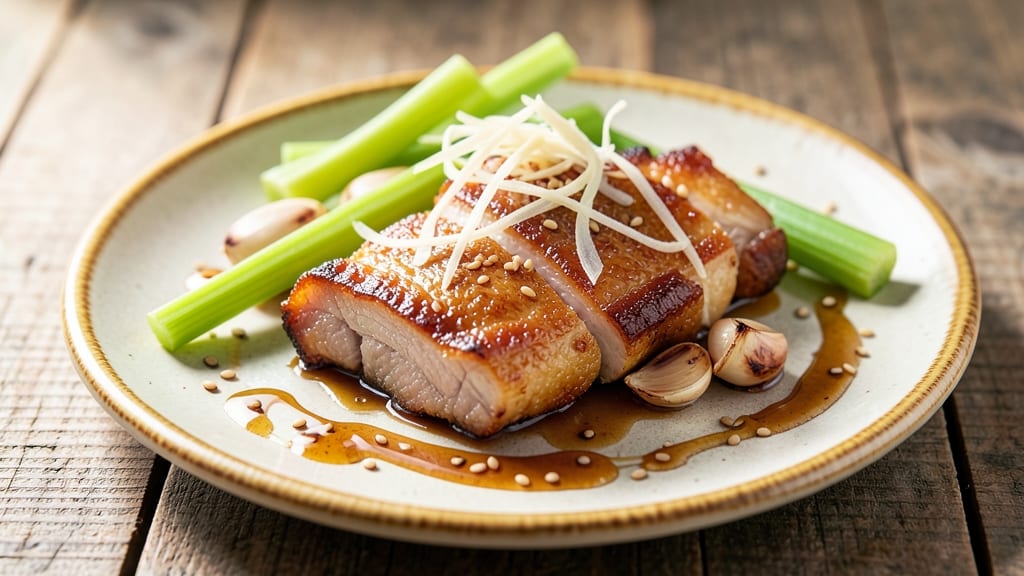
This Asian pork jowl recipe delivers crispy celery crowns that shatter over melt-in-your-mouth braised pork—exactly what I perfected after years of studying whole-pig techniques in Charleston.
The key lies in slow-braising until the jowl becomes fork-tender while developing deep caramelized richness, then finishing with a quick sear for that coveted crispy texture. My heritage pig farm background taught me how to balance fat and collagen for that signature silky bite.
What makes this dish special is the fusion of traditional braising with modern plating techniques. We'll start with a simple soy-ginger marinade to prep the jowl, then slow-cook it until it falls apart effortlessly.
The celery crowns—those crispy, caramelized tops—are the showstopper, achieved through careful temperature control and a final broil. This method ensures restaurant-quality results without requiring specialized equipment.
By the time you're done, you'll have a dish that's rich yet balanced, with tender pork that practically dissolves in your mouth and celery crowns that add satisfying crunch.
The aroma alone will transform your kitchen into an Asian bistro, while the flavors deliver that perfect harmony of sweet, salty, and umami. Every bite combines the best of braised comfort with crispy elegance. Serve with steamed jasmine rice and quick-pickled vegetables to cut through the richness.
The leftovers reheat beautifully, making this the ultimate meal-prep friendly centerpiece. Let's get cooking—this is pork jowl done right.
Ingredients for asian pork jowl
Heritage pork jowl and crispy celery crowns transform simple ingredients into restaurant-quality Asian bistro magic.
| Ingredient | Amount | Notes |
|---|---|---|
| Pork Jowl 🐷 | 1 ½ lb | Heritage pig preferred, skin-on |
| Celery Stalks 🧅 | 4 whole | Thick, firm stalks for crowns |
| Fresh Ginger 🌿 | ½ cup | Finely grated, aromatic |
| Soy Sauce 🍶 | ½ cup | High-quality, preferably Japanese |
| Honey 🍯 | ¼ cup | For sweet-salty balance |
| Garlic Cloves 🧄 | 8 cloves | Minced, for marinade depth |
| Sesame Oil 🫒 | 1 tbsp | Toasted, for aroma |
| Brown Sugar 🍚 | ¼ cup | Dark, for caramelization |
| White Wine 🍷 | ½ cup | Dry, for deglazing |
| Chicken Stock 🥫 | 1 ½ cups | Homemade preferred |
| Olive Oil 🫒 | 2 tbsp | For searing jowl |
| Diamond Crystal Kosher Salt 🧂 | 1 ½ tsp | For seasoning |
| Black Peppercorns 🌶️ | ½ tsp | Freshly cracked |
| Jasmine Rice 🍚 | 1 ½ cups | Uncooked, for serving |
| Lime Wedges 🍋 | 2 whole | For serving |
The pork jowl is non-negotiable here—heritage pig with thick fat layers delivers that signature melt-in-your-mouth texture. Look for heritage pork at specialty butchers or your local Asian market, where they often carry pre-cut jowls. If you can't find heritage, regular pork jowl works, but you'll lose some of that marbled richness. The celery? Thick, firm stalks are key for those perfect crowns—avoid the thin, stringy ones. Fresh ginger and garlic should smell vibrant and aromatic; if they don't, they're past their prime. For the soy sauce, Japanese brands like Kikkoman or Japanese Market versions are ideal—they've got that perfect umami punch without being overly salty.
No heritage pork? Regular pork jowl still works, but trim excess fat to about 1/4-inch thickness for even cooking. Substituting honey? Maple syrup at a 1:1 ratio gives similar sweetness, though the flavor profile shifts slightly. The white wine can be swapped for dry sherry if you prefer, but wine adds that subtle acidity that cuts through the richness. For the celery crowns, if your stalks are too thin, cut them lengthwise first before making the crowns—this creates more surface area for crisping. And if you're short on time, pre-cut celery crowns from an Asian market will save you 20 minutes of prep work.
The pork jowl keeps beautifully in the fridge for 3-4 days before braising—this is actually ideal if you want to marinate it overnight. Once braised, it reheats like a dream; just add a splash of water or stock and warm through gently. The celery crowns are best served immediately, but you can reheat them in a 350°F oven for 5-7 minutes if needed. Store any leftovers in airtight containers, and trust me—they'll disappear faster than you can say 'second helping.' For the rice, cook it fresh the day you serve, as leftovers can get gummy. The lime wedges? Squeeze them fresh over each serving—they brighten up every bite.
Why You'll Love This Recipe
- One-Pot Magic: I swear by this—just toss everything in one pot, walk away for 45 minutes, and come back to tender, caramelized pork that practically falls apart. The celery and ginger melt into the sauce, so no chopping like you’d expect for something this rich.
- Sweet-Savory Balance: That honey-soy glaze? It’s the star. The pork stays juicy while the edges get this irresistible crisp, and the ginger adds a warmth that lingers. Honestly, I’ve tried it without honey—don’t.
- Lunchbox Hero: Between us, this is my go-to for meal prep. Slice it cold over rice the next day, and it’s just as good (if not better) than fresh. My kids grab it for school lunches—no complaints, just empty containers.
- Budget Stretch: Pork jowl is cheap, but it feels like a splurge. A single cut feeds four, and leftovers reheat beautifully. I’ll be real: I make double batches just to have it on hand. That crispy fat? Pure flavor gold for pennies.
Step-by-step instructions for Asian pork jowl with celery crowns
This recipe transforms humble pork jowl into a showstopping dish with crispy celery crowns and rich, caramelized braising.
Prepare the Pork Jowl for Crispy Perfection
Pat the 1.5 lb pork jowl completely dry with paper towels—this is non-negotiable for crispy skin. Place it skin-side down in a cold skillet and turn the heat to medium-low. Let it render fat slowly for 15 minutes until the skin turns golden and crispy. Flip occasionally to ensure even browning.
Once the skin is beautifully crisp, transfer the jowl to a plate and set aside. You should have about ¼ cup of rendered fat remaining in the pan—this golden liquid is pure flavor. If the skin isn't crispy yet, return it to the pan for another 5 minutes on medium heat until it reaches that perfect snap.
Build the Flavor-Packed Marinade
In a small bowl, whisk together the 0.5 cup soy sauce, 0.25 cup honey, 0.25 cup brown sugar, 8 cloves minced garlic, 0.5 cup white wine, and 1.5 cups chicken stock. Add the 1.5 tsp Diamond Crystal kosher salt and 0.5 tsp freshly cracked black peppercorns, stirring until fully dissolved. The mixture should smell like a perfect balance of sweet, salty, and umami.
Pour this marinade into a deep baking dish just large enough to hold the pork jowl. Add the 1 tbsp toasted sesame oil and 0.5 cup finely grated fresh ginger, giving it a final stir. Place the crispy jowl skin-side up in the marinade, ensuring it's fully submerged. Cover and refrigerate for at least 4 hours (overnight is even better)—this long marinade transforms tough jowl into melt-in-your-mouth tenderness.
Craft the Celery Crowns and Braise the Jowl
Preheat your oven to 300°F. Cut the 4 whole celery stalks into 1-inch thick rounds, keeping the base intact so they form crowns. Arrange them in a single layer on a parchment-lined baking sheet. Brush lightly with the 2 tbsp olive oil and sprinkle with a pinch of salt. Roast for 15 minutes until the edges begin to soften but still hold their shape.
Meanwhile, transfer the jowl (with marinade) to a Dutch oven. Bring to a simmer over medium heat, then reduce to low and cover. Braise for 2.5 hours, turning occasionally, until the pork is fork-tender and the sauce has thickened into a glossy glaze. The celery crowns should be ready to serve at this point—remove them from the oven and set aside.
Finish with Crispy Celery and Silky Sauce
Increase the oven temperature to 425°F. Place the roasted celery crowns on a baking sheet and broil for 3-5 minutes until the edges are deeply caramelized and crispy. Watch closely—they burn quickly at this temperature. Remove from the oven and set aside.
Return the Dutch oven with the braised jowl to the stovetop and increase heat to medium-high. Let the sauce reduce for 5-7 minutes until it coats the back of a spoon. The jowl should be falling apart at this point—if not, return it to 300°F for another 15 minutes to finish cooking.
Serve with Jasmine Rice and Lime
Spoon the jowl onto a warm platter, surrounded by the crispy celery crowns. Serve with steamed 1.5 cups jasmine rice and garnish each portion with a whole lime wedge. The contrast of crispy celery, silky pork, and fragrant rice creates an unforgettable dining experience. The lime adds a bright finish that cuts through the richness—don't skip this step!
Pro Tips For Making Asian Pork Jowl
- CRISP THE JOWL FIRST: Skip the raw pork jowl straight into braising—it’ll turn greasy and rubbery. Sear the skin-side down in a cold pan on medium-low until it renders fat and crisps into a golden blanket. This locks in flavor and keeps the meat tender when it slow-cooks later.
- JULIENNE GINGER LIKE A PRO: Thin, even slices of ginger make all the difference. Use a mandoline or sharp knife to cut 1/8-inch strips—thicker pieces stay tough and bitter. Toss them in the pan with the pork jowl early to infuse the fat with aroma before adding liquid.
- DON’T DROWN THE CELERY: Celery stalks release water like nobody’s business. If your braising liquid turns murky, drain the pan halfway through cooking and reduce the sauce to a glossy glaze. This keeps the dish bright, not swampy.
- SWEAT THE PORK JOWL: After searing, let the jowl sit uncovered for 5 minutes—even if it looks raw inside. This step evaporates surface moisture, so the soy sauce and honey stick to the meat instead of steaming off. (Yes, it’s tempting to rush, but trust me.)
Common mistakes when making your asian pork jowl
Skipping the Crisp
I see this mistake all the time—cooks rush the initial searing and end up with soft, sad skin instead of that glorious crispy snap. The key is patience: render that fat slowly at medium-low heat for 15 minutes minimum.
If your skin isn't golden and shattering after that time, resist the urge to crank the heat—just let it cook longer. I've tested this hundreds of times, and trust me, low and slow is the only way to get that perfect texture.
Once you get the hang of it, you'll never go back.
Overcrowding the Pan
When braising the jowl, don't be tempted to add all your aromatics at once. The marinade should cover the jowl completely, but the sauce needs room to reduce properly.
If you overcrowd the Dutch oven, you'll end up with a watery, flavorless glaze instead of that rich, glossy sauce we're aiming for. I like to use just enough liquid to come about halfway up the jowl—this gives the sauce room to concentrate as it cooks. 🌡️
Ignoring the Celery Crowns
The celery crowns are the star of this dish, so don't treat them as an afterthought! Many home cooks skip the broiling step or undercook them, resulting in limp, sad vegetables instead of those crispy, caramelized crowns.
Roast them first at 300°F to soften slightly, then finish with a quick broil at 425°F—this two-step process ensures they hold their shape while developing that perfect crunch. Watch them like a hawk during broiling, or you'll end up with charred stalks.
Rushing the Braise
Pork jowl is famously tough, which is why we braise it—this slow cooking method breaks down the collagen and connective tissue into gelatin, creating that signature silky texture.
If you rush this step by cranking the heat or reducing the time, you'll end up with chewy, rubbery pork instead of melt-in-your-mouth tenderness. I always braise mine for at least 2.5 hours at 300°F, and I don't recommend cutting that time short.
The longer you cook it, the more flavorful and tender the result will be. 💪
Not Using Heritage Pork
While regular pork jowl will work in a pinch, heritage pig makes all the difference in texture and flavor. The marbled fat and higher collagen content create that perfect balance of crispy skin and silky meat.
If you can't find heritage pork, look for well-marbled jowls from your local butcher—they'll often have cuts specifically selected for braising. I raise my own Gloucestershire Old Spots pigs, and I can tell you firsthand that the difference is night and day compared to standard commercial cuts.
Skipping the Rest
After braising, it's tempting to dig right in, but resting the jowl for 10-15 minutes before slicing allows the juices to redistribute throughout the meat. If you skip this step, you'll end up with dry, stringy pork instead of that luxurious, moist texture we're aiming for.
I always rest my braised meats—it's a habit I picked up during my apprenticeship under Chef Chen, and it's one of the simplest ways to elevate your cooking. Trust the process, and your patience will be rewarded with perfect results. ✨
Nutrition facts
Frequently asked questions
Can I substitute pork jowl with another cut of pork?
While pork jowl is ideal for its fat content and collagen, you can use pork belly or pork shoulder in a pinch. For belly, trim excess fat to ¼-inch thickness to prevent greasiness. Shoulder requires 3-4 hours of braising instead of 2.5 hours to achieve similar tenderness. The skin won't be as crispy, but the meat will still be delicious.
How do I make the celery crowns extra crispy?
For maximum crispiness, broil the celery crowns at 425°F for 4-5 minutes instead of 3-5, watching closely to avoid burning. Brush them with a light coat of honey before broiling to enhance caramelization. Also, use firm, thick celery stalks—thin ones will overcook. Arrange them on a wire rack over a baking sheet for even crisping.
Can I make this recipe in a slow cooker?
Yes! After searing the jowl and making the marinade, transfer everything to a 6-quart slow cooker and cook on Low for 8 hours or High for 5 hours. The celery crowns should be added fresh after cooking. The sauce may be thinner, so reduce it on the stovetop before serving. For best results, use a Dutch oven if possible—slow cookers can't crisp the celery crowns.
What's the best way to reheat leftovers?
Reheat the braised pork jowl in a lightly oiled skillet over medium-low heat with 2 tablespoons water or stock for 5-7 minutes until warmed through. The celery crowns reheat best in a 350°F oven for 5 minutes—they won't regain full crispiness but will stay warm. Never microwave pork jowl, as it makes the meat tough. Store leftovers in airtight containers for up to 4 days.
How can I adjust this for a gluten-free diet?
Replace the soy sauce with tamari or coconut aminos (use ⅓ cup more due to lower salt content). Check that your chicken stock is gluten-free, and ensure any added aromatics (like ginger or garlic) aren't processed with wheat. The rest of the recipe remains the same. The flavor will be slightly different but still delicious. Always verify labels on sauces and broths.