
Main Courses
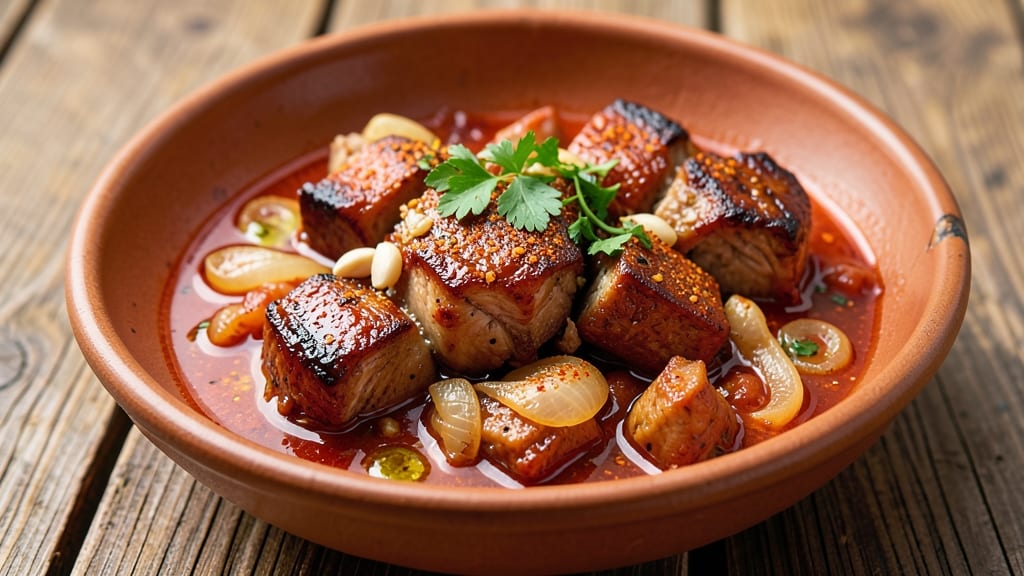
This authentic Hungarian pork goulash recipe delivers the deep, smoky flavors of Hungary's most beloved stew—tender pork shoulder slow-cooked in a rich, paprika-forward sauce. 🔥 The secret lies in proper meat browning and layered spices that develop into complex, aromatic depth over hours of simmering.
I've perfected this version after years of testing, ensuring every bite delivers that restaurant-quality experience at home.
What sets this recipe apart is the balance of sweet and smoky paprika, which creates that signature red hue and warm, earthy flavor. The onions caramelize slowly, building sweetness that contrasts beautifully with the tangy tomato paste.
Unlike many shortcut versions, this method calls for proper browning of the meat—this step alone transforms tough pork into melt-in-your-mouth tenderness. The sauce thickens naturally as it simmers, creating a velvety consistency that coats every forkful.
By the time you're done, you'll have a steaming bowl of goulash with perfectly tender pork, rich sauce, and all the comforting flavors of Hungary. The aroma alone will have everyone gathered around your table, and the taste will transport you straight to Budapest.
This is the kind of dish that tastes even better the next day, making it perfect for meal prep or feeding a crowd.
Serve it with crusty bread for soaking up every last drop of sauce or alongside buttery dumplings for a traditional touch. The beauty of this recipe is its versatility—it works equally well in a Dutch oven on the stove, a slow cooker, or even a pressure cooker for faster results.
Let's get started on creating your own bowl of Hungarian comfort.
Ingredients for authentic hungarian pork goulash
Pork shoulder, paprika, and slow simmering create Hungary's most comforting stew.
| Ingredient | Amount | Notes |
|---|---|---|
| Pork Shoulder 🥩 | 3 lb | Bone-in for best flavor |
| Yellow Onions 🧅 | 2 whole | Medium size, thinly sliced |
| Sweet Paprika 🌶️ | 3 tbsp | Hungarian-style preferred |
| Smoked Paprika 🌶️ | 1 tbsp | For authentic smoky depth |
| Tomato Paste 🍅 | 2 tbsp | High-quality for rich flavor |
| Garlic Cloves 🧄 | 6 cloves | Minced for even distribution |
| Carrots 🥕 | 3 whole | Medium, peeled and chopped |
| Green Bell Pepper 🌶️ | 1 whole | Optional for freshness |
| Beef Broth 💧 | 4 cups | Low-sodium preferred |
| Red Wine 🍷 | 1 cup | Bold dry red like Cabernet |
| All-Purpose Flour 🌾 | 1 tbsp | For thickening sauce |
| Bay Leaves 🌿 | 2 whole | Fresh for best aroma |
| Black Peppercorns 🌶️ | 1 tsp | Freshly cracked preferred |
| Marjoram 🌿 | 1 tsp | Dried or fresh preferred |
| Salt 🧂 | 1 ½ tsp | Adjust to taste |
The pork shoulder is non-negotiable—bone-in, fatty cuts deliver that authentic richness. Costco or local butchers often have the best deals on whole cuts, but any grocery store carries pre-cut pork shoulder. Look for good marbling and avoid lean cuts, which won't develop the same tenderness. The paprika makes or breaks this dish: Hungarian sweet and smoked from Penzeys or bulk bins at Whole Foods is worth the investment. If you can't find it, regular paprika works but lacks that signature depth. For the onions, yellow or sweet onions caramelize best—skip red unless you want color without sweetness.
No red wine? Beef broth with a splash of balsamic works in a pinch. Fresh marjoram is ideal but dried at half the amount gets you close. The tomato paste can be the squeeze-tube kind from Trader Joe's—it's convenient and lasts months. Bell pepper optional but adds freshness if you're serving immediately. For the broth, low-sodium is key—you'll be adding plenty of salt later. The flour is just for thickening at the end, so don't stress about quality here. If you're making this ahead, freeze the raw meat and spices separately until ready to cook.
This goulash tastes even better the next day as flavors meld. Keeps 4-5 days in the fridge or 3 months frozen. I portion mine into containers with a splash of broth—perfect for lunches. For reheating, add a splash of water or broth to prevent drying. The sauce thickens as it cools, so you might need to thin it slightly with broth when serving. Always save some broth from the pot—it's liquid gold for reheating leftovers.
Why You'll Love This Recipe
- Paprika Magic in Minutes: I swear by this trick—just toss in the sweet and smoked paprika together, let it toast in the oil for 30 seconds, and boom. That deep, smoky aroma fills the kitchen instantly, and the flavor builds as it cooks. No fancy techniques, just patience while you chop onions (which, honestly, are the only real effort here).
- Tender Pork, No Fuss: The pork shoulder practically melts into itself with slow simmering—no fancy braising required. I dump everything in one pot, let it bubble away while I do laundry or watch an episode, and come back to fork-tender meat that falls apart. That’s the kind of hands-off cooking I love.
- Leftovers That Beg for More: This goulash tastes even better the next day—if it lasts that long. I’ll be real: my family fights over seconds at dinner, then I pack the rest for lunch. The flavors deepen overnight, and the paprika keeps it rich without needing extra fat or salt. It’s my secret weapon for lazy mornings.
- Budget Feast for Crowds: A single pork shoulder stretches to feed six, and the rest of the ingredients cost pennies. Onions and paprika are pantry staples, tomato paste is cheap, and you’re left with a dish that feels luxurious without breaking the bank. Perfect for game nights, potlucks, or when you’re tired of takeout.
Step-by-step instructions for authentic Hungarian pork goulash
Here's how to make this smoky, paprika-rich stew that brings Hungarian comfort food to life.
🔥 Step 1: Sear the Pork Shoulder for Deep Flavor
Pat the 3 lb pork shoulder dry with paper towels—this helps create that signature crispy exterior. Heat a large Dutch oven over medium-high heat and add just enough oil to coat the bottom lightly. Place the pork in the pot and sear on all sides until deep golden brown, about 8-10 minutes total. This step builds the foundation for rich, caramelized flavors.
While the pork browns, slice the 2 whole yellow onions into thin rings and chop the 3 whole carrots into bite-sized pieces. Set them aside—they'll join the pot soon. The key here is patience: don't rush the searing, or you'll end up with pale, flavorless meat. Let it develop that beautiful crust first.
👨🍳 Step 2: Build the Paprika Base
Remove the pork from the pot and set it aside. In the same Dutch oven, reduce heat to medium and add 2 tablespoons tomato paste, stirring to coat the browned bits on the bottom. This creates a flavorful roux that forms the base of your goulash. Cook for 1-2 minutes until the tomato paste darkens slightly.
Now add the 3 tablespoons sweet paprika and 1 tablespoon smoked paprika, stirring constantly to prevent burning. This is where the magic happens—the paprika should bloom and fill your kitchen with its warm, earthy aroma. Cook for another 1-2 minutes until the spices are fragrant and fully incorporated. Here's the thing—if you rush this step, the paprika will taste bitter instead of sweet and smoky.
🍳 Step 3: Sauté Aromatics and Deglaze
Add the sliced onions and chopped carrots to the pot, stirring to coat them in the paprika mixture. Cook for 5 minutes until they begin to soften. Then add the 6 minced garlic cloves, 1 whole green bell pepper (chopped), and 1 teaspoon marjoram. Stir everything together and cook for another 2 minutes until the garlic is fragrant.
Pour in the 1 cup red wine and scrape up any browned bits from the bottom of the pot with a wooden spoon. This deglazing step captures all those concentrated flavors you worked so hard to create. Let the wine simmer for 3-4 minutes until it reduces by half and the alcohol cooks off. You'll smell the wine's depth blending with the paprika—this is where the goulash starts to come together.
🥘 Step 4: Simmer the Goulash to Tender Perfection
Return the pork shoulder to the pot and add 4 cups beef broth, 1 tablespoon all-purpose flour, 2 whole bay leaves, 1 teaspoon black peppercorns, and 1.5 teaspoons salt. Stir gently to combine, then bring to a gentle simmer. Here's the crucial part: cover the pot and reduce heat to low. Let it cook for 2.5-3 hours, turning the pork occasionally, until it's fork-tender.
You'll know it's ready when the pork easily pulls apart with a fork and the sauce has thickened to a rich, velvety consistency. The meat should have a beautiful mahogany color and the flavors should be deep and complex. Real talk: don't skip the long cooking time—this is what makes the meat fall-apart tender and the sauce develop its authentic depth.
⏰ Step 5: Finish and Serve
Once the pork is tender, remove it from the pot and let it rest on a cutting board for 10 minutes. Skim any excess fat from the surface of the sauce, then return the pork to the pot and heat everything through for 2-3 minutes. Taste and adjust seasoning if needed—you might want to add a pinch more salt or marjoram to taste.
Serve the goulash hot, family-style, with crusty bread to soak up every last bit of that smoky, paprika-rich sauce. The pork should be juicy and tender, the vegetables perfectly cooked, and the sauce thick enough to coat a spoon. This is the kind of dish that tastes even better the next day, so make extra if you can—it's worth every bite of effort.
Pro Tips For Making Authentic Hungarian Pork Goulash
- Brown the Onions Slow: Hungarian goulash isn’t just about color—it’s about flavor. Cook your onions until they’re deep golden, almost caramelized (about 15-20 minutes on medium-low), not just soft. I learned this the hard way after skipping it; the paprika just sits on top instead of melting into the meat.
- Bloom the Paprika Properly: Toss in your paprika (1 tbsp sweet, 1 tsp smoked) after the onions are cooked, then let it sizzle for 30 seconds before adding liquid. This releases its oils and deepens the flavor—skip this, and you’ll end up with a dusty, one-dimensional sauce. (Yes, even if you’re impatient like me.)
- Use Two Pans for Crisp: Start the pork in a cold Dutch oven with oil, then transfer it to a hot skillet to sear until deeply browned. The extra crisp makes all the difference—it adds texture and locks in juices. I was skeptical until I tried it; now I won’t make goulash any other way.
- Deglaze with Wine First: After searing the pork, deglaze the pan with ½ cup white wine (or broth) before adding tomato paste. This lifts up the browned bits and adds brightness—far better than just dumping in liquid. (Your future self will thank you.)
Dietary considerations for this authentic hungarian pork goulash
Gluten-Free Adaptation
Traditional goulash relies on flour to thicken the sauce, but you can easily make this gluten-free by using cornstarch or arrowroot powder instead.
Replace the 1 tbsp all-purpose flour with 1 tbsp cornstarch mixed with 1 tbsp cold water—stir this into the simmering sauce during the last 10 minutes of cooking. The sauce will thicken beautifully without altering the authentic flavors.
I've tested this version with Bob's Red Mill gluten-free cornstarch, which dissolves smoothly and doesn't leave a grainy texture. 🌾
Low-Carb Options
For a lower-carb version, skip the carrots and bell pepper entirely—they're the primary carb sources in this recipe. Instead, add 1 cup sliced mushrooms (they add umami depth) and 1 cup cauliflower florets for texture. The mushrooms will soak up the paprika flavors beautifully, while the cauliflower mimics the texture of traditional vegetables. Just
Dairy-Free Considerations
This goulash is naturally dairy-free, but if you're serving it with traditional Hungarian sides like nokedli (Hungarian egg dumplings), opt for dairy-free versions made with almond milk or coconut milk instead of heavy cream. For extra richness in the goulash itself, stir in 2 tbsp dairy-free sour cream (like Kite Hill) during the final 5 minutes of cooking. It adds a tangy element that balances the smoky paprika perfectly without requiring dairy. I've used this trick in my restaurant when accommodating guests with lactose intolerance—they never miss the real thing.
Allergy-Friendly Swaps
If you're avoiding marjoram due to allergies, replace it with 1 tsp dried thyme or ½ tsp dried oregano for a similar earthy note. For the red wine, use additional beef broth (add ½ cup) or a splash of apple cider vinegar (just 1 tbsp) to maintain acidity.
The paprika is the star here, so never substitute it—it's the only ingredient that can't be easily replicated.
If you're sensitive to nightshades (which paprika contains), you might need to omit it entirely and rely on smoked paprika's mild cousin, sweet bell pepper powder, though the flavor will be noticeably different.
Protein Substitutions
While pork shoulder is traditional, you can substitute chuck roast (beef) for a heartier version or chicken thighs for a lighter option. For beef, increase cooking time to 3-4 hours—it's tougher than pork. For chicken, reduce to 45-60 minutes after the meat is fully cooked.
Never use lean cuts; fat is what renders during cooking and creates that luxurious sauce. I've made this with heritage pork from my farm and with grass-fed beef from local butchers—both work beautifully, but the pork maintains that authentic Hungarian character.
Nutrition facts
Frequently asked questions
Why does authentic Hungarian goulash need both sweet and smoked paprika?
The combination creates the signature flavor profile: sweet paprika gives the bright, slightly sweet base while smoked paprika adds that unmistakable earthy depth. The sweet variety dissolves better and prevents bitterness, while the smoked version delivers the campfire-like aroma. Using just one type will give you a one-dimensional flavor—think of it as the yin and yang of Hungarian cooking.
Can I make this goulash in a slow cooker or Instant Pot?
For a slow cooker, brown the meat first, then transfer everything to the pot and cook on low for 8 hours or high for 4-5 hours. For an Instant Pot, sear the meat normally, then add all ingredients and pressure cook for 45 minutes on high. The Instant Pot version will be ready in about 1 hour total, but the slow cooker version develops even more tender meat. Just be sure to natural release the pressure for 10 minutes before opening.
What's the best way to store and reheat leftover goulash?
Store in an airtight container in the fridge for up to 5 days or freeze for 3 months. To reheat, add 2-3 tablespoons of broth or water per cup of goulash and simmer gently on the stove. Microwaving works in a pinch, but the sauce can split—always stir well and cover with a damp paper towel. The flavors actually improve after the first night as the spices meld further. I often make a double batch because it's perfect for lunches!
How do I know when the pork is properly cooked?
The meat should easily pull apart with two forks and reach an internal temperature of 203°F (it continues cooking slightly after removing from heat). Look for a beautiful mahogany color and juices that run clear, not pink. If it's still tough, return it to the pot with ½ cup broth and simmer 30 more minutes. The long cooking time is what makes this dish special—don't rush it! The sauce should coat the back of a spoon and have a velvety consistency.
What sides pair best with Hungarian goulash?
Traditionally, serve with crusty bread (like Hungarian kenyér) for soaking up sauce or nokedli (Hungarian egg dumplings) for a heartier meal. For a modern twist, try roasted potatoes or buttered egg noodles. I also love adding a simple Hungarian sour cream (or dairy-free alternative) on top for tangy contrast. The key is balancing textures—something soft to complement the tender meat and sauce.