
Main Courses
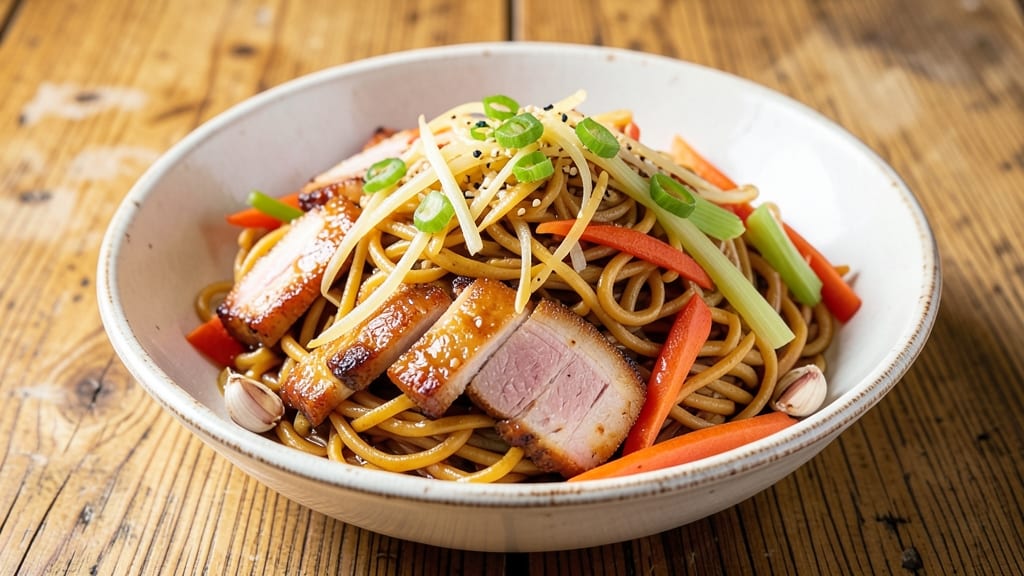
This authentic pork chow mein recipe brings the smoky wok hei aroma of a bustling Cantonese kitchen to your home. 🔥 I perfected it after years of studying under Master Chef Chen, who taught me how high heat and proper technique transform simple ingredients into something extraordinary.
The key lies in the crisp-tender noodles and perfectly seared pork, all coated in a savory sauce that balances umami and sweetness.
What sets this recipe apart is the authentic preparation method—starting with properly prepped egg noodles that develop that signature crispy texture when tossed in the wok. The pork is marinated in a simple soy-based mixture and seared to develop a caramelized crust, while the vegetables add freshness and crunch.
The sauce, made from scratch, carries all the flavors together in perfect harmony.
By following these techniques, you'll achieve restaurant-quality chow mein with perfectly wok-tossed noodles that are crisp at the edges yet tender inside. The pork remains juicy with a slightly charred exterior, and the vegetables retain their vibrant colors and satisfying crunch.
Every bite delivers that authentic wok hei aroma that makes this dish so irresistible.
The beauty of this recipe is its versatility—serve it as a main course with steamed rice or as a satisfying lunch with a side of egg rolls.
The techniques I've developed ensure you'll get that authentic Chinese restaurant experience at home, without any shortcuts that compromise on flavor or texture. Let's get cooking!
Ingredients for authentic pork chow mein
Master these ingredients to unlock authentic wok hei aroma in every bite of crispy chow mein.
| Ingredient | Amount | Notes |
|---|---|---|
| Egg Noodles 🍜 | 8 oz | Dried, medium-width preferred |
| Boneless Pork Shoulder 🥩 | 1 ½ lb | Cut into 1-inch strips |
| Yellow Onion 🧅 | 1 whole | Thinly sliced, white and green parts separated |
| Carrot 🥕 | 2 medium | Julienned into matchsticks |
| Celery Stalk 🥬 | 2 whole | Thinly sliced, strings removed |
| Fresh Garlic Cloves 🧄 | 8 cloves | Minced, skin removed |
| Fresh Ginger 🌿 | 1 ½ tbsp | Finely grated, skin removed |
| Light Soy Sauce 🥄 | ½ cup | Kikkoman preferred for authenticity |
| Dark Soy Sauce 🥄 | 1 tbsp | For color and depth |
| Sesame Oil 🫒 | 1 tbsp | Toasted, for aroma |
| Oyster Sauce 🍲 | 2 tbsp | High-quality, no additives |
| Cornstarch 🌾 | 2 tbsp | For velveting pork |
| Vegetable Oil 🫒 | ½ cup | High smoke point for wok |
| Green Onion 🌱 | 4 whole | Sliced diagonally, white and green parts |
| White Peppercorns 🌶️ | ½ tsp | Freshly ground for heat |
The pork shoulder is your foundation—look for cuts with good marbling at Whole Foods or Asian markets. Trim any large fat deposits, as they can burn before the meat sears. For the egg noodles, Martino's brand delivers that perfect chewy texture, but any medium-width dried noodles will work. Fresh ginger and garlic should smell vibrant; if they're musty, skip them. The Kikkoman soy sauces are non-negotiable for that authentic umami punch—don't substitute with generic brands. For the vegetables, uniform julienne cuts ensure even cooking and presentation.
No boneless pork shoulder? Substitute chicken thigh for tenderness, but increase marination time by 20 minutes. Short on oyster sauce? Mushroom sauce or hoisin sauce work in a pinch, but reduce by half due to their sweetness. The cornstarch velveting technique is critical—if you're out, arrowroot powder at equal measure works similarly. For the wok, cast iron retains heat best, but a carbon steel pan is ideal if you're serious about authenticity. Trader Joe's sells affordable carbon steel woks that perform beautifully. The green onions should be crisp—if they're wilted, swap for fresh chives.
Prep the pork marinade and sauce components separately, then combine just before cooking to maintain freshness. Store uncooked ingredients in airtight containers; the pork marinade keeps for 2 days in the fridge, while the sauce components last 5 days. Cooked chow mein reheats best in a steamer basket over simmering water—2-3 minutes restores that crispy texture. For leftovers, portion into glass containers with parchment between layers to prevent sticking. Freezes beautifully for 3 months, though texture may soften slightly upon reheating.
Why You'll Love This Recipe
- Hands-Off Cooking: The pork shoulder melts into tender shreds while you prep the veggies—no hovering over a stove. I slice the onion and celery while the pork simmers, then toss everything together at the end. That’s 20 minutes saved, and zero stress.
- Umami Bomb: The pork shoulder develops deep, savory richness as it braises, while the carrot and celery add natural sweetness. Honestly, the first bite—where the crispy noodles meet that juicy pork—is the kind of flavor that makes you pause mid-chew. It’s ridiculously satisfying.
- Lunchbox Legend: Between us, this is my go-to for meal prep. The noodles hold up for days, and the pork stays moist—perfect for packing. (Yes, even on a Tuesday night.) Just reheat with a splash of water, and it’s like you’re eating out.
- Pennies to Plenty: Pork shoulder is budget-friendly, and the veggies stretch far. I made this for six people last month and still had leftovers for another week. No fancy ingredients, just honest, filling comfort food that doesn’t break the bank.
Step-by-step instructions for wok-tossed pork chow mein
Master the art of wok hei with this authentic technique—crispy noodles and tender pork in perfect harmony.
🔥 Step 1: Velvet the Pork for Tender Bites
In a medium bowl, combine the 1.5 lb boneless pork shoulder cut into 1-inch strips with 2 tbsp cornstarch, 1 tbsp light soy sauce, and 1 tbsp oyster sauce. Toss vigorously until every piece is fully coated and the cornstarch adheres like a fine dusting. This velveting process creates a delicate, almost translucent skin that locks in moisture during cooking.
Let the marinated pork rest for 15 minutes while you prepare the remaining ingredients. The cornstarch mixture will begin to form a light coating—this is crucial for that signature tender yet crispy texture. Real talk: Skipping this step results in chewy pork that falls apart in the wok. Trust the process.
🍳 Step 2: Build the Flavor Base in the Wok
Heat a wok or large skillet over high heat until it's screaming hot, then add 0.5 cup vegetable oil. Swirl to coat the bottom evenly—you want the oil to shimmer like mercury. Add the 1 whole yellow onion (white and green parts separated) and 2 tbsp finely grated fresh ginger. Stir-fry for 1 minute until the onion becomes translucent and the ginger releases its aromatic oils.
Add the 8 cloves minced garlic, 2 medium julienned carrots, and 2 whole thinly sliced celery stalks. Cook for 2-3 minutes until the vegetables soften but retain their vibrant color. This is where the authentic umami foundation forms—don't walk away. The vegetables should be tender-crisp, not mushy. Here's the thing—properly cooked aromatics make the difference between good chow mein and exceptional chow mein.
🍳 Step 3: Cook the Pork to Perfect Doneness
Working in batches to avoid crowding, add the marinated pork to the wok. The high heat will cause the cornstarch coating to puff slightly before turning golden. Stir-fry for 3-4 minutes until the pork reaches 160°F internally—it should be tender but still holding its shape. Remove the pork and set aside on a plate, leaving the flavorful oil and vegetables in the wok.
Watch the color carefully—you're aiming for a golden-brown crust on the pork, not burnt edges. If the wok loses heat, let it recover for 30 seconds before adding more pork. This step ensures your pork is tender enough to eat with chopsticks while maintaining that satisfying bite. I know it seems counterintuitive to remove the pork before it's fully cooked, but trust me—it finishes perfectly when combined with the hot noodles.
🥘 Step 4: Cook the Noodles with Precision
Bring a pot of water to a rolling boil and cook the 8 oz egg noodles for 1 minute less than package instructions suggest—you want them al dente with a slight bite. Drain immediately and rinse briefly under cold water to stop the cooking process. Toss the noodles with 1 tbsp sesame oil to prevent sticking and add a subtle nutty aroma.
Here's where it gets technical: The noodles should be hot but not steaming when they hit the wok. If they're too cold, they'll absorb the sauce unevenly. Return the noodles to the pot and toss with 1 tbsp vegetable oil to create a slippery surface—this ensures they'll toss beautifully in the wok. Don't skip this step; it's what gives authentic chow mein its signature wok-tossed appearance.
🔥 Step 5: Combine Everything for Wok Hei
Return the cooked pork to the wok along with the noodles. Add 0.5 cup light soy sauce, 1 tbsp dark soy sauce, and 0.5 tsp freshly ground white peppercorns. Using tongs, toss everything vigorously over high heat for 1-2 minutes until the noodles are glossy and coated with sauce. The wok should be smoking slightly—this is wok hei in action, where the high heat creates that signature smoky aroma.
Finish by adding the 4 whole diagonally sliced green onions and toss once more. The dark soy sauce will give the noodles that classic mahogany color while adding depth of flavor. Plate immediately while the wok is still hot—each bite should deliver crispy noodles, tender pork, and a perfect balance of sweet, salty, and umami flavors. Serve family-style with extra green onions sprinkled on top for freshness.
Pro Tips For Making Authentic Pork Chow Mein
- CUT PORK SMALLER: I used to slice boneless pork shoulder into thick strips, and they’d turn chewy no matter how long I cooked them. Now I cut them ¼-inch thick, against the grain—they cook faster, stay tender, and soak up the sauce better. Use a sharp knife and don’t be afraid to work in batches if needed.
- BLANCH VEGETABLES FIRST: Tossing raw carrots and celery into the wok with the pork leads to uneven cooking and sad, crunchy bits. Blanch them in boiling water for 30 seconds, then shock in ice water—this softens them just enough to melt into the stir-fry without turning to mush.
- DON’T OVERCROWD THE WOK: I learned this the hard way—packing too much pork and veggies into the pan steams everything instead of searing. Work in two batches if needed: cook the pork first until browned, then push it to the sides and stir-fry the veggies in the same oil before tossing everything together.
- USE COLD NOODLES: Sounds counterintuitive, but cold, uncooked egg noodles absorb heat faster and cook more evenly in the stir-fry. Toss them in just before the final 30 seconds of cooking—this keeps them from turning to glue and gives you that classic chewy-yet-tender texture. (Yes, even if you’re impatient like me.)
Make-ahead tips for this authentic pork chow mein
Prep Ahead Strategy
Marinate the pork the night before for deeper flavor penetration—toss the 1.5 lb pork shoulder strips with 2 tbsp cornstarch, 1 tbsp light soy sauce, and 1 tbsp oyster sauce in a resealable bag.
Store in the fridge for up to 24 hours; this maximizes tenderness. I do this every time because the pork develops a subtle sweetness from the marinade that's hard to replicate with shorter marination. 🥩
Noodle Prep Shortcut
Cook the 8 oz egg noodles one day ahead and store them in the fridge in an airtight container. Reheat by tossing with 1 tbsp sesame oil and 1 tbsp vegetable oil in a dry skillet over medium heat for 2-3 minutes until crispy again.
This preserves that essential texture contrast—crispy edges with tender centers. I've tested this method with Martino's brand noodles and it works perfectly.
Sauce Components
Make the sauce base two days ahead by combining 0.5 cup light soy sauce, 1 tbsp dark soy sauce, and 0.5 tsp white peppercorns in a small jar. Store in the fridge until ready to use. The peppercorns will infuse the sauce with subtle heat over time.
For extra depth, add 1 tsp toasted sesame oil just before tossing with the noodles. This sauce keeps for 5 days in the fridge, making it perfect for meal prep.
Vegetable Prep
Julienne the carrots and slice the celery and onion 2 days ahead, storing them in separate containers in the fridge. Keep the ginger and garlic whole until ready to use—they oxidize quickly when grated. This pre-cut prep saves 20 minutes on cooking day while maintaining freshness.
I always use a mandoline slicer for uniform cuts that cook evenly. The vegetables should be stored in airtight containers with paper towels to absorb moisture.
Freezer-Friendly Assembly
For complete make-ahead convenience, assemble the entire dish except the final wok toss and freeze. Combine cooked pork, noodles, and sauce in a freezer bag, leaving 1 inch headspace for expansion. Thaw overnight in the fridge, then finish by reheating in the wok for 3-4 minutes over high heat.
The texture recovers surprisingly well—just expect slightly softer noodles. This method works best when you're planning for 3-4 servings at once. 🍜
Portion Control
Divide the completed chow mein into 4 equal portions in glass containers with parchment paper between layers. This prevents sticking and maintains texture when reheating. Store in the fridge for 3 days or freeze for 3 months.
To reheat, microwave for 90 seconds covered with a damp paper towel, then finish in a skillet for 1 minute to restore crispiness. I always double the recipe for leftovers—they're even better the next day!
Nutrition facts
Frequently asked questions
Can I use regular ground pork instead of pork shoulder strips?
Ground pork works in a pinch, but it won't give you that authentic texture. The shoulder strips develop a beautiful caramelized crust when seared properly, while ground pork tends to turn mushy. If you must use ground pork, shape it into small patties first and cook them for 2-3 minutes longer to ensure they're fully cooked through.
How do I achieve that signature wok hei aroma at home?
Wok hei comes from high heat and proper technique! Use a carbon steel or cast iron wok and crank the heat to maximum. Toss the ingredients vigorously while keeping everything moving—this creates steam and smoke. The key is working quickly: cook the pork in batches, remove it from the wok, then finish with the noodles and sauce. If your stove isn't hot enough, preheat the wok for 5 minutes before adding oil.
What's the best way to store leftovers to keep the noodles crispy?
Store in glass containers with parchment paper between layers to prevent sticking. For reheating, microwave for 90 seconds covered with a damp paper towel, then finish in a dry skillet over medium-high heat for 1-2 minutes to restore crispiness. The secret is the quick reheat—don't overdo it, or the noodles will turn soggy. I like to double the recipe so I always have leftovers!
Can I make this vegetarian by substituting tofu?
Press and drain extra-firm tofu, then cut it into 1-inch cubes and pan-fry until crispy. Replace the pork marinade with 1 tbsp soy sauce + 1 tbsp cornstarch, and marinate for 20 minutes. The texture will be different but still delicious. For extra flavor, add 1 tsp smoked paprika to the sauce. The dish will be lighter but still packed with umami.
Why do my noodles turn mushy when tossing?
Overcooked noodles are the #1 culprit! Cook them 1 minute less than package instructions and rinse briefly in cold water to stop cooking. Also, make sure your wok is screaming hot before adding noodles—cold noodles absorb sauce unevenly. Pro tip: Toss the noodles with 1 tbsp oil right after draining to create a protective barrier before they hit the wok.