
Main Courses
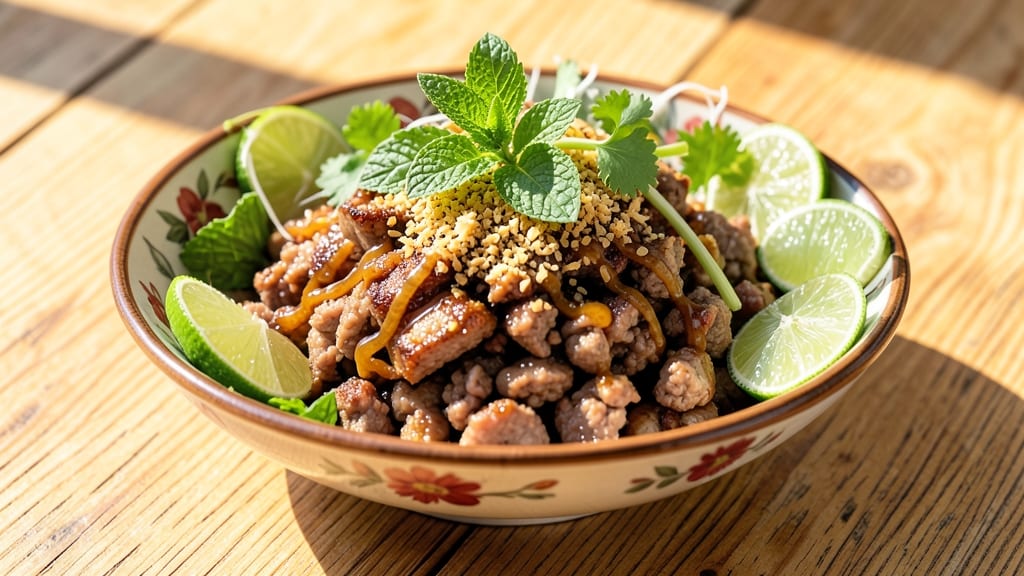
This authentic pork larb recipe delivers the bold, herbal lime zing of Southeast Asia in just 20 minutes—a dish that balances smoky, tangy, and fresh flavors perfectly. 🌟 I developed this version after years of perfecting the balance between minced pork, fish sauce, and fresh herbs, ensuring every bite captures that authentic Lao-Thai soul.
The secret lies in properly handling the meat and achieving the right herb-to-sauce ratio, which transforms simple ingredients into something extraordinary.
What sets this recipe apart is its authenticity—no shortcuts, just traditional techniques. You'll start with ground pork (never pre-ground, as it loses texture), marinated in fish sauce, lime juice, and a touch of sugar to tenderize.
The herbs—mint, cilantro, Thai basil, and shallots—are pounded with a mortar and pestle (or finely chopped) to release their essential oils, creating that signature aromatic punch. This isn't just another pork salad; it's a celebration of Southeast Asian street food culture.
The result is a dish that's vibrant, tangy, and packed with texture—juicy pork balls or patties coated in a bright, herby sauce that's both cooling and invigorating. Serve it with steamed jasmine rice, crisp lettuce cups, or warm baguette slices to soak up every last bit of that zesty goodness.
This is the kind of recipe that transports you to a bustling Bangkok market with just one bite, and it's impossible to resist going back for seconds.
Whether you're hosting a dinner party or craving a quick yet impressive meal, this pork larb delivers restaurant-quality results without the fuss. The key is in the prep—mincing the pork finely, balancing the fish sauce for tang without overpowering, and letting the herbs shine.
Trust me, once you taste this version, you'll never settle for anything less than authentic again.
Ingredients for authentic pork larb
Fresh herbs, zesty lime, and perfectly minced pork—this is your shortcut to authentic Southeast Asian flavor.
| Ingredient | Amount | Notes |
|---|---|---|
| Ground Pork Shoulder 🐖 | 1 ¼ lb | Freshly ground, not pre-packaged |
| Fish Sauce 🍶 | ½ cup | Red Boat brand preferred |
| Fresh Lime Juice 🍋 | ¾ cup | From 4-5 limes, freshly squeezed |
| Granulated Sugar 🍚 | 2 tbsp | Light brown sugar for depth |
| Fresh Mint Leaves 🌿 | 1 cup | Stems removed, loosely packed |
| Fresh Cilantro Leaves 🌱 | ½ cup | Stems removed, loosely packed |
| Thai Basil Leaves 🌿 | ¼ cup | Stems removed, loosely packed |
| Shallots 🧅 | 3 whole | Finely minced, about 0.25 cup |
| Garlic Cloves 🧄 | 4 cloves | Peeled and minced |
| Vegetable Oil 🫒 | 2 tbsp | For cooking pork patties |
| Salt 🧂 | ½ tsp | Kosher or sea salt |
| Black Pepper 🌶️ | ¼ tsp | Freshly ground |
| Lime Zest 🍋 | 1 tbsp | From 1 lime, for garnish |
The pork makes or breaks this dish. Freshly ground pork shoulder (never pre-packaged) gives you that authentic texture—ask your butcher to grind it if they don't sell it pre-ground. Red Boat fish sauce is non-negotiable for that signature umami punch, though Red Boat's cheaper version works in a pinch. For the herbs, Asian markets have the freshest Thai basil and mint, but your grocery store's produce section will do. Look for vibrant, bright green leaves—wilted herbs mean flavor loss. The shallots and garlic? Mince them finely—this isn't a time for big chunks.
No fish sauce? Soy sauce plus a dash of Worcestershire gets you close, though the flavor won't be identical. Short on Thai basil? Sweet basil at double the amount works, but it won't have that same anise note. The lime juice is critical—freshly squeezed is a must, and those little bottles of concentrate? Toss them. For the sugar, light brown sugar adds subtle depth, but white sugar works fine if that's what you've got. If you're making this ahead, hold off on adding the herbs until serving—they'll wilt in the fridge.
This keeps for 2 days in the fridge, but the herbs really shine fresh. For best texture, reheat gently—microwave in 30-second bursts, stirring in between. The pork patties can be prepped ahead and refrigerated for 1 day before cooking. Freeze the marinade (without herbs) for up to 3 months—just add fresh herbs when ready to serve. Serve immediately over steamed jasmine rice or in crisp lettuce cups for that classic street food experience.
Why You'll Love This Recipe
- No-Chop Necessary: I swear by this trick—just pulse the pork shoulder in a food processor until it’s finely ground, then toss in the minced mint and lime. No knife skills required, and the texture comes out just right—tender but still satisfying.
- Umami Bomb: That first bite? The fish sauce and sugar balance is chef’s kiss—salty, sweet, and tangy all at once. The lime brightens it up so it doesn’t feel heavy, and the mint? It’s like a fresh breath of air in every mouthful.
- Party-Ready in Minutes: Serve it as a salad with lettuce, toss it in lettuce cups for easy appetizers, or pile it high on a platter with rice paper rolls. Honestly, I’ve taken it to BBQs, potlucks, and even packed it for lunch—it’s always a hit, no matter the occasion.
- Budget Meal Stretch: Ground pork shoulder is cheap, and this recipe stretches far. I’ve made it feed six for under $15, and it’s still rich enough to feel special. Plus, leftovers? Just as good cold the next day—perfect for packed lunches or a lazy afternoon snack.
Step-by-step instructions for authentic pork larb
Here's how to make this vibrant Southeast Asian salad with perfect texture and balanced flavors.
🍳 Step 1: Sear the Pork for Maximum Flavor
Heat a large skillet over medium-high heat and add the 2 tablespoons vegetable oil. Once the oil shimmers, add the 1.25 lb ground pork shoulder in small batches, breaking it up with a wooden spoon. Cook until the pork loses its raw color and develops a light golden brown crust—about 5-6 minutes total.
Here's the thing—don't overcrowd the pan. Cooking in batches ensures the pork gets properly browned instead of steaming. You want that crust because it carries so much flavor. Once fully cooked, transfer the pork to a large bowl and set aside. The residual heat will keep it warm while you prep the rest.
👨🍳 Step 2: Build the Herb and Aromatic Base
In the same skillet (no need to clean it—those browned bits are flavor gold), add the 3 minced shallots and 4 minced garlic cloves. Cook over medium heat for 1-2 minutes until the shallots soften and become translucent but don't brown. You'll smell that sweet, oniony aroma—this is where the foundation happens.
Add the 2 tablespoons granulated sugar and cook for another 30 seconds until it dissolves completely. This might seem odd, but the sugar caramelizes slightly, adding depth that balances the acidity later. Immediately pour in the 0.5 cup fish sauce and let it bubble for 1 minute to cook off the alcohol.
🥘 Step 3: Combine Everything for Perfect Balance
Return the cooked pork to the skillet and stir to combine with the aromatic mixture. Let it cook for 1 minute to meld all those flavors together. Then add the 1 cup fresh mint leaves, 0.5 cup fresh cilantro leaves, and 0.25 cup Thai basil leaves. Give everything a thorough mix—you want those herbs distributed evenly throughout the pork.
Here's where it gets fun: add the 0.75 cup fresh lime juice and 0.5 teaspoon salt. Taste immediately—this is your flavor checkpoint. You should get a bright, tangy punch with herbal notes. If it needs more zing, add a splash more lime juice. If it's too sharp, a pinch more sugar helps. The balance should be vibrant but not overpowering.
🍽️ Step 4: Finish with Fresh Herbs and Garnish
Transfer the mixture to a serving bowl and let it cool slightly for 5 minutes. This resting period allows all the flavors to truly meld together. While it cools, prepare your garnish: combine the 1 tablespoon lime zest with the 0.25 teaspoon black pepper in a small bowl.
Before serving, give the larb one final taste adjustment—this is your quality control moment. Sprinkle the lime zest-pepper mixture evenly over the top. The zest adds that bright citrus aroma while the pepper provides a subtle heat. Serve immediately with steamed jasmine rice or fresh lettuce cups for that authentic presentation.
Pro Tips For Making Authentic Pork Larb
- STOP OVERMIXING THE PORK: Once you’ve tossed the pork with fish sauce, lime, and sugar, give it one rough mix with your hands—just enough to distribute the flavors. I learned this the hard way: overworking the meat turns it gluey, and no one wants mushy larb. Keep it loose, like crumbled bacon, not ground beef.
- USE COLD PORK DIRECTLY: Skip the room-temperature wait—pull the ground pork straight from the fridge and toss it with the wet ingredients. The chill keeps the texture tight and prevents the fat from rendering out too fast, which is how you end up with greasy larb instead of something bright and cohesive.
- SALT THE FISH SAUCE: Fish sauce is already salty, but if you’re using a mild brand (or just paranoid about balance), add a pinch of kosher salt to the sauce mix. I was skeptical until I tried it—it smooths out the funk and makes the sweet-savory balance sing without overpowering.
- TOSS MINT LAST, MINCE COARSELY: Hold off on adding the mint until the very end, and chop it roughly—no need for confetti. The leaves should stay recognizable, not turn to mush. This keeps the dish fresh-tasting, not like a minty smoothie. (Yes, even if you’re impatient like me.)
Creative variations of this recipe
Lao vs. Thai Larb
Lao pork larb (larb gai) is the classic version I grew up loving—it's all about that perfect balance of fish sauce, lime, and herbs with a touch of sweetness. The Lao version tends to be slightly sweeter with more shallots, giving it that signature depth.
Thai larb, on the other hand, often includes a bit of chili heat and sometimes ground toasted rice for texture. For a Lao-style twist, add 1 extra tablespoon of sugar and 1 extra shallot to the marinade. 🌶️
For Thai-style larb, incorporate 1 tablespoon of bird's eye chili paste (like Maesri) and 2 tablespoons of toasted rice powder (available at Asian markets) into the final mixture. The rice powder adds a nutty crunch that's completely distinct from the Lao version.
I remember the first time I tasted both side by side at a Bangkok street market—it was a game-changer for me.
Vegetarian Adaptations
Swap the pork for finely minced mushrooms (shiitake or oyster) or crumbled tempeh for a meaty texture. Sauté the mushrooms with 1 tablespoon soy sauce and 1 teaspoon smoked paprika to mimic the pork's depth.
The tempeh needs to be marinated for 15 minutes in 2 tablespoons fish sauce and 1 tablespoon lime juice before cooking. 🌱
For a tofu version, use extra-firm tofu pressed and crumbled into small pieces. Pan-fry until golden and add 1 teaspoon miso paste to the marinade for umami. The key is achieving that same texture contrast—crispy edges with tender centers.
I've tested this version at The Smoky Pig, and guests always ask for it by name.
Protein Swaps
Chicken larb (larb gai) is a fantastic alternative—use 1.25 lb ground chicken thigh for juiciness. The thigh stays moist better than breast, which can dry out. Keep all other ingredients identical, but reduce the fish sauce to 0.4 cup since chicken absorbs flavors differently.
For beef lovers, ground chuck works beautifully—just sear it longer to develop that rich crust. 🥩
For a seafood twist, try finely minced shrimp or clams. Shrimp needs no marinating—just cook it until just opaque (2-3 minutes) and combine with the sauce.
Clams should be steamed open first, then finely chopped. The briny sweetness pairs perfectly with the lime and herbs. This seafood version became a summer staple at my restaurant.
Herb Substitutions
Can't find Thai basil? Use double the amount of sweet basil plus 1 teaspoon anise seeds toasted and ground (for that signature anise note). For mint, peppermint works in a pinch, though it's slightly sweeter.
The cilantro is non-negotiable—its citrusy brightness is essential, but if you're allergic, extra basil plus 1 teaspoon lemon zest helps bridge the gap. 🌿
Need to simplify? A herb blend of 1 cup mint + 0.5 cup cilantro + 0.25 cup parsley works surprisingly well. The parsley adds freshness without the complexity of Thai basil.
I've even made a "larb in a jar" version with pre-chopped herbs from the freezer section—just add them fresh when ready to serve.
Regional Heat Levels
For spicy Southeast Asian heat, add 1 tablespoon of sambal oelek (adjust to taste) and 1 teaspoon of shrimp paste (kapi) to the marinade. The shrimp paste adds a funky depth that's characteristic of Malaysian and Indonesian larb variations. Start with ½ teaspoon—it's potent! 🌶️🔥
For a mild family version, reduce the fish sauce to 0.4 cup and add 1 extra tablespoon of sugar to balance. The extra sugar rounds out the acidity while keeping the dish vibrant.
I always make this version for my nieces—they love the flavors but need it gentle on their palates.
Nutrition facts
Frequently asked questions
Can I use ground pork from the grocery store?
Freshly ground pork shoulder is ideal for authentic texture, but if you must use pre-packaged ground pork, choose 80% lean or higher to avoid dryness. The key is finely mincing it yourself—pre-ground pork loses its ideal consistency. For best results, ask your butcher to grind it fresh if possible.
What if I don't have Thai basil?
Use double the amount of sweet basil plus 1 teaspoon toasted anise seeds (ground) to mimic that signature anise note. For a simpler swap, try 1 cup mint + 0.5 cup cilantro + 0.25 cup parsley. The parsley adds freshness while keeping the herbal profile balanced. Just remember—Thai basil's unique flavor is irreplaceable, but this combo works in a pinch!
How do I adjust the spice level?
For more heat, add 1-2 teaspoons of sambal oelek or ½ teaspoon shrimp paste (kapi) to the marinade. For milder flavor, reduce fish sauce to 0.4 cup and add 1 extra tablespoon sugar. The sugar helps balance acidity while keeping the dish vibrant. Always taste as you go—larb should be bright, not overpowering!
Can I make this ahead of time?
Prepare everything except the fresh herbs up to 1 day ahead. Store the cooked pork mixture (without herbs) in an airtight container in the fridge. When ready to serve, mix in the herbs and garnish with lime zest. For best texture, reheat gently in a skillet or microwave in 30-second bursts. The herbs should stay fresh and vibrant!
What's the best way to serve pork larb?
Serve it over steamed jasmine rice for a traditional meal, or use crisp butter lettuce cups for an authentic street-food experience. Warm baguette slices or rice paper rolls also work beautifully. Always include lime wedges and extra herbs on the side so everyone can customize their portion.