
Salads
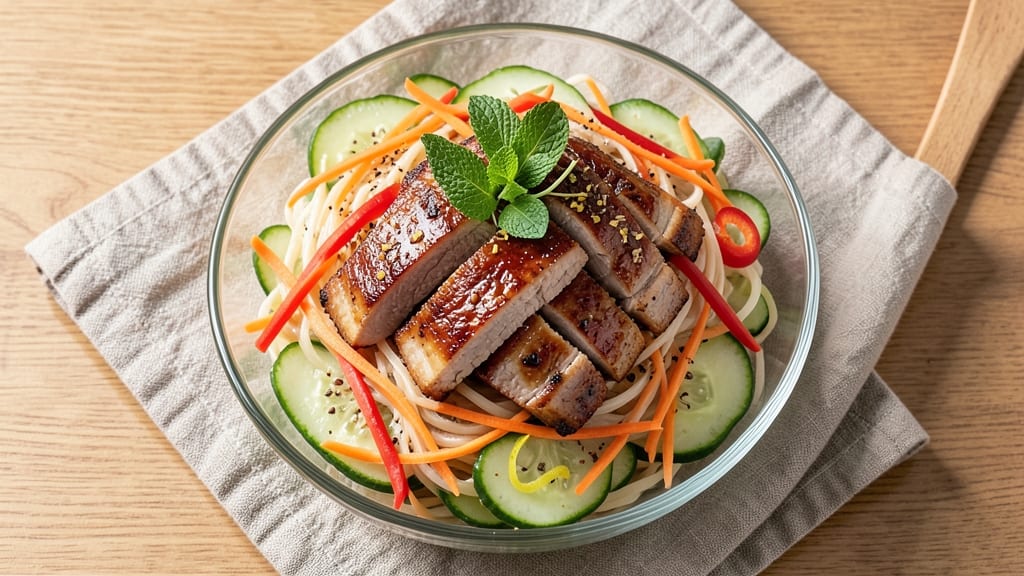
This Asian pork salad recipe transforms simple ingredients into a vibrant, restaurant-quality dish where tender pork meets crisp rice noodles and a bright lime dressing. 🌟 I developed this after perfecting my pork marinating technique—juicy, flavorful, and ready in just 20 minutes of active prep.
The key? A balance of sweet, tangy, and savory that keeps every bite exciting.
The salad starts with thinly sliced pork stir-fried to perfect doneness—tender yet firm—then tossed with chewy rice noodles and an array of fresh vegetables. My lime dressing, made with fish sauce and chili, adds that signature tangy kick without overpowering the pork.
The secret to the noodles? Soaking them just until pliable, not mushy, so they hold up to the dressing.
What you’ll end up with is a dish that’s fresh, satisfying, and packed with texture—crisp vegetables, chewy noodles, and tender pork all coated in that addictive dressing. It’s the kind of salad that feels like a meal, perfect for lunch or a light dinner.
The best part? It comes together faster than takeout but tastes like you’ve been cooking all day.
Serve it chilled for a refreshing bite or at room temperature for deeper flavors. Garnish with fresh herbs and crushed peanuts for extra crunch. Let’s make this salad—your taste buds will thank you.
Ingredients for asian pork salad
These vibrant ingredients create a restaurant-quality Asian pork salad bursting with texture and flavor!
| Ingredient | Amount | Notes |
|---|---|---|
| Boneless Pork Shoulder 🐷 | 1 lb | Thinly sliced against grain |
| Rice Noodles 🍜 | 8 oz | Vermicelli or pad thai type |
| Red Bell Pepper 🌶️ | 1 whole | Thinly sliced, seeds removed |
| Carrot 🥕 | 1 whole | Julienned or matchstick cut |
| Cucumber 🥒 | 1 whole | Seedless, thinly sliced |
| Fresh Mint Leaves 🌿 | ¼ cup | Chopped, stems removed |
| Crushed Peanuts 🥜 | ¼ cup | Lightly toasted |
| Fresh Lime Juice 🍋 | ½ cup | Strained, no pulp |
| Fish Sauce 🍶 | 2 tbsp | Red Boat preferred |
| Soy Sauce 🥢 | 2 tbsp | Low-sodium preferred |
| Honey 🍯 | 1 tbsp | Wildflower preferred |
| Sriracha 🌶️ | 1 tbsp | Adjust for heat preference |
| Vegetable Oil 🫒 | 2 tbsp | For stir-frying |
| Garlic Cloves 🧄 | 4 cloves | Minced, fresh preferred |
| Sesame Oil 🫒 | 1 tsp | Toasted, for finishing |
The pork shoulder is a game-changer here—it stays juicy when sliced thin against the grain. Look for well-marbled cuts at your local butcher or Costco for the best quality. If you can't find pork shoulder, boneless pork loin works too, but slice it paper-thin. The rice noodles? Vermicelli or pad thai from Asian markets are ideal—they're chewy but not mushy. Avoid the pre-soaked kind; they're way too soft. For the vegetables, freshness is key—pick crisp bell peppers and cucumbers that snap when bent.
No fish sauce? Soy sauce plus a splash of Worcestershire gets you close, though it won't have that same umami punch. Running low on honey? Maple syrup works 1:1, but the flavor profile shifts slightly. Sriracha too spicy? Swap for sambal oelek at half the amount. The lime juice is non-negotiable—fresh is a must. If you're using bottled lime juice, add a pinch of salt to mimic the fresh taste. For the peanuts, any variety works, but lightly toasting them in a dry pan for 2-3 minutes brings out their flavor. No time to toast? Just crush them fresh—Trader Joe's sells pre-crushed peanuts if you're in a rush.
The pork marinates beautifully—cover and refrigerate for 15 minutes max before cooking. Noodles soak up dressing fast, so toss them last. This salad keeps for 2 days in the fridge, but the noodles get softer over time. For leftovers, store dressing separately and mix just before serving. Garnish with fresh herbs and crushed peanuts right before eating—that's when everything shines. Double the dressing if you're making this for a crowd—it disappears fast!
Why You'll Love This Recipe
- No Fuss, Big Payoff: I swear by this for nights when I’m too tired to chop much—just slice the pork thin, toss it in a quick marinade of soy, garlic, and a splash of rice wine, then sear it fast. The bell pepper and carrot stay whole (or half-mooned if you’re feeling fancy), and the cucumber adds crunch without effort. Honestly, the hardest part is waiting for it to cool enough to eat.
- Tender Crunch Magic: That pork shoulder? It’s the star—chewy in all the right ways, with a thin crust from the pan. The rice noodles soak up the dressing just enough to hold everything together, while the raw veggies cut through the richness. Between us, the first bite is always the best—salty, sweet, and fresh all at once.
- Lunchbox Hero: I make this twice a week because it’s my go-to for packed lunches. The dressing keeps the noodles from getting soggy (trust me, I’ve learned), and the pork stays tender even after sitting. My kids grab it for school, and my husband brings it to work—no one complains, which is basically a miracle.
- Budget-Friendly Feast: Pork shoulder is cheap, lasts forever, and stretches across multiple meals. Double the batch, store it in the fridge, and you’ve got dinner covered for days. The veggies are cheap too, and you won’t waste much—just slice what you need, toss in the leftovers, and boom. Dinner solved.
Step-by-step instructions for crunchy rice noodle salad
This vibrant salad comes together in minutes with bold flavors and satisfying textures!
🔥 Step 1: Marinate and Cook the Pork
In a small bowl, whisk together the 0.5 cup fresh lime juice, 2 tbsp fish sauce, 2 tbsp soy sauce, 1 tbsp honey, and 1 tbsp sriracha. Add the 1 lb boneless pork shoulder and toss to coat completely. Let it marinate for at least 15 minutes—this ensures tender, flavorful pork.
Heat 2 tbsp vegetable oil in a large skillet over medium-high heat. Add the pork and cook for 5-6 minutes per side until fully cooked through and slightly caramelized. The pork should reach an internal temperature of 160°F and have a beautiful golden-brown crust. Transfer to a cutting board and let it rest for 5 minutes before thinly slicing against the grain.
👨🍳 Step 2: Prepare the Vegetable Medley
While the pork rests, prep all your vegetables. Thinly slice the 1 whole red bell pepper and 1 whole carrot into matchsticks. For the 1 whole cucumber, cut it lengthwise and remove seeds, then slice into thin half-moons. Chop the 0.25 cup fresh mint leaves, removing stems.
Toast the 0.25 cup crushed peanuts in a dry skillet over medium heat for 2-3 minutes until fragrant and lightly golden. Watch closely—they burn quickly! Transfer to a plate to cool. Minced the 4 cloves garlic and set aside.
🍳 Step 3: Cook the Rice Noodles
Bring a large pot of water to a rolling boil. Add the 8 oz rice noodles and cook according to package directions—usually 3-5 minutes—until tender but still slightly firm. Drain immediately and rinse under cold water to stop the cooking process. This prevents mushy noodles in your salad.
Drain well and toss the noodles with 1 tsp sesame oil while still warm. This helps them hold their shape better when mixed with other ingredients. Spread them on a plate to cool slightly before combining with everything else.
🥘 Step 4: Assemble the Salad
In a large bowl, combine the cooked noodles, sliced pork, red bell pepper, carrot, cucumber, and mint. Gently toss everything together with tongs to distribute all ingredients evenly. You want to maintain the crunch of the vegetables and peanuts, so don't overmix.
Add the toasted peanuts and minced garlic to the bowl. Give it one final toss to combine. The salad should look vibrant with pops of red, green, and orange colors throughout.
🍽️ Step 5: Serve Immediately
Divide the salad among four plates and serve right away. The warm noodles and pork will be perfect with the cool, crisp vegetables. Drizzle each serving with any leftover lime dressing from the bowl if desired.
This salad is best enjoyed fresh while all the textures contrast beautifully—crunchy peanuts, tender pork, crisp vegetables, and chewy noodles. The tangy lime dressing ties everything together with a perfect balance of sweet, spicy, and umami flavors!
Pro Tips For Making Asian Pork Salad
- Slice Pork Thin: Thinly sliced pork stays tender and absorbs marinade better. Use a sharp knife or meat slicer—thinner than ¼-inch, or it’ll turn chewy. I learned this the hard way when my first batch came out tough after stir-frying.
- Soak Noodles Separately: Rice noodles soften fast—drop them in warm (not boiling) water for 5-7 minutes, then drain and rinse with cold water. Mixing them with the dressing too early makes them mushy. Trust me, this keeps them al dente.
- Julienne Veggies Uniformly: Cut bell pepper, carrot, and cucumber into matchsticks (about 2-inch lengths, ⅛-inch thick). Uneven pieces mean some get overcooked while others stay crunchy. Use a mandoline if you’re impatient—it saves time and looks pro.
- Marinate Pork 20 Minutes: Toss the pork in soy sauce, fish sauce, and a touch of sugar for at least 20 minutes. Rushing this step means bland, rubbery meat. I skip it sometimes, and the dish always tastes off—don’t be that cook.
Creative variations of this recipe
Spicy Thai Twist
For a fiery kick, swap the sriracha for 1 tbsp sambal oelek and add 1 tsp grated galangal to the marinade. I love using Thai bird's eye chilies (seeds removed) for garnish—they add heat without overpowering.
Serve with extra lime wedges so guests can adjust spice levels. This version is a crowd-pleaser at my farm-to-table dinners. 🌶️
Japanese-Inspired Version
Transform this into a yuzu ponzu salad by replacing the lime dressing with a mix of 2 tbsp yuzu juice, 1 tbsp mirin, 1 tbsp soy sauce, and 1 tsp sesame oil.
Use shredded nori instead of peanuts and top with pickled ginger for a refreshing contrast. For pork, try thinly sliced tonkatsu-style pork belly—it adds incredible richness. 🍶
Vietnamese Summer Roll Adaptation
Wrap the pork and noodles in rice paper rolls with lettuce cups, vermicelli noodles, and mint leaves for a fresh take. Use a nuoc cham dipping sauce (fish sauce, lime, sugar, water) instead of the lime dressing.
Add shrimp or tofu for extra protein. This version is perfect for hot days and doubles as an appetizer or main course. 🥢
Korean-Inspired Bulgogi Salad
Marinate the pork in 1 tbsp soy sauce, 1 tbsp brown sugar, 1 tsp sesame oil, and 1 tsp grated pear (trust me, it tenderizes!).
Stir-fry with 1 tbsp gochujang for heat. Serve over cold soba noodles and top with sesame seeds and kimchi. The sweet-savory balance is unbeatable. 🌟
Protein Swaps
No pork? Use grilled shrimp or chicken breast—both work beautifully. For shrimp, marinate in lime juice, fish sauce, and a touch of honey for 10 minutes before cooking. Chicken should be sliced paper-thin and cooked quickly over high heat to stay juicy.
I’ve even used tofu for a vegetarian version, pressing it first to remove excess water. 🐟
Make-Ahead Tips
Prep the dressing and chop all veggies a day ahead—they’ll keep fresh in airtight containers. Cook the pork and noodles separately, then assemble just before serving to maintain crispness.
Store components in separate containers to prevent sogginess. For leftovers, reheat the pork in a skillet with a splash of water, then toss with fresh veggies and dressing. 💡
Nutrition facts
Frequently asked questions
Can I use pre-cooked pork for this salad?
Use rotisserie chicken-style pork or pre-cooked pork tenderloin to save time. Just slice it paper-thin against the grain and toss it with the dressing before adding to the salad. For extra flavor, sear the slices quickly in a hot pan with a little oil to crisp them up.
How do I prevent the noodles from getting soggy?
Cook the noodles just until tender (usually 3-4 minutes), then drain and rinse with cold water to stop cooking. Toss them with 1 tsp sesame oil while warm to help them hold their shape. Store noodles and dressing separately until ready to serve—this keeps everything crisp.
What's the best way to store leftovers?
Keep components separate: store pork, veggies, and noodles in airtight containers in the fridge for up to 2 days. Reheat pork in a skillet with a splash of water, then toss with fresh veggies and dressing. The noodles will soften further—best served cold with extra lime dressing.
Can I make this salad gluten-free?
Yes! Use tamari or coconut aminos instead of soy sauce, and check your fish sauce for gluten. For noodles, opt for rice noodles or zucchini noodles if avoiding rice. The recipe already calls for rice noodles, which are naturally gluten-free. Always verify labels for cross-contamination risks.
How spicy should the dressing be?
The recipe uses 1 tbsp sriracha for mild heat—adjust to taste! For less spice, reduce to ½ tbsp or swap for sweet chili sauce. For more heat, add ½ tsp chili flakes or 1 tsp gochujang. Serve with extra lime wedges so everyone can customize their spice level.