
Main Courses
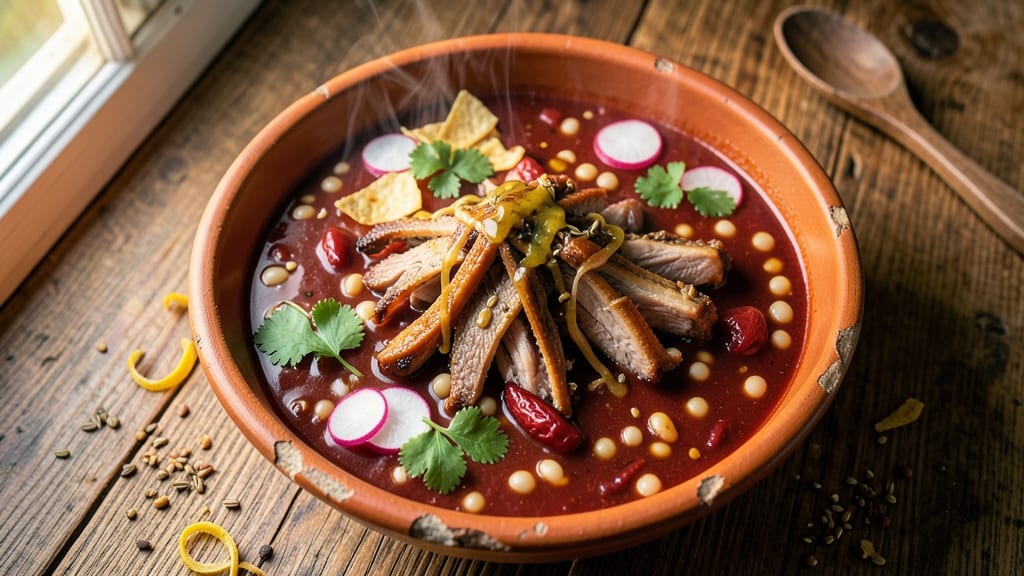
This authentic red pork pozole recipe brings the soul of Mexican tradition to your kitchen with its deep, smoky anise and chili-spiced broth. Growing up in Georgia, I learned how pork transforms into something magical when slow-cooked with hominy and dried chilies—just like my abuela taught me.
The key lies in rendering the pork head for rich, gelatinous broth that binds every ingredient together.
The recipe starts with a whole pork head and meat, simmered for hours with dried guajillo and ancho chilies until the broth turns a vibrant red and develops layers of smoky depth. Hominy, the essential corn base, soaks up the flavors while keeping its satisfying texture.
What makes this dish truly special is the balance of spices—anise seeds for warmth, garlic for brightness, and oregano for that unmistakable Mexican aroma.
By the time you serve it, you'll have a steaming bowl of tender pork, hearty hominy, and a broth so flavorful it deserves a spoon of its own. The traditional toppings—crunchy radishes, fresh cilantro, lime wedges, and toasted corn chips—elevate each bite with texture and acidity.
This is more than a stew; it's a celebration of Mexican heritage, perfect for gatherings or cozy weeknight dinners.
Serve it family-style in a large pot or ladle into bowls for individual servings, always with extra lime and chili powder on the table. The leftovers taste even better the next day, as the flavors meld into perfect harmony.
Let's bring this authentic taste to your home—just as it's been made for generations.
Ingredients for authentic red pork pozole
Pork head, hominy, and dried chilies—this is where pozole magic begins.
| Ingredient | Amount | Notes |
|---|---|---|
| Pork Head 🐖 | 1 whole | For rich gelatinous broth |
| Pork Shoulder 🥩 | 3 lb | Cut into 2-inch chunks |
| Dried Guajillo Chilies 🌶️ | 6 whole | Stems and seeds removed |
| Dried Ancho Chilies 🌶️ | 4 whole | Stems and seeds removed |
| White Hominy 🌽 | 2 cans | 15 oz each, drained |
| Anise Seeds 🌿 | 1 tbsp | Toasted lightly for aroma |
| Garlic Cloves 🧄 | 6 cloves | Peeled and smashed |
| Mexican Oregano 🍃 | 1 tbsp | Dried, crumbled |
| Bay Leaves 🌿 | 2 whole | Fresh or dried |
| Salt 🧂 | 2 tsp | Kosher or sea salt |
| Ground Black Pepper 🌶️ | ½ tsp | Freshly ground |
| Lime Wedges 🍋 | 4 whole | For serving |
| Fresh Cilantro 🌿 | ½ cup | Chopped, for garnish |
| Radishes 🥕 | 1 whole | Thinly sliced, for topping |
| Corn Tortilla Chips 🍞 | 1 cup | Toasted, for crunch |
The pork head is non-negotiable for that deep, gelatinous broth. Local butchers or Costco often carry them—ask for the whole head, not pre-cut pieces. If you can't find one, pork shoulder with extra skin works in a pinch, but it won't be quite the same. Dried chilies? Mexican markets have the best selection—look for guajillo and ancho that are plump, not brittle. The hominy should be canned, not dried; Goya brand is my go-to, but any white hominy will do. Toast your anise seeds in a dry pan for 30 seconds—they’ll release their aroma instantly.
No guajillo chilies? Ancho or pasilla work in a pinch, but they’ll change the color slightly. Mexican oregano is a must—regular oregano won’t cut it. Short on lime? Key limes or even lemon add brightness, but classic pozole deserves real limes. The radishes add crunch, but if you’re feeling lazy, jicama or even cucumber slices work too. For the tortilla chips, store-bought is fine, but homemade tostadas are a game-changer if you’re feeling ambitious. And yes, you can make this ahead—the flavors only get better after a day in the fridge.
This stew tastes even better the next day, so make a double batch. Store the broth and hominy separately in the fridge for up to 5 days, then reheat gently. The pork will keep for 3-4 days in the fridge, but it’s so tender you’ll eat it all in one sitting. For leftovers, freeze the broth in portions—it’s perfect for quick lunches or as a base for other Mexican dishes. Just add a splash of water when reheating to loosen it up.
Why You'll Love This Recipe
- One-Pot Magic: I swear by this recipe because it’s actually one-pot—no chopping piles of veggies or juggling multiple pans. The pork head and shoulder simmer together, the hominy softens right in the broth, and the dried chilies (guajillo and ancho) just melt into the sauce with zero fuss. Honestly, the hardest part is waiting for it to finish.
- Rich, Deep Umami Bomb: That pork head? It’s the secret weapon—crispy ears and cheeks add texture, while the shoulder falls apart into tender, juicy chunks. The guajillo and ancho chilies give it that smoky, slightly tangy depth, and the hominy soaks up all the flavor like a sponge. Between us, this isn’t just soup; it’s a full-on taste experience.
- Crowd-Pleaser, Any Day: I make this for Sunday dinners, potlucks, or even lazy weeknights when I don’t want to think. It’s hearty enough for a winter gathering but still light enough for a casual meal. My college-aged kids go wild for it—even the ones who “don’t eat Mexican food.” (Yes, even on a Tuesday night.)
- Budget Feast, Leftovers Galore: Pork head and shoulder are cheaper than you’d think, and they stretch into so much broth. A single batch feeds six, with leftovers that taste even better the next day. I’ll be real: I’ve reheated this for lunch three times in a row without getting sick of it. Plus, the hominy adds that satisfying, chewy bite that keeps everyone coming back.
Step-by-step instructions for smoky anise and chili-spiced pork stew
Let's create this traditional pozole with deep flavors and perfect textures—every step brings us closer to that smoky, hearty Mexican classic.
Prepare the Chili Paste and Toast the Spices
Start by toasting the 1 tablespoon anise seeds and 6 cloves garlic in a dry skillet over medium heat for 2-3 minutes until fragrant. Watch closely—they should smell aromatic but not burn. Transfer to a bowl and let cool.
While the spices toast, remove stems and seeds from the 6 whole dried guajillo chilies and 4 whole dried ancho chilies. Toast these chilies in the same skillet for 1-2 minutes per side until fragrant. Place them in a bowl and cover with 2 cups hot water to soften for 15 minutes. Drain and blend with the toasted anise seeds, garlic, 1 tablespoon Mexican oregano, and 2 whole bay leaves until smooth. This is your flavor foundation.
Simmer the Pork Head for Rich Broth
Place the 1 whole pork head in a large stockpot and cover with 12 cups cold water. Bring to a boil over high heat, then reduce to a simmer and skim off any foam that rises to the surface. This ensures a clear, flavorful broth. Simmer uncovered for 2 hours until the meat is tender and falls off the bone easily.
Remove the pork head and strain the broth through a fine-mesh sieve, discarding the solids. Return the broth to the pot and set aside. Meanwhile, shred the cooked pork head meat and set it aside for later use.
Cook the Pork Shoulder and Hominy
In the same pot, add the 3 lb pork shoulder cut into 2-inch chunks and the blended chili paste. Bring to a boil, then reduce heat to low and simmer for 2 hours until the pork is fork-tender and easily pulls apart. Remove the pork and shred it, adding it back to the pot.
Add the 2 cans drained white hominy, 2 teaspoons salt, and ½ teaspoon ground black pepper to the pot. Simmer for an additional 30 minutes to allow all flavors to meld together. The hominy should be heated through but not mushy.
Finish and Serve with Traditional Toppings
Taste the pozole and adjust seasoning if needed. Serve immediately in bowls with the 4 whole lime wedges, ½ cup chopped fresh cilantro, 1 whole sliced radish, and 1 cup toasted corn tortilla chips on top. The contrast of textures and bright lime will make this dish truly authentic.
Garnish each serving with extra lime juice and cilantro to brighten the rich, smoky flavors. Pozole tastes even better the next day as the flavors deepen, so it's perfect for meal prep too!
Pro Tips For Making Authentic Red Pork Pozole
- Char the Chilies Properly: Toss guajillo and ancho chilies in a dry skillet over medium-high heat for 30 seconds per side—just until they darken and smell smoky. I learned this the hard way: skipping the char makes the broth taste flat and one-dimensional. (Yes, even if you’re impatient like me.)
- Simmer Pork Head Low and Slow: After the initial boil, reduce heat to a bare simmer—just enough to keep tiny bubbles breaking the surface—and let the pork head cook for 3 hours. I used to rush it, and the meat always fell apart. This gives it time to render fat and infuse flavor without falling apart.
- Toast Hominy Before Adding: Dry-toast the white hominy in a skillet for 2–3 minutes until it smells nutty and slightly caramelized. This step makes a real difference in texture—it prevents mushiness and adds depth to the broth. (Your future self will thank you.)
- Save the Pork Broth: Strain the broth through a fine-mesh sieve, then press the solids with a wooden spoon to extract every last bit of flavor. I skip this when I’m lazy, but the dish is noticeably better when I don’t—it’s worth the extra 2 minutes.
Flavor customization for this recipe
Spice Level Control
Adjust the heat to your preference by controlling the chili blend. For a milder pozole, reduce the number of guajillo chilies by 2-3 and add 1-2 dried pasilla chilies for depth without heat. If you love spice, add 1-2 dried habanero or serrano chilies (seeds removed) to the blend.
I often keep a small bowl of chili powder on the table so guests can add their own heat. 🌶️
Smoky Depth Variations
For extra smokiness, add 1-2 chipotle peppers in adobo to the chili paste or simmer the pork with 2-3 smoked oak chips (available at specialty stores) for 30 minutes before adding the hominy.
My favorite shortcut? A ½ teaspoon smoked paprika stirred into the broth at the end. This works especially well if you don’t have access to a smoker. ✨
Herb and Aroma Boosts
Swap out Mexican oregano for thyme or rosemary if you can’t find it, but expect a different flavor profile. For a brighter, fresher aroma, add 1 sprig fresh thyme while simmering the pork.
I also love tossing in 1-2 cinnamon sticks during the initial broth simmer—they add warmth without overpowering. Remove them before serving. 🌿
Protein Swaps
While pork is traditional, you can substitute chicken thighs (for a lighter version) or beef chuck roast (for a richer taste). If using chicken, reduce simmering time to 1 hour—it cooks faster.
For a vegetarian twist, replace the pork with extra hominy and mushrooms (like oyster or shiitake) for umami depth. Just remember, the broth is the star! 🍗
Texture Adjustments
Prefer your hominy softer? Add it 10 minutes earlier to the simmering time. For extra crunch, toast the corn tortilla chips in a dry skillet for 2-3 minutes until golden. I also like adding crumbled queso fresco on top for a creamy contrast.
For a heartier bite, stir in 1 cup cooked black beans during the final 15 minutes of cooking. 🥘
Regional Twists
In Oaxaca, pozole often includes epazote (a licorice-flavored herb) for a distinct taste. If you can find it, add 1 sprig to the broth during the final 30 minutes of cooking.
For a Northern Mexican touch, swap hominy for dried corn kernels (soaked overnight) and add 1 teaspoon cumin to the chili paste. Each region has its own secrets—play around to find your favorite! 🗺️
Nutrition facts
Frequently asked questions
Can I make pozole without a pork head?
While the pork head creates the richest broth, you can substitute with 3-4 pounds pork shoulder with extra skin or beef chuck roast. For extra gelatin, add 1 cup pork bones or 2 tablespoons cornstarch to thicken the broth. The flavor will be slightly different but still delicious.
How do I find dried guajillo and ancho chilies?
Start at your local Mexican market—they usually carry these staples in the dried chili section. If unavailable, check the international aisle at larger grocery stores like Walmart or Kroger. Online options include Amazon or La Tienda. For a shortcut, use 1 teaspoon chili powder plus ½ teaspoon smoked paprika, though it won't be as authentic.
Why does my pozole taste bitter?
Bitterness usually comes from over-toasted chilies or too much anise. Reduce the anise seeds to ½ teaspoon and toast chilies for 30 seconds per side max. Balance with 1 extra lime wedge per serving or a pinch of sugar (just ½ teaspoon). Always taste as you blend the chili paste!
Can I make pozole in a slow cooker?
Yes! Brown the pork first in a skillet, then transfer everything to the slow cooker. Cook on low for 8 hours or high for 5 hours. Add hominy during the last 30 minutes to prevent mushiness. The slow cooker method actually enhances the flavors—just stir occasionally.
What's the best way to serve pozole for a crowd?
Keep the broth and hominy warm in a chafing dish while serving individual bowls of pork. Set out toppings in small bowls (radishes, cilantro, lime) and a large bowl of chips at the center. For a festive touch, serve with warm corn tortillas on the side. Pozole is meant to be shared—double the recipe if hosting!