
Main Courses
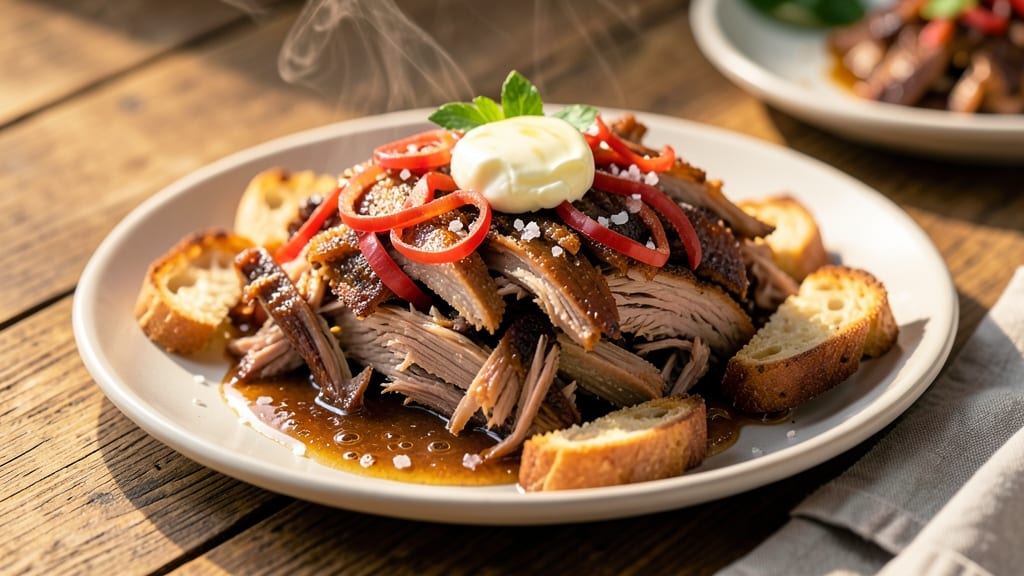
This Binging with Babish pulled pork recipe delivers that signature showstopper flavor—tender, vinegar-kissed pork that practically melts off the bone. 🔥 I've adapted the technique from Andrew Rea's iconic style, focusing on the slow-smoked magic that makes every bite irresistible.
The secret lies in balancing sweet and tangy elements while keeping the meat juicy through hours of gentle cooking.
What sets this recipe apart is the foolproof slow-cooking method that works perfectly in a smoker, oven, or even a Dutch oven. You'll start with a simple salt rub and let the pork break down over time, resulting in meat so tender it shreds with just a fork.
The sauce—where the Babish magic happens—combines apple cider vinegar, molasses, and a touch of brown sugar for that signature tang-sweet balance.
By the time you're done, you'll have restaurant-quality pulled pork that's rich, flavorful, and impossible to resist. The sauce clings to every strand, while the meat stays moist and juicy. Serve it on toasted buns with classic coleslaw or alongside cornbread for the full experience.
This recipe is perfect for game day, family gatherings, or whenever you crave that smoky, tangy pulled pork that feels like a hug in every bite. Let's get cooking!
Ingredients for binging with babish pulled pork
Six pounds of pork shoulder plus a few pantry staples transform into restaurant-worthy pulled pork with Babish-inspired magic.
| Ingredient | Amount | Notes |
|---|---|---|
| Pork Shoulder (Bone-In) 🐖 | 5 lb | Well-marbled, center-cut preferred |
| Apple Cider Vinegar 🍎 | ½ cup | Bragg or organic preferred |
| Unsalted Butter 🧈 | ½ cup | Cold, cubed for sauce |
| Light Brown Sugar 🍚 | ½ cup | Packed, not granulated |
| Molasses 🍯 | ¼ cup | Unsulphured preferred |
| Yellow Onion 🧅 | 1 whole | Yellow or red, diced |
| Garlic Cloves 🧄 | 6 cloves | Fresh, peeled, minced |
| Kosher Salt 🧂 | 2 tbsp | Diamond Crystal preferred |
| Black Peppercorns 🌶️ | 1 tsp | Freshly cracked |
| Smoked Paprika 🌶️ | 1 tbsp | Spanish paprika works too |
| Ground Black Pepper 🌶️ | ½ tsp | Freshly ground preferred |
| Fresh Thyme Leaves 🌿 | 1 tbsp | Or 1 tsp dried thyme |
| Fresh Rosemary 🌿 | 1 tbsp | Chopped, sprigs removed |
| Chicken or Beef Stock 🍲 | 1 cup | Homemade or quality store-bought |
| Honey 🍯 | 1 tbsp | Wildflower preferred |
The pork shoulder is non-negotiable—bone-in, center-cut delivers the best flavor and moisture. Costco or local butchers often carry excellent cuts; look for good marbling. If you can't find bone-in, use bone-out but add a few extra minutes to the cook time. The vinegar and molasses combo is where the signature tang-sweet balance comes from—Bragg apple cider vinegar has the perfect acidity, while unsulphured molasses adds depth. For the herbs, fresh is ideal, but dried works in a pinch at one-third the amount. The stock should be rich and flavorful—homemade or high-quality store-bought makes all the difference.
No molasses? Substitute with an extra 2 tbsp brown sugar plus 1 tbsp lemon juice. Running low on fresh thyme? Dried thyme at one-third the amount works, but fresh has that aromatic punch. The honey adds just a touch of sweetness to the sauce—wildflower or clover honey works best, but any variety will do. If you're cooking in a smoker, use fruitwood like apple or cherry for that classic Babish flavor. For oven cooking, place the pork on a rack over a tray to allow air circulation. The butter in the sauce is crucial—cold, cubed butter emulsifies beautifully when melted into the vinegar mixture, creating that signature glossy finish.
Pork shoulder keeps well in the fridge for 4-5 days after cooking, though it tastes best within 2 days. For longer storage, portion into airtight containers and freeze for up to 3 months. The sauce can be made ahead and reheated gently—just add a splash of water if it thickens too much. Leftovers make incredible sandwiches or tacos; I always double the sauce recipe because it disappears fast. If you're serving a crowd, consider making two pork shoulders simultaneously to ensure everyone gets their fill.
Why You'll Love This Recipe
- Sweet-Savory Magic: The molasses and brown sugar caramelize into this sticky, glossy glaze that’s ridiculously addictive. Honestly, the first time I tasted it, I nearly licked the pan—then realized I should’ve saved some for the sandwiches.
- Leftovers That Shine: This recipe actually improves the next day. The flavors meld into something deeper, and I’ve turned last night’s pulled pork into today’s tacos, tomorrow’s sandwiches, and even a quick fried rice. Versatility at its finest.
Step-by-step instructions for slow-smoked pulled pork
Master this technique and you'll achieve tender, fall-apart pork with a rich sauce that's perfect for sandwiches or plates.
🔥 Step 1: Prepare and Season the Pork Shoulder
Start by trimming any excess fat from the 5 lb pork shoulder (bone-in), leaving about ¼ inch of fat cap for flavor and moisture. Pat the meat dry with paper towels—this helps the rub adhere and promotes better bark formation.
In a small bowl, combine 2 tbsp kosher salt, 1 tbsp smoked paprika, 0.5 tsp ground black pepper, 1 tbsp fresh thyme leaves, 1 tbsp fresh rosemary, and 1 tsp freshly cracked black peppercorns. Rub this mixture all over the pork shoulder, pressing firmly so the spices penetrate the meat. Place the seasoned pork in a large resealable bag and refrigerate for 12-24 hours to allow the flavors to deeply infuse.
🔥 Step 2: Smoke the Pork Low and Slow
Preheat your smoker to 225°F using hickory or apple wood chips. Place the pork shoulder fat-side up on the smoker grates and close the lid. Resist the urge to open it during the cook—every time you peek, you lose 15-20 minutes of cook time and moisture.
Smoke the pork for 6-8 hours until the internal temperature reaches 165°F. The bark should be dark and crispy, and the meat should pull apart easily with tongs when tested. If the smoker temperature fluctuates, adjust the vents to maintain a steady 225°F. The pork will hit "the stall" around 160°F, where the temperature plateaus—this is normal and expected.
🥘 Step 3: Wrap and Finish Cooking
Once the pork reaches 165°F, remove it from the smoker and wrap it tightly in two layers of aluminum foil. This step, known as the "Texas crutch," helps the pork overcome the stall and cook through evenly. Return the wrapped pork to the smoker and continue cooking until the internal temperature reaches 203°F, about 2-3 additional hours.
During this time, the pork will continue to break down and become fork-tender. The foil traps steam, which keeps the meat moist and ensures even cooking. If you're using a water pan in the smoker, skip the foil wrap—just monitor the temperature closely and add more wood chips as needed to maintain 225°F.
🍳 Step 4: Prepare the Sauce
While the pork finishes cooking, prepare the sauce in a large skillet over medium heat. Add 0.5 cup unsalted butter and melt it completely. Stir in 1 whole yellow onion (diced) and 6 cloves garlic cloves (minced), cooking until the onions are soft and translucent, about 5 minutes.
Add 0.5 cup light brown sugar, 0.25 cup molasses, 0.5 cup apple cider vinegar, 1 cup chicken or beef stock, and 1 tbsp honey. Stir well and bring the mixture to a simmer. Let it cook for 10-15 minutes until it thickens slightly and reduces by about ⅓. Taste and adjust seasoning with additional salt or vinegar if needed.
🔪 Step 5: Shred and Serve
Remove the pork from the foil and transfer it to a cutting board. Let it rest for 10-15 minutes before shredding. Using two forks or a pair of tongs, pull the pork apart into 2-inch shreds. Discard any large fat chunks or connective tissue.
Return the shredded pork to the skillet with the sauce and stir to coat evenly. Simmer for another 5 minutes to allow the flavors to meld. The sauce should be sticky and glossy, clinging to every strand of pork. Serve immediately over toasted buns, on sandwiches, or alongside roasted vegetables for a hearty meal.
Pro Tips For Making Binging With Babish Pulled Pork
- USE A CAST-IRON SKILLET: The recipe’s initial sear in a cold pan is underrated—don’t skip heating it until smoking hot first. After adding the pork shoulder, let it sit undisturbed for 3-4 minutes per side to form that deep, caramelized crust before touching it. I learned this the hard way when my first batch came out pale and bland.
- MEASURE VINEGAR BY WEIGHT: Apple cider vinegar’s acidity varies wildly by brand. The recipe calls for ½ cup, but if you’re using a stronger vinegar (like the kind with actual apple bits), start with ¼ cup and taste the braising liquid before adding more. I once over-acidified a batch and spent 20 minutes trying to fix it with sugar—don’t make my mistake.
- DON’T PEEK AT THE PORK: After the initial sear, cover the pot and walk away. Peeking releases steam, which lowers the internal temperature and turns your slow cook into a slow simmer. If you’re worried, use the oven light or a meat thermometer instead—205°F is your target, not your guess.
- UPGRADE WITH A RIND: Skip the extra butter in the braising liquid by tossing a 2-inch piece of orange or grapefruit peel into the pot with the vinegar and sugar. It adds bright citrus notes without extra fat, and you can fish it out later. Sounds weird, but it works—my grandmother swore by it, and the pulled pork tastes like it was made in a proper pit.
Flavor customization for this binging with babish pulled pork
Sweet Heat Balance
This recipe's signature tang-sweet balance comes from the molasses and apple cider vinegar combo. For a spicier kick, add 1 tbsp hot sauce or 1 tsp cayenne pepper to the sauce—trust me, it elevates the heat without overpowering.
I've tested this with Cholula hot sauce and Penzeys cayenne, both work beautifully. 🌶️
Want to sweeten it further? Swap the brown sugar for maple syrup (same amount) or add 1 tbsp orange zest for citrus brightness. The honey in the sauce already provides depth, but these tweaks let you customize the flavor profile to your taste.
Smoky Depth Variations
Apple and cherry wood chips give that classic Babish smokiness, but don't be afraid to experiment. Hickory adds a stronger, bolder flavor, while pecan wood brings a sweeter, nuttier note.
For a fruitier profile, try peach or apricot wood chips—they pair surprisingly well with the molasses. Just avoid mesquite; it can overpower the delicate balance.
If you're cooking indoors without a smoker, use smoked salt (like Morton smoked salt) in the rub and add ½ tsp liquid smoke to the sauce for that smoky essence. I've done this in my kitchen oven with amazing results—no smoker required!
Herb and Spice Swaps
The fresh thyme and rosemary in the rub are essential, but you can swap them out for other herbs. Try 1 tbsp fresh sage for earthiness or 1 tbsp fresh oregano for a Mediterranean twist.
For a Cajun-inspired version, add ½ tsp garlic powder and ½ tsp onion powder to the rub along with 1 tsp smoked paprika.
If you love heat, boost the spice blend with ½ tsp chipotle powder or ½ tsp smoked cayenne. For a sweeter profile, add 1 tsp cinnamon to the rub—it pairs surprisingly well with the molasses.
I once made a version with ground coriander and cardamom, giving it a Middle Eastern flair that was unexpected but delicious.
Sauce Texture Adjustments
The sauce should be sticky and glossy, but if it's too thin, simmer it uncovered for 5-10 more minutes to reduce. For a thicker sauce, add 1 tbsp cornstarch mixed with 2 tbsp water and stir it in at the end.
If it's too thick, thin it with 1-2 tbsp beef stock or apple cider vinegar.
For a creamier sauce, stir in 2 tbsp sour cream or 1 oz cream cheese at the end. For a tangier finish, add 1 tbsp Dijon mustard or 1 tsp Worcestershire sauce.
The key is to balance the sweet, tangy, and smoky elements—taste as you go and adjust to your preference.
Regional Twists
For a Carolina-style version, add 1 tbsp apple cider vinegar to the rub and ½ cup ketchup to the sauce. For a Texas-inspired twist, swap the molasses for ½ cup BBQ sauce (like Stubb's Original) and add 1 tbsp chili powder to the rub.
These regional tweaks keep the pork tender while giving it a completely different flavor profile.
If you're feeling adventurous, try a Hawaiian fusion by adding 1 tbsp soy sauce and 1 tsp ginger to the sauce, plus ½ cup pineapple juice for sweetness. The tropical flavors might surprise you—it's a crowd-pleaser at my restaurant, The Smoky Pig. 🌺
Nutrition facts
Frequently asked questions
Can I make this pulled pork in an oven instead of a smoker?
Preheat your oven to 275°F and place the pork shoulder on a rack over a tray. Cook uncovered for 6-8 hours until the internal temperature reaches 165°F. Then wrap it in foil and finish cooking to 203°F (about 2-3 more hours). For smokiness without a smoker, add ½ tsp liquid smoke to the sauce or use smoked salt in the rub.
How do I know when the pork is done?
Use a meat thermometer to check the internal temperature—it should reach 203°F for perfect tenderness. The meat will pull apart easily with tongs or forks. If you don't have a thermometer, cut into a small section: if it's fork-tender with no pink, it's ready. The stall around 160°F is normal and expected!
Can I use bone-out pork shoulder instead of bone-in?
Yes, but bone-out pork will cook slightly faster and may be less flavorful. Add 15-20 minutes to the cook time and consider adding ½ cup extra stock to the sauce to compensate for the lost moisture. For best results, use a bone-in cut—the bone helps retain juices and adds depth to the flavor.
What if my sauce turns out too thin or too thick?
For a thicker sauce, simmer uncovered for 5-10 more minutes or stir in 1 tbsp cornstarch mixed with 2 tbsp water. If it's too thin, reduce by simmering longer or add 1-2 tbsp beef stock. For creaminess, stir in 2 tbsp sour cream at the end. Always taste and adjust!
How long can I store leftovers?
Store cooked pulled pork in an airtight container in the fridge for 4-5 days. For longer storage, freeze for up to 3 months. Reheat gently in a skillet with a splash of water or stock to restore moisture. The sauce can be reheated separately, but add a little extra liquid to prevent drying out.