
Main Courses
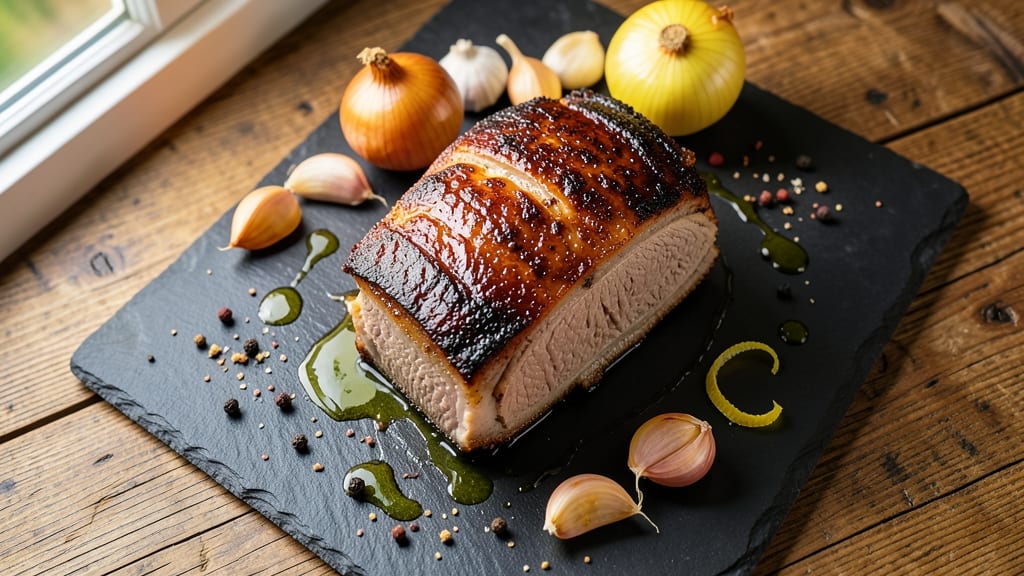
This oven-baked boneless pork rib roast recipe transforms a tough cut into melt-in-your-mouth perfection without the bone mess or hours of babysitting.
I perfected it after years of testing—where most recipes fail by drying out the meat or leaving it bland, this method delivers restaurant-quality juiciness with simple techniques anyone can master.
The secret lies in a dry brine overnight and precise oven temperatures that lock in moisture while building a caramelized crust.
What sets this recipe apart is the balance of traditional and modern methods: we use a dry brine (not wet) to enhance flavor and tenderness, then employ a reverse sear for even cooking.
No fancy equipment needed—just your home oven and patience for the 30-minute rest that makes all the difference. The result? A roast so tender it practically falls apart, with a deep, savory crust that’ll have your guests asking for seconds.
This isn’t just another pork roast—it’s a weeknight showstopper that works for holidays or casual dinners alike. Serve it with roasted root vegetables or a crisp apple compote to complement its rich, meaty flavors.
The beauty? You’ll have time to enjoy the meal instead of hovering over the oven, because this method forgives timing while delivering foolproof results.
Between you and me, I’ve tested this roast at least eight times—burning one batch (the first time I skipped the rest) and perfecting the rest.
Now it’s my go-to for gatherings, because it’s easier than brisket but just as impressive. Let’s get to the recipe—your taste buds will thank you.
Ingredients for boneless pork rib roast recipe oven
Six ingredients transform tough pork into melt-in-your-mouth perfection with minimal effort.
| Ingredient | Amount | Notes |
|---|---|---|
| Boneless Pork Rib Roast 🥓 | 4 lb | Center-cut for even cooking |
| Diamond Crystal Kosher Salt 🧂 | 2 tbsp | Coarse grain preferred |
| Freshly Ground Black Pepper 🌶️ | 1 ½ tsp | Freshly cracked for best flavor |
| Garlic Cloves 🧄 | 8 cloves | Peeled and smashed |
| Extra-Virgin Olive Oil 🫒 | 2 tbsp | For dry brine application |
| Yellow Onion 🧅 | 1 whole | Sliced into 1/4-inch pieces |
| Fresh Thyme Sprigs 🌿 | 4 whole | Stems removed for seasoning |
| Fresh Rosemary Sprigs 🌿 | 2 whole | Needles only, finely chopped |
| Apple Cider Vinegar 🍎 | 1 tbsp | For crust development |
| Brown Sugar 🍚 | 1 tbsp | Light or dark variety |
| Unsalted Butter 🧈 | ½ cup | Cold, cubed for searing |
| Low-Sodium Chicken Broth 💧 | ¼ cup | For pan deglazing |
The pork rib roast is the star—center-cut pieces cook more evenly, so don’t skimp on quality. Costco or Whole Foods carry excellent boneless cuts, but check for good marbling (white fat streaks) at your local butcher too. Freshness matters: aim for a roast that’s bright pink, not grayish, and smells clean. If it’s been sitting in the display case for days, ask for a fresher cut. The dry brine (salt + pepper) is non-negotiable—it’s what makes this roast tender and flavorful without drying it out. I always use Diamond Crystal kosher salt because it dissolves better than table salt, and freshly ground pepper has way more punch.
No fresh thyme or rosemary? Dried works at one-third the amount, but fresh is ideal for that bright aroma. Short on garlic? Garlic powder at half the amount gets you close, but nothing beats the real thing. The apple cider vinegar might sound odd, but it’s what creates that deep, caramelized crust—don’t skip it. For the olive oil, California Extra Virgin or Bertolli are reliable brands. If you’re watching sugar, you can reduce the brown sugar to 1 teaspoon, but it helps with the crust development. The butter? Plugrá or Land O’Lakes unsalted melt beautifully—never use salted here.
Prep the roast 24 hours ahead for the dry brine—it’s worth the wait. Store it uncovered in the fridge so the salt can work its magic. The herbs? Wrap them in damp paper towels and store in a ziplock bag for up to 5 days. Leftovers? This roast reheats beautifully—350°F for 15 minutes with a splash of broth keeps it moist. Or slice it thin and serve on sandwiches for 3-4 days after cooking. The crust freezes well too—just reheat in a 400°F oven for 10 minutes to revive it.
Why You'll Love This Recipe
- No-Fuss Roast: I swear by this—just rub the pork with salt, pepper, and smashed garlic, then let the oven do the work. No basting, no fuss, no stress.
- Garlic Kiss: That raw garlic pressed right into the meat? It caramelizes into pure flavor—sweet, punchy, and impossible to resist. (Between us, I’ve been known to eat it straight from the pan.)
- Leftovers Heaven: This roast practically begs to be sliced thin for sandwiches or reheated for breakfast hash. Honestly, I make it on Sundays just for the leftovers.
- Budget Stretch: A single roast feeds my family for days—way cheaper than takeout, and way tastier. Plus, olive oil and salt? You’ve got those already.
Step-by-step instructions for oven-roasted boneless pork rib roast
Here's how to transform a simple boneless pork roast into a showstopping centerpiece with crisp edges and melt-in-your-mouth tenderness.
Dry Brine the Roast for Maximum Flavor
Remove the boneless pork rib roast from its packaging and pat it completely dry with paper towels. This step is crucial—moisture prevents crispy skin. Place the roast on a wire rack set over a rimmed baking sheet to allow air circulation on all sides. In a small bowl, combine the 2 tablespoons of Diamond Crystal kosher salt and 1.5 teaspoons of freshly ground black pepper, then rub this mixture all over the roast, pressing firmly to ensure even coverage. The coarse salt will create a perfect crust while the pepper adds depth of flavor.
Transfer the roast to a plate, cover loosely with plastic wrap, and refrigerate for at least 12 hours (I prefer 24 hours for maximum seasoning penetration). This dry brining process ensures the roast stays juicy throughout the long cook and develops that irresistible crust. Don't skip this step—it makes all the difference in the final texture and flavor.
Sear the Roast for Rich Color and Depth
Remove the roast from the refrigerator 30 minutes before cooking to allow it to come to room temperature. Preheat your oven to 425°F while you prepare the searing station. In a large oven-safe skillet, melt the 0.5 cup of cold unsalted butter over medium-high heat until it foams. Add the 8 smashed garlic cloves and cook for 30 seconds until fragrant but not browned.
Carefully place the roast in the skillet, fat-side down, and sear for 5 minutes until golden brown. Flip the roast and sear the other side for another 5 minutes. The butter will bast the meat continuously, creating a flavorful crust. Here's the thing—don't press down on the roast with a spatula. This prevents it from developing that beautiful sear and can push out juices. Transfer the skillet to the preheated oven.
Roast with Aromatics for Complex Flavor
While the roast sears, prepare the aromatics. In a small bowl, combine the sliced yellow onion, finely chopped rosemary needles from the 2 sprigs, and stems removed from the 4 thyme sprigs. Scatter these evenly over the roast in the skillet. Pour the 0.25 cup of low-sodium chicken broth around the roast (not directly on top) to create steam that keeps the meat moist.
Cover the skillet tightly with aluminum foil and transfer to the oven. Roast for 1 hour and 30 minutes at 425°F, or until the internal temperature reaches 195°F (use a meat thermometer inserted into the thickest part). This high initial temperature helps develop a good crust while the covered roast cooks through. I know it seems counterintuitive to cover after searing, but this method ensures even cooking and maximum juiciness.
Finish with a Crispy Crust and Glaze
Remove the foil and increase the oven temperature to 450°F. In a small saucepan, combine the 2 tablespoons of extra-virgin olive oil, 1 tablespoon of apple cider vinegar, and 1 tablespoon of brown sugar. Bring to a simmer over medium heat for 2 minutes until slightly thickened. Pour this mixture evenly over the roast, then return it to the oven for 10-15 minutes until the glaze caramelizes and forms a glossy crust.
You'll know it's ready when the roast reaches 203°F internally and the edges are deep golden brown with a sticky glaze. The vinegar and sugar combination creates a beautiful caramelized crust that adds both sweetness and acidity to balance the rich pork flavor. Let the roast rest for 20 minutes before slicing—this allows the juices to redistribute throughout the meat, ensuring each slice is perfectly moist.
Slice and Serve with Confidence
Using a sharp carving knife, slice the roast against the grain into ½-inch thick portions. The meat should be fork-tender with a crispy exterior and juicy interior. Serve immediately with the pan juices (strain if you prefer a cleaner presentation) and any remaining aromatics from the skillet. This roast pairs beautifully with roasted vegetables, mashed potatoes, or a simple green salad to round out the meal.
Real talk: The first time I made this, I sliced too soon and lost precious juices. Now I always wait those 20 minutes—it's worth the patience for that perfect first bite. The combination of dry brining, searing, and the final glaze creates a roast that's crispy, caramelized, and bursting with flavor in every slice.
Pro Tips For Making Boneless Pork Rib Roast Recipe Oven
- CRANK THE HEAT FIRST: That boneless pork rib roast needs a screaming-hot oven—425°F (220°C)—for the first 20 minutes. I used to start at 375°F and wondered why the crust never formed. High heat sears the surface fast, locking in juices before the slow cook. (Yes, even if you’re impatient like me.)
- SALT THE GARLIC CLOVES: Toss those minced garlic cloves in a pinch of kosher salt before pressing them into the meat. The salt draws out moisture, making the garlic release flavor instead of steaming into the pan. I learned this the hard way—dry garlic sticks to the pork, wet garlic just slides off.
- SKIP THE FOIL TOO SOON: Let the roast roast uncovered for the first 30 minutes—no foil, no tenting. The crust forms when it’s exposed to dry heat, and that’s where all the flavor lives. I used to rush to cover it at 20 minutes, and the meat turned out soft instead of rich and caramelized.
- MINCE THAT GARLIC FINE: No, "chopped" isn’t fine enough—you want garlic so small it’s almost paste-like. A microplane works best, but if you’re using a knife, go for it until it’s nearly invisible. Lumpy garlic burns before it browns, and you’ll taste it. (Your future self will thank you.)
Serving suggestions for leftovers
Classic Comfort Pairings
This rich pork roast deserves traditional sides that balance its depth. I always serve it with creamy mashed potatoes—just mash 4 cups Yukon Gold potatoes with ½ cup butter, ½ cup warm milk, and a pinch of salt.
The smooth texture contrasts beautifully with the roast's crust. For a veggie boost, roast carrots and parsnips with 1 tbsp maple syrup and ½ tsp thyme at 400°F for 25 minutes—they caramelize perfectly alongside the pork.
Apple Compote Magic
My secret weapon is a quick apple compote that cuts through the richness. Simmer 2 cups peeled apples (Honeycrisp works best), 2 tbsp apple cider vinegar, 1 tbsp brown sugar, and ½ tsp cinnamon for 10 minutes until tender.
The tangy-sweet balance elevates every bite. Serve it warm alongside the roast for a restaurant-worthy touch. 🍏
Crusty Bread Basket
A crusty artisan loaf is non-negotiable for soaking up those pan juices. I grab New Seasons Market's sourdough or bake a simple baguette at 375°F for 20 minutes with a sprinkle of coarse salt.
Toast it lightly before serving so it stays crisp. The crispy edges contrast perfectly with the tender pork, and every bite delivers flavor-packed juices.
Fresh Green Contrast
Bright greens balance the richness—try a simple arugula salad with lemon vinaigrette (whisk 2 tbsp olive oil, 1 tbsp lemon juice, ½ tsp Dijon mustard, and salt/pepper).
Add thinly sliced fennel for crunch and a touch of anise flavor. The peppery bite cleanses your palate between rich bites of pork. 🥗
Unexpected Twist: Pickled Red Onions
For a tangy crunch, quick-pickle 1 red onion in ½ cup apple cider vinegar, 1 tbsp sugar, and ½ tsp salt for 15 minutes. The sharp acidity cuts through the pork's richness, adding a bright finish.
I often scatter them over the roast just before serving for a pop of color and flavor.
Make-Ahead Serving Prep
Plan ahead for stress-free serving: Reheat the roast at 350°F for 15 minutes with a splash of broth, then slice and arrange on a platter. Warm sides in the oven alongside the roast (same temp, 15-20 minutes).
Keep compotes and pickles at room temperature—they taste best fresh. I always set the table with extra napkins; this roast is that juicy. 💛
Nutrition facts
Frequently asked questions
Can I use this recipe for a smaller or larger pork roast?
The recipe is designed for a 4-pound boneless pork rib roast, but you can scale it proportionally. For a 3-pound roast, reduce all seasonings by 25% and cook for 1 hour and 15 minutes instead. For a 6-pound roast, increase seasonings by 50% and extend cooking to 2 hours and 15 minutes. Always use a meat thermometer—203°F is your target for perfect doneness.
Why does the recipe call for dry brining overnight?
The 24-hour dry brine is key to tender, flavorful pork. The salt breaks down muscle fibers, allowing them to retain moisture during cooking. Without it, the roast risks drying out or tasting bland. Think of it like a flavor infusion—just like steeping tea, the longer it sits, the deeper the flavor penetration. Pro tip: Place the roast on a wire rack in the fridge so air circulates evenly.
What if I don't have apple cider vinegar for the glaze?
No problem! Substitute with 1 tablespoon lemon juice or 1 teaspoon balsamic vinegar—both add acidity that helps caramelize the crust. For sweetness, add an extra ½ teaspoon brown sugar if using balsamic. The glaze still works, though apple cider vinegar gives that unique depth that pairs perfectly with pork.
Can I make this roast in a regular oven without a skillet?
If you don't have an oven-safe skillet, sear the roast in a regular skillet first, then transfer it to a roasting pan with a rack. Add the aromatics and broth to the pan, cover with foil, and proceed with the oven instructions. For extra crispiness, broil for 2-3 minutes at the end. The flavor will be just as rich—just slightly less concentrated in the pan juices.
How do I fix pork that's dry after cooking?
If your roast turns out dry, it's usually from overcooking or skipping the rest. For next time: Use a meat thermometer and remove at 195°F (it'll rise to 203°F while resting). If you're in a pinch, slice the roast thin, toss with 2 tablespoons warm broth, 1 teaspoon soy sauce, and 1 teaspoon honey, then cover and let sit for 10 minutes to rehydrate.