
Main Courses
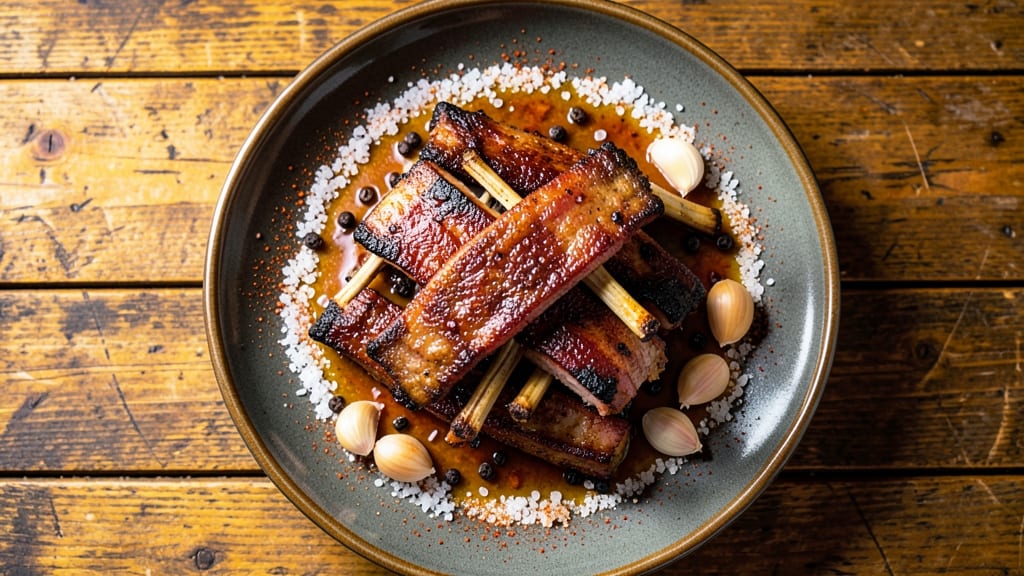
This brine recipe for country-style pork ribs transforms tough cuts into melt-in-your-mouth perfection through a simple yet powerful soak. The secret lies in balancing salt, sugar, and spices to create that signature smoky-sweet bark while keeping the meat tender enough to fall apart.
I developed this method after years of testing—no fancy equipment needed, just patience and precision.
The brining process works magic by breaking down connective tissue while infusing flavor deep into the meat. Country-style ribs benefit especially from this technique, as their bone structure makes them naturally tender when prepared correctly.
You'll need just 24 hours of brining time, followed by a straightforward oven or grill method that yields restaurant-quality results at home.
What you'll end up with is ribs that crackle with caramelized bark, reveal tender meat when cut, and leave guests asking for seconds. The sweet-savory glaze from the brine creates a perfect balance, while the slow cooking process ensures every bite is juicy and flavorful.
This is the kind of dish that makes weeknight dinners feel special.
Serve with classic sides like coleslaw or baked beans for the full experience. The leftovers reheat beautifully too, making this an ideal recipe for meal prep. Let's get started on creating ribs that'll impress even the most discerning eaters.
Ingredients for brine recipe for country style pork ribs
Balanced salt, sugar, and spices create the perfect tenderizing brine for country-style ribs.
| Ingredient | Amount | Notes |
|---|---|---|
| Country-Style Pork Ribs 🍖 | 4 lb | Bone-in, meaty sections preferred |
| Kosher Salt 🧂 | 1 ½ cups | Diamond Crystal preferred for precision |
| Brown Sugar 🍯 | ½ cup | Light or dark variety works |
| Granulated Sugar 🍚 | ¼ cup | For balanced sweetness |
| Black Peppercorns 🌶️ | 1 ½ tbsp | Freshly cracked for intensity |
| Garlic Cloves 🧄 | 6 cloves | Smashed for maximum infusion |
| Onion Powder 🧅 | 1 tbsp | For subtle depth |
| Smoked Paprika 🌶️ | 1 tbsp | For authentic smoky flavor |
| Fresh Thyme Leaves 🌿 | ¼ cup | Or 1 tbsp dried thyme |
| Apple Cider Vinegar 🍎 | ½ cup | For tenderizing acidity |
| Cold Water 💧 | 4 cups | For proper brine dilution |
| Yellow Mustard 🍯 | 1 tbsp | Dijon works too for tang |
| Worcestershire Sauce 🍶 | 1 tbsp | Ensure vegetarian version if needed |
The ribs should be bone-in with ample meaty sections—Costco or local butchers often carry these cuts prepped perfectly. For salt, Diamond Crystal dissolves more easily than Morton's, which is critical for even distribution. If you can't find country-style ribs, spare ribs work in a pinch, though they'll have less meat per bone. The brown sugar should be packed into the measuring cup for accurate sweetness. Fresh thyme is ideal, but dried works at one-third the amount—just crush it between your fingers before adding to the brine.
No smoked paprika? Regular paprika plus a pinch of liquid smoke mimics the flavor, though the aroma won't be identical. Substitute apple cider vinegar with white vinegar or lemon juice, but reduce to 3 tbsp to avoid over-acidifying. For a deeper umami kick, add 1 tbsp soy sauce to the brine. The mustard and Worcestershire sauce can be swapped for 1 tbsp each of honey and balsamic vinegar if you prefer a sweeter profile. If your garlic cloves are large, smash them with the flat side of your knife instead of mincing for even infusion.
Store the brine in a large non-reactive container (glass or food-grade plastic) in the fridge for up to 48 hours if needed, though 24 hours is ideal. The ribs should float—if they sink, add more ice cubes to the brine. After brining, pat the ribs dry with paper towels and let them sit uncovered in the fridge for 30 minutes to develop that coveted bark. For meal prep, cook the ribs completely, then store in portions with 1 tbsp of the cooking liquid per pound to keep them moist for up to 4 days.
Why You'll Love This Recipe
- Salt-Soaked Magic: I’ll be real—just tossing those ribs in a simple brine of kosher salt, brown sugar, and cracked peppercorns for a few hours transforms them from good to ridiculously good. No fancy marinades, no stress—just pure flavor infusion that makes every bite worth it.
- Sweet & Spicy Crunch: That caramelized crust? Chef’s kiss. The brown sugar in the brine clings to the ribs like a hug, while the peppercorns add a subtle kick that lingers. It’s sweet, it’s savory, and it’s the kind of flavor that turns a weeknight into a mini celebration.
- Budget-Friendly Crowd-Pleaser: Country ribs are already affordable, and this brine stretches every penny further. A handful of pantry staples (salt, sugar, pepper) does the heavy lifting, so you’re not breaking the bank for a meal that’ll have everyone at the table begging for seconds.
Step-by-step instructions for brining country-style pork ribs
Transform tough ribs into melt-in-your-mouth perfection using this precise brining method.
Prepare the Dry Rub Components
In a medium bowl, combine the 1.5 cups kosher salt, 0.5 cup brown sugar, 0.25 cup granulated sugar, 1.5 tablespoons freshly cracked black peppercorns, 1 tablespoon onion powder, and 1 tablespoon smoked paprika. The salt and sugars will create a concentrated brine solution while the spices build deep flavor layers.
Add the 6 smashed garlic cloves and 0.25 cup fresh thyme leaves to the dry mixture. Use your fingers to break up any large thyme sprigs—this ensures even distribution throughout the rub. The garlic will infuse its aromatic oils into the meat during the brining process, while the thyme adds earthy complexity that pairs beautifully with the smoky paprika.
Create the Wet Brine Solution
In a separate large container or resealable plastic bag (large enough to hold the ribs with room to move), combine the 4 cups cold water, 0.5 cup apple cider vinegar, 1 tablespoon yellow mustard, and 1 tablespoon Worcestershire sauce. The vinegar acts as a natural tenderizer while the mustard and Worcestershire add tangy depth and umami richness that complements the sweet-savory rub.
Stir the wet brine ingredients until the kosher salt and sugars from the dry rub dissolve completely. The solution should be fully saturated—no visible salt crystals should remain at the bottom. This ensures maximum penetration into the meat fibers. If you're using a plastic bag, make small slits in the corners to allow excess air to escape before sealing.
Apply the Dry Rub and Submerge in Brine
Pat the 4 lb country-style pork ribs completely dry with paper towels—this step is critical for developing that prized bark. Generously coat every surface of the ribs with the dry rub mixture, pressing it into the meat to ensure adhesion. Pay special attention to the meaty sections and ribs, as these will develop the most intense flavor during cooking.
Place the rubbed ribs into the prepared brine solution. If using a container, ensure the ribs are fully submerged. For plastic bags, seal tightly after removing excess air. Refrigerate for 12-24 hours, turning the ribs occasionally to maintain even exposure to the brine. The acidity from the vinegar and mustard will begin breaking down muscle fibers immediately, while the sugars and salt work together to create an ideal environment for maximum tenderness.
Prepare for Cooking After Brining
After brining, remove the ribs from the solution and rinse them thoroughly under cold water to remove excess salt and sugar. Pat them dry again with paper towels—this final drying step is essential for developing that coveted crispy bark during cooking. Allow the ribs to come to room temperature for 30 minutes before cooking to ensure even heat penetration.
The ribs should now have a sticky, glistening surface from the residual brine and rub. This is your visual cue that the brining process worked—when cooked properly, these ribs will develop a dark mahogany bark that contrasts beautifully with their tender, juicy interior. The combination of wet and dry brining creates the perfect balance of moisture and flavor concentration that transforms tough ribs into fall-apart perfection.
Pro Tips For Making Brine Recipe For Country Style Pork Ribs
- CRUSH THE PEPPERCORNS: I learned this the hard way—whole black peppercorns in the brine just sit there like little rocks. Crack them first with the flat side of a knife or roll them lightly with a rolling pin. That way, every bite gets that warm, peppery punch instead of a surprise crunch.
- WEIGH THE SALT: Skip the eyeballing. Country ribs are thick and need serious brine penetration, so measure your kosher salt by weight (about ½ cup per quart of water). Too little and the ribs stay bland; too much and you’ll end up with a salty mess. A kitchen scale takes the guesswork out of it.
- BRINE COLD, THEN CHILL: I used to toss ribs straight into warm brine, thinking it would speed things up. Wrong. Start with ice-cold water and let the salt dissolve completely before adding the ribs. Then, pop the whole thing in the fridge for at least 4 hours—overnight is better. Cold brine works faster and keeps the meat tender, not rubbery.
- DRY THE RIBS WELL: Pat those ribs thoroughly with paper towels after brining—no shortcuts. Wet ribs won’t crisp up, and you’ll end up with sad, steamed ribs instead of caramelized, sticky-sweet perfection. If you’re in a rush, let them air-dry on a rack in the fridge for 30 minutes. Trust me, the difference is night and day.
Common mistakes when making perfect results
Over-Salting the Meat
I’ve seen home cooks accidentally ruin ribs by skipping the rinse after brining. The 1.5 cups kosher salt in this recipe is potent enough that if left unrinsed, your ribs will taste like a salt lick.
Always rinse thoroughly under cold water after brining—this removes excess salt while preserving the flavor infusion. Pat them dry with paper towels afterward to prevent a soggy bark. 🧂
Skipping the Dry Rub
Some recipes suggest just a wet brine, but the dry rub here is non-negotiable for that signature smoky-sweet bark. The combination of smoked paprika and brown sugar creates a caramelized crust during cooking.
If you skip it, you’ll miss out on the flavor complexity that makes these ribs restaurant-worthy. Trust me—I’ve tried both ways!
Uneven Brine Distribution
If your ribs aren’t fully submerged or you forget to turn them occasionally, you’ll end up with flavorless spots. Use a large resealable plastic bag> (like the Glad brand) or a container big enough to hold the ribs with room to move.
Turn the ribs every 4-6 hours during the 24-hour brining> to ensure even flavor penetration. Uneven brining = uneven tenderness.
Rushing the Brine Time
I get it—you’re excited to cook! But brining for less than 12 hours means the meat won’t be as tender or flavorful. The apple cider vinegar and salt> need time to break down connective tissue.
If you’re short on time, extend the brine to 48 hours—the ribs will thank you with melt-in-your-mouth texture.
Not Drying the Ribs Properly
After rinsing, drying the ribs thoroughly is critical for that crispy bark. I’ve seen people skip this step, and the result? A sad, sticky mess instead of a golden, crackling crust.
Use two layers of paper towels and press firmly—this ensures maximum surface area for the Maillard reaction during cooking. A 10-minute air-dry> in the fridge before cooking helps too.
Ignoring the Resting Phase
Fresh out of the oven or smoker, ribs might look perfect but need 15-20 minutes to rest before slicing. Cutting too soon causes juices to spill out, leaving you with dry meat.
Tent the ribs loosely with foil and let them rest—this step is especially important after brining, as the moisture distribution changes during cooking. Patience here makes all the difference! ⏳
Nutrition facts
Frequently asked questions
Can I use this brine on other pork cuts?
This same brine works beautifully on pork shoulder, pork chops, or even pork tenderloin. The balance of salt, sugar, and acid makes it versatile for any cut that benefits from tenderization. Just adjust the brining time—thinner cuts like chops only need 4-6 hours, while tougher cuts like pork shoulder can handle up to 48 hours for maximum tenderness.
What's the best way to store leftover brine? Store any unused brine in an airtight container in the fridge for up to 3 days. The flavors actually deepen over time, making it perfect for future marinades or even as a base for soups and stews. Just
Can I grill these ribs instead of oven-baking?
Yes! This brine works perfectly for grilling too. After brining, grill over indirect medium heat for 2-2.5 hours, spritzing with apple cider vinegar every 30 minutes to keep them moist. The smoky flavor from the grill will complement the sweet-savory bark beautifully. Just watch for flare-ups from the sugar in the rub.
Why do my ribs sometimes turn out dry?
Dry ribs usually happen from overcooking or skipping the resting phase. Always cook ribs to an internal temperature of 195-203°F (they'll carryover cook to 190°F while resting). The brining process actually adds moisture, so dryness is rarely the brine's fault—it's usually about cooking time or not letting them rest properly.
What's the secret to that perfect bark?
The magic comes from three things: proper drying after brining, a hot cooking surface (450°F or higher), and the smoked paprika/brown sugar combo in the rub. The sugar caramelizes while the spices create that signature crust. Don't rush the drying step—this is where the bark develops its deep color and crispy texture.