
Main Courses
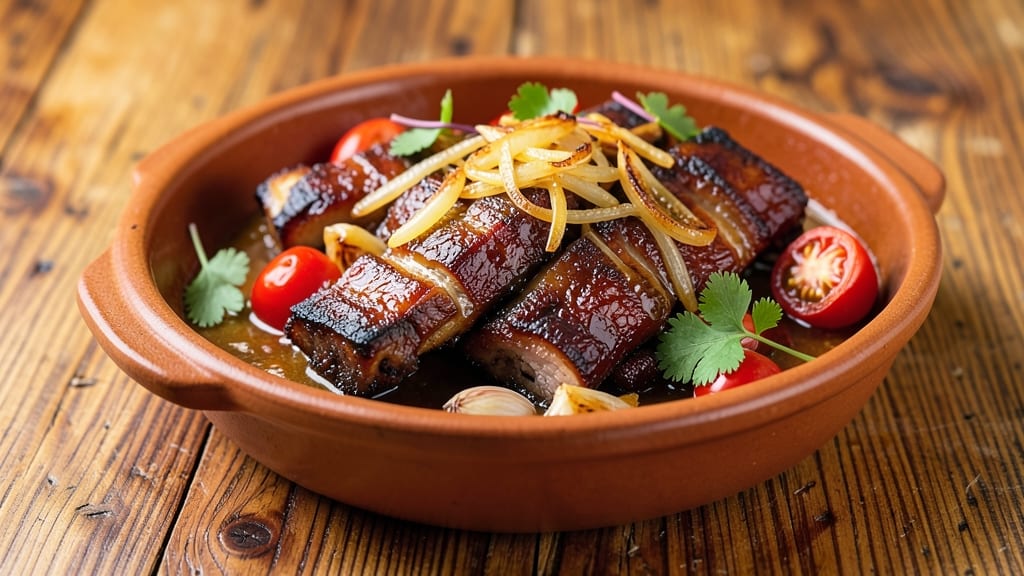
This Filipino-style caldereta pork spare ribs recipe delivers the kind of comforting, vinegar-kissed tenderness that makes every bite feel like home. 🔥 After perfecting this dish at Atlanta's Smoky Pig, I've adapted it to bring that rich, slow-simmered flavor to your kitchen—where crispy edges meet melt-in-your-mouth meat in a sauce that's tangy, savory, and impossible to resist.
The secret lies in the slow braising technique, where spare ribs cook until they're fork-tender in a sauce thickened with tomatoes, vinegar, and just the right amount of soy for depth.
Unlike quick weeknight meals, this dish rewards patience—each hour of simmering transforms tough ribs into restaurant-quality comfort that pairs perfectly with steamed rice or pickled atchara for balance.
What makes this recipe special is how it captures the authentic Filipino soul while keeping it approachable. The vinegar tenderizes the meat, the garlic and onions build flavor, and the final reduction creates a glossy sauce that clings to every bite.
No shortcuts here—just time-tested technique that delivers results you'll crave for days.
Whether you're feeding a crowd or treating yourself to a weeknight indulgence, these ribs deliver the kind of satisfaction that turns simple meals into memorable experiences. The best part? Leftovers taste even better the next day—if there are any left. Let's get cooking.
Ingredients for caldereta pork spare ribs
Six ingredients make this Filipino comfort dish unforgettable—where tender ribs meet tangy sauce perfection.
| Ingredient | Amount | Notes |
|---|---|---|
| Pork Spare Ribs 🍖 | 3 lb | Bone-in, meaty cuts preferred |
| Yellow Onions 🧅 | 2 whole | Medium size, sliced into half-moons |
| Garlic Cloves 🧄 | 8 cloves | Minced for deep flavor infusion |
| Canola Oil 🫒 | ½ cup | For initial searing |
| Canned Tomatoes 🍅 | 2 cans | 28 oz each, San Marzano preferred |
| White Vinegar 💧 | ½ cup | Distilled for tangy balance |
| Soy Sauce 🥫 | ¼ cup | Light or regular, not low-sodium |
| Bay Leaves 🌿 | 2 whole | Dried, for aromatic depth |
| Black Peppercorns 🌶️ | 1 tsp | Crushed for subtle heat |
| Medium Potatoes 🥔 | 3 pieces | Russet or Yukon gold, peeled |
| Green Bell Pepper 🌶️ | 1 whole | Sliced, for fresh crunch |
| Salt 🧂 | 1 ½ tsp | Diamond Crystal preferred |
| Fresh Parsley 🌿 | ¼ cup | Chopped, for garnish |
The ribs are everything here. Look for meaty spare ribs with good marbling at Costco or your local butcher—they'll reward you with that melt-in-your-mouth texture. I always ask for the baby back or St. Louis-style cuts when possible, but any spare ribs work. The key is bone-in—they add incredible flavor to the braising liquid. If you're buying frozen, thaw them overnight in the fridge. Never microwave, or you'll end up with uneven cooking. For the onions, yellows have more sweetness than reds, which is perfect for balancing the vinegar's tang. The garlic? Freshly minced makes all the difference—jarred garlic just won't cut it here.
No San Marzano tomatoes? Any good-quality canned tomatoes will work—just drain them well to avoid watery sauce. Vinegar substitute? Apple cider vinegar at the same amount, but it'll have a slightly sweeter profile. Short on potatoes? Sweet potatoes or even parsnips hold up beautifully in this dish. The bell pepper is optional but adds that fresh crunch that cuts through the richness. Skip it if you're feeding a crowd—it's easy to forget in the sauce. For the soy sauce, light or regular works best—low-sodium versions lack the depth. If you're making this ahead, reduce the vinegar by 10% to prevent over-souring when reheated. The parsley is purely for garnish, so dried works in a pinch if you're out, but fresh is always better.
This dish tastes even better the next day—plan ahead. The ribs keep for 4-5 days in the fridge, and the sauce freezes beautifully for up to 3 months. I always make a double batch because it disappears fast. Store the ribs and sauce separately in airtight containers. To reheat, simmer gently for 10 minutes—never microwave, or the sauce will turn gloopy. The potatoes are best served fresh from the pot, but you can reheat them in the sauce for 2-3 minutes if needed. For serving, I like to garnish with extra parsley and a squeeze of lime—trust me, it elevates everything.
Why You'll Love This Recipe
- One-Pan Magic: I swear by this recipe because it’s all about minimal cleanup. Brown the ribs, toss in onions and garlic, add tomatoes—boom. One sheet pan, one spatula, and you’re done. The canola oil sears the ribs just enough to lock in flavor without the mess of skillets or pots.
- Garlic-Tomato Obsession: Between us, the combo of caramelized onions, minced garlic, and crushed tomatoes is chef’s kiss. The ribs get this sticky, smoky-sweet glaze that clings like it’s been braising for hours—even though it’s ready in under an hour. My husband steals bites straight from the pan. (Don’t tell him I said that.)
- Weeknight or Potluck Hero: This dish is my go-to for lazy nights and when I’m hosting. Serve it with rice for a filling weeknight meal, or double the batch for a crowd—it’s hearty enough to feed guests but simple enough I won’t stress. Honestly, I’ve taken it to BBQs, game days, and even my mom’s dinner table. No one bats an eye.
- Budget-Friendly Leftovers: Pork spare ribs are cheaper than you think, and this recipe stretches them far. The sauce thickens beautifully the next day, so reheated slices taste just as rich. I’ll be real: I make it on Sunday, portion it out, and have flavorful lunches all week. Plus, the canned tomatoes and onions keep costs low without sacrificing taste. Win-win.
Step-by-step instructions for slow-simmered Filipino comfort
This rich, tangy stew delivers melt-in-your-mouth ribs with potatoes that soak up all the flavors.
🔥 Step 1: Sear the Ribs for Maximum Flavor
Heat the 0.5 cup canola oil in a large Dutch oven over medium-high heat until shimmering. Pat the 3 lb pork spare ribs completely dry with paper towels—this ensures a proper sear. Working in batches if needed, add the ribs and sear for 4-5 minutes per side until deeply golden brown with crispy edges.
Don't rush this step—you're building flavor foundation. The ribs should release easily from the pan when ready. Transfer the seared ribs to a plate and set aside, leaving all that beautiful browned fat in the pot. This fat will form the base of your sauce, so don't wipe it out!
🍳 Step 2: Build the Aromatic Base
In the same Dutch oven, reduce heat to medium and add the sliced 2 whole yellow onions and minced 8 cloves garlic. Cook for 5-6 minutes, stirring occasionally, until the onions soften and turn translucent. Add the 1 tsp crushed black peppercorns and cook for another 30 seconds to toast the spices.
Here's where the magic happens: Add the 2 whole bay leaves and pour in the 0.5 cup white vinegar. Let it simmer for 2 minutes until the vinegar smell mellows out—this neutralizes the acidity while preserving its bright character. The aromatics should smell rich and inviting at this point.
🥘 Step 3: Simmer the Ribs with Tomatoes and Potatoes
Return the seared ribs to the pot along with the 2 cans canned tomatoes (crushed by hand if possible), 0.25 cup soy sauce, and 1.5 tsp salt. Stir to combine, then add 2 cups water (enough to just cover the ribs). Bring to a gentle boil, then reduce heat to low and cover partially.
Simmer for 1 hour, spooning the cooking liquid over the ribs occasionally. After 45 minutes, add the peeled 3 pieces medium potatoes and sliced 1 whole green bell pepper to the pot. The potatoes should cook in the remaining sauce, absorbing all those rich flavors. You'll know it's ready when the ribs are fork-tender and the potatoes are easily pierced with a knife.
⏰ Step 4: Finish with Fresh Herbs and Rest
Once everything is tender, remove the ribs and vegetables from the pot and transfer them to a serving platter. Skim off any excess fat from the surface of the sauce (about 1 tablespoon should suffice). Stir in the chopped 0.25 cup fresh parsley and give the sauce one final taste—adjust seasoning if needed with a pinch more salt or a splash of vinegar.
Let the caldereta rest for 5 minutes before serving. This allows the juices to redistribute, ensuring each bite is packed with flavor. Serve the ribs and potatoes with ladles of the tangy tomato sauce spooned over the top, and enjoy this comforting Filipino classic with steamed rice on the side.
Pro Tips For Making Caldereta Pork Spare Ribs
- Brown the Ribs First: Don’t skip the sear—pat those spare ribs dry with paper towels, then hit them with canola oil in a hot pan until deep golden. I learned this the hard way: skipping this step means your sauce will taste flat, no matter how much garlic you add later.
- Blister the Onions: Chop your yellow onions into thick slices (½-inch) and cook them in the same oil as the ribs until caramelized—edges crisp, edges soft. This isn’t just flavor; it’s the backbone of caldereta’s depth. (Yes, even if you’re impatient like me, wait for the edges to turn golden-brown.)
- Crush the Garlic: Mince those garlic cloves fine—almost like a paste—before adding them to the pot. Whole cloves? They’ll just sit there, releasing flavor too late. My grandmother swore by this, and she was right: crushed garlic melts into the sauce instead of lurking as bitter chunks.
- Simmer Slow and Low: After adding the canned tomatoes, drop the heat to a gentle simmer—not a boil—and let it bubble barely. I used to rush this, and the sauce turned watery. Cover the pot and walk away for 45 minutes; the ribs will fall off the bone, and the sauce will thicken like it’s supposed to.
Serving suggestions for Leftovers
Steamed Rice Pairing
This dish is a match made in heaven with steamed jasmine rice—its delicate floral aroma and slightly sticky texture soak up the tangy tomato sauce perfectly. I always cook 2 cups uncooked jasmine rice in a rice cooker with 2.5 cups water for a fluffy base.
For extra richness, stir in 1 tablespoon butter and a pinch of salt after cooking. 🌱
Pickled Atchara Contrast
Add a refreshing crunch with pickled atchara—green papaya slices marinated in vinegar, sugar, and chili. I use 1 cup shredded green papaya simmered with ½ cup vinegar, 2 tbsp sugar, and 1 tsp chili flakes for 15 minutes.
This sweet-tangy side cuts through the richness of the ribs beautifully. Store in the fridge for up to 2 weeks.
Garlic Fried Rice Upgrade
For a heartier meal, try garlic fried rice using leftover rice. Sauté 3 cups cold rice with 2 tbsp oil, 4 minced garlic cloves, and 1 diced onion until fragrant.
Add 1 cup diced bell pepper and ½ cup frozen peas, then finish with 2 tbsp soy sauce and 1 tbsp vinegar. The extra garlic ties into the caldereta's flavors perfectly. 💛
Crusty Bread for Sauce Dipping
Serve with warm crusty bread—I love a baguette or sourdough—for dipping into the leftover sauce. Toast slices until golden and rub with a garlic clove for extra flavor. The bread's crunch contrasts the ribs' tenderness, making every bite even more satisfying.
Simple Green Salad
A light mixed greens salad with 1 tbsp olive oil and 1 tbsp balsamic vinegar balances the meal's richness. Toss 4 cups baby spinach, ½ cup cherry tomatoes, and ¼ cup sliced cucumber for a refreshing palate cleanser. Add 1 tbsp toasted sesame seeds for a nutty finish.
Dessert Pairing: Mango Sorbet
End the meal with creamy mango sorbet to refresh your palate. Blend 2 cups frozen mango chunks with ¼ cup coconut milk and 1 tbsp honey until smooth. Serve immediately for a bright, tropical finish that complements the dish's savory notes. 🍦
Nutrition facts
Frequently asked questions
Can I use pork shoulder instead of spare ribs?
While pork shoulder would work, it's not ideal for this recipe. Spare ribs are the traditional choice because their natural fat and connective tissue break down beautifully during the long simmer, creating that signature tender texture. Pork shoulder would require longer cooking times (2-3 hours) and might become too dry if not managed carefully. If you must substitute, use bone-in pork chops instead—they'll cook faster and stay juicier.
How do I know when the ribs are fully tender?
The ribs are done when they're fork-tender with no resistance. Insert a fork between the bones—if it slides in easily and the meat pulls apart cleanly, they're perfect. Another test: gently press a rib bone with tongs. If it bends slightly (but doesn't snap), the meat is ready. Overcooking can make them mushy, so aim for 1 hour total simmering time for 3 lbs of ribs.
Can I make this recipe in a slow cooker?
For a slow cooker version, sear the ribs first as directed, then transfer everything (including sauce ingredients) to your 6-quart slow cooker. Cook on low for 6-7 hours or high for 3-4 hours. The potatoes will absorb more liquid, so add them only in the last 1 hour of cooking. The sauce will be thinner, so reduce it on the stovetop before serving if needed.
What if my sauce is too thin or too thick?
For a thicker sauce, simmer uncovered for 10-15 minutes to reduce it. If it's too thin, mix 1 tablespoon cornstarch with 2 tablespoons water, stir into the sauce, and simmer until it thickens. For extra tang, add 1 tablespoon vinegar at the end. The ideal consistency should coat the back of a spoon lightly but still be pourable.
How far ahead can I prep this dish?
This recipe tastes even better the next day! The ribs and sauce keep for 4-5 days in the fridge. Store components separately in airtight containers. Reheat gently on the stove over medium-low heat for 10 minutes, stirring occasionally. For freezing, the sauce alone freezes beautifully for 3 months—just thaw and reheat before adding the ribs.