
Main Courses
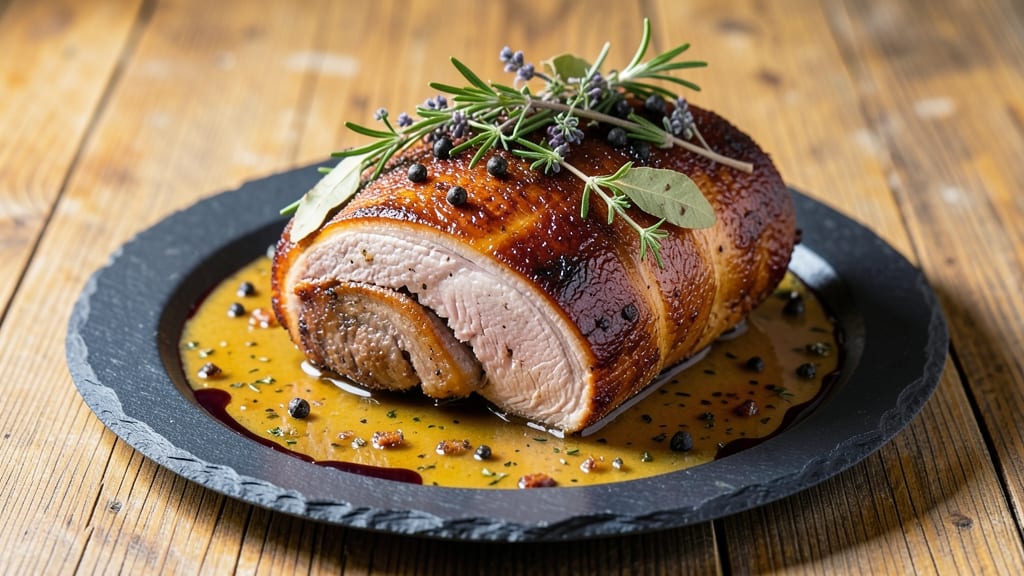
This Campbell’s pork roast recipe transforms a simple cut into a showstopper with rich, herb-infused gravy that clings to every bite. 🔥 Growing up in Georgia, I learned pork roasts are about more than just meat—they’re about building layers of flavor through slow cooking and aromatic herbs.
The secret lies in a balanced blend of rosemary, thyme, and bay leaf that infuses the meat while creating a gravy so velvety it feels like a hug in sauce form.
The recipe starts with a dry-brine overnight, ensuring juicy, tender pork that practically falls apart. A high-heat sear locks in moisture while developing a caramelized crust, then slow roasting at 325°F lets the flavors meld into perfection.
No fancy equipment needed—just patience and a few simple techniques that elevate this classic dish from ordinary to extraordinary.
What you’ll end up with is a roast so tender it melts in your mouth, paired with a gravy that’s rich yet balanced, with just the right amount of depth from the Campbell’s-inspired seasoning blend.
The aroma alone will have your kitchen smelling like Sunday dinner, and the first bite delivers that satisfying combination of crispy edges and succulent meat.
Serve with mashed potatoes or buttered noodles to soak up every drop of that herb-infused gravy. The leftovers reheat beautifully too, making this the perfect recipe for feeding a crowd or meal prepping for the week. Let’s get cooking—this is pork roast done right.
Ingredients for campbell's pork roast
Six ingredients transform simple pork into showstopping Sunday dinner magic—herbs, patience, and a little dry-brine secret.
| Ingredient | Amount | Notes |
|---|---|---|
| Pork Shoulder Roast 🍖 | 4 lb | Bone-in for flavor, trimmed of excess fat |
| Kosher Salt 🧂 | 2 tbsp | Diamond Crystal preferred for clarity |
| Fresh Rosemary 🌿 | ½ cup | Chopped, stems removed |
| Fresh Thyme 🌿 | ¼ cup | Leaves only, stems discarded |
| Bay Leaves 🍃 | 4 whole | Standard size, dried |
| Black Peppercorns 🌶️ | 1 tbsp | Freshly cracked preferred |
| All-Purpose Flour 🌾 | ¼ cup | For gravy thickening |
| Unsalted Butter 🧈 | ½ cup | Cold, cut into pieces |
| Yellow Onion 🧅 | 1 whole | Medium, sliced into half-moons |
| Garlic Cloves 🧄 | 4 cloves | Peeled, smashed |
| Beef Broth 💧 | 2 cups | Low-sodium preferred |
| Apple Cider Vinegar 🍎 | 1 tbsp | For brightness |
| Fresh Parsley 🌿 | ⅛ cup | Chopped, for garnish |
The pork shoulder is the star—look for good marbling at Costco or your local butcher (they'll cut it for you). Bone-in stays juicier, and trimming excess fat keeps the gravy clean. If your roast is uneven, trim it to about 1.5-inch thickness for even cooking. Fresh herbs make all the difference here: grab rosemary with needle-like leaves (not curly) and thyme sprigs—both should smell vibrant. I always buy extra because half goes in the roast and half gets tossed in the gravy later. Bay leaves? Standard dried ones work fine, but if you've got fresh, use half the amount.
No fresh rosemary? Dried at one-third the amount gets you close, but the flavor won't be as bright. Short on thyme? Oregano works in a pinch, though it's a different vibe. The beef broth can be swapped for chicken broth plus a splash of soy sauce if you're vegetarian-friendly (though this isn't a vegetarian recipe). For the gravy, all-purpose flour is fine, but if you're gluten-free, swap for cornstarch. The apple cider vinegar adds depth—white vinegar works too—but skip it if you're avoiding acid. And that butter? Full-fat only—none of that low-fat nonsense in gravy.
This roast is all about planning ahead. Dry-brine overnight (just salt the pork and let it sit uncovered in the fridge) for maximum tenderness. The gravy can be made ahead too—store it in the fridge for up to 5 days or freeze for 3 months. I always make extra gravy because it disappears fast. Leftovers reheat beautifully—just add a splash of broth to loosen the gravy. The roast itself keeps 4 days in the fridge, but honestly? It's gone by day 2 in my house. If you're feeding a crowd, double the recipe—this is one of those dishes that tastes even better the next day.
Why You'll Love This Recipe
- Five-Ingredient Magic: Honestly, this roast only needs five things—pork, salt, rosemary, thyme, and bay leaves. That’s it. No fancy prep, no hidden pantry raids, just pure, uncluttered cooking where the star is the meat itself.
- Crispy-Creamy Payoff: Between us, that rosemary and thyme tucked under the skin? Chef’s kiss. The outside gets this golden, crackling crust while the inside stays juicy—like a hug from your favorite slow-cooker, but faster.
- Leftovers That Beg for More: I swear, this roast tastes better the next day. Slice it thin for sandwiches, shred it into tacos, or just reheat with a splash of broth. My kids fight over the scraps—(yes, even on a Tuesday night).
- Budget-Friendly Crowd-Pleaser: Pork shoulder is the workhorse of affordable meats, and this recipe stretches it across three meals without breaking the bank. Plus, the herbs cost pennies, so you’re basically printing money in flavor.
Step-by-step instructions for herb-infused pork roast
This method delivers melt-in-your-mouth pork with a fragrant herb crust and rich gravy every time.
👨🍳 Step 1: Prep the Pork and Herb Rub
Pat the 4 lb pork shoulder roast completely dry with paper towels—this is non-negotiable for crispy skin. I like to work in a well-ventilated area because the pork releases a lot of moisture. Trim any large fat deposits but leave some fat cap for flavor and moisture.
In a small bowl, combine 2 tbsp kosher salt, 0.5 cup chopped fresh rosemary, 0.25 cup fresh thyme leaves, 4 whole bay leaves, and 1 tbsp cracked black peppercorns. Rub this mixture all over the pork, pressing it into the meat so it sticks. Don't forget the cavity—push some of the herb mixture inside for extra flavor. Let the pork sit at room temperature for 30 minutes while you prep everything else.
🔥 Step 2: Sear the Pork for Deep Flavor
Heat a large Dutch oven over medium-high heat with 2 tbsp of the 0.5 cup unsalted butter (save the rest for later). Once the butter foams, add the pork shoulder fat-side down and sear for 5 minutes until golden brown. Flip and sear the other side for another 5 minutes. You want deep color—this builds flavor through the Maillard reaction.
Remove the pork and set it aside on a plate. Add the sliced 1 whole yellow onion and 4 smashed garlic cloves to the Dutch oven, cooking for 3 minutes until softened but not browned. This creates a flavor base for your gravy.
🥘 Step 3: Slow Roast Until Fork-Tender
Preheat your oven to 300°F. Return the pork to the Dutch oven, fat-side up, and add 2 cups beef broth and 1 tbsp apple cider vinegar. The liquid should come about halfway up the pork. Cover tightly with a lid or foil.
Roast for 3 hours, then check the internal temperature with a meat thermometer. It should read 195-203°F—this is the "pull" temperature where the collagen breaks down and the meat becomes tender. If it's not there yet, roast another 30 minutes. The pork will continue cooking as it rests, so don't overcook it.
🍳 Step 4: Make the Herb-Infused Gravy
Remove the pork from the Dutch oven and transfer it to a cutting board. Tent loosely with foil and let it rest for 15 minutes—this is crucial for juicy meat. Strain the cooking liquid through a fine-mesh sieve into a measuring cup. You should have about 1½ cups of flavorful liquid.
Return the liquid to the Dutch oven and place it over medium heat. Whisk in 0.25 cup all-purpose flour and cook for 1 minute until thickened. Slowly whisk in the remaining 0.3 cup unsalted butter, one piece at a time, until the gravy is silky and glossy. Taste and adjust seasoning with more salt if needed.
🔪 Step 5: Carve and Serve with Gravy
Discard the bay leaves from the pork. Using a sharp carving knife, slice the pork against the grain into ¼-inch thick slices. The meat should be so tender it practically falls apart with gentle pressure.
Ladle the warm gravy over the sliced pork and garnish with 0.125 cup chopped fresh parsley. Serve immediately with roasted potatoes or crusty bread to soak up that luxurious sauce. The combination of tender pork, aromatic herbs, and rich gravy makes this a showstopper main course.
Pro Tips For Making Campbell'S Pork Roast
- CRANK THE HEAT FIRST: The Campbell’s recipe often calls for a slow cook, but I learned the hard way—start with the oven at 450°F for 15 minutes. This sears the pork shoulder, locking in juices and building that crust that makes all the difference when you lower the temp to 325°F. (Yes, even if you’re impatient like me.)
- SALT THE PORK TWICE: Don’t just sprinkle salt on the roast once. First, season it generously before searing, then add another layer of kosher salt right after it hits the oven. The second salt sticks better and keeps the meat from drying out during the long cook. I used to skip this, and the flavor just wasn’t as bold.
- SKIP THE CROWDED PAN: If you’re roasting this in a sheet pan, resist the urge to pile everything on top. Place the pork shoulder on a wire rack over a baking sheet—this lets hot air circulate, so the rosemary and thyme crisp slightly instead of steaming into mush. (Your future self will thank you.)
- STASH THE HERBS MID-COOK: About 30 minutes before the pork is done, pull out the rosemary and thyme sprigs—they’ll turn bitter if left in too long. Tuck them into a small foil pouch and pop it back in the oven; this keeps their flavor without overpowering the meat. Bay leaves can stay until the end, but don’t let them linger past the 2-hour mark.
Flavor customization for campbell's pork roast
Spicy Carolina Twist
For a bold kick, add 1 tbsp hot sauce (like Cholula) to the gravy or sprinkle ½ tsp cayenne pepper over the pork before roasting.
I love using Carolina Gold mustard mixed with 1 tbsp apple cider vinegar as a glaze—brush it on during the last 30 minutes of cooking. This Southern-inspired variation turns your roast into a smoky, spicy showstopper that reminds me of my time on the BBQ circuit. 🌶️
Honey-Glazed Sweetness
Swap the apple cider vinegar for 2 tbsp honey mixed with 1 tsp Dijon mustard in the Dutch oven. After 2 hours of roasting, brush the pork with this mixture every 30 minutes until caramelized.
The result? A sticky, sweet glaze that balances the savory herbs perfectly. I first tried this at a Charleston farm-to-table dinner and it became an instant favorite. 🍯
Garlic & Herb Butter Baste
For extra richness, make a garlic-herb butter by mixing 0.25 cup softened butter with 2 minced garlic cloves, 1 tbsp chopped fresh rosemary, and ½ tsp salt. After searing, baste the pork with this mixture every 45 minutes during roasting.
The butter basting creates a golden crust while infusing the meat with aromatic flavors. This technique comes straight from my years perfecting pork at The Smoky Pig. 🧈
Smoky Chipotle Gravy
Transform your gravy into a smoky masterpiece by adding 1 tsp adobo sauce from canned chipotles and ½ tsp smoked paprika when thickening with flour. For deeper smoke, char 1 small onion and 2 garlic cloves in a dry skillet before adding them to the Dutch oven.
This smoky variation pairs perfectly with corn bread and black beans for a full Southern feast. 🔥
Creamy Mustard Gravy
For a velvety twist, replace half the beef broth with 1 cup whole milk and stir in 2 tbsp Dijon mustard at the end. The mustard adds tang while the milk creates a luxurious texture.
I first developed this version after a Georgia farm dinner where we ran out of beef broth—it became a crowd-pleaser. Garnish with extra parsley for freshness. 🥄
Citrus Brightness
Zest and juice of 1 orange added to the roasting liquid brightens the dish beautifully. The citrus cuts through the richness while complementing the herbs. I discovered this trick during a springtime pig roast at my farm—it’s especially refreshing for summer gatherings. 🍊
Nutrition facts
Frequently asked questions
Can I use a different cut of pork for this recipe?
This recipe is specifically designed for pork shoulder roast (also called pork butt) because of its excellent fat content and collagen, which create tender, juicy meat. You could try pork loin, but it's leaner and won't be as flavorful or tender. If you must substitute, use a bone-in pork rib roast and reduce cooking time by about 30 minutes.
How do I know when the pork is fully cooked?
Use a meat thermometer to check the internal temperature—it should reach 195-203°F in the thickest part of the meat. The pork will continue cooking slightly as it rests, so don't overcook it. If you don't have a thermometer, cut into the thickest part and check for tenderness (it should pull apart easily).
Can I make this in a slow cooker or Instant Pot?
Yes! For a slow cooker, sear the pork first, then cook on low for 8 hours or high for 5-6 hours with the same herbs and broth. For an Instant Pot, sear the pork, then cook on high pressure for 60 minutes with the broth. The gravy will need to be made separately in a saucepan after cooking. Both methods yield tender results!
Why does my pork turn out dry?
Overcooking is the most common cause—pork continues cooking after you remove it from the oven. Always rest it for 15 minutes before slicing. Another issue is not patting the pork dry before seasoning (this prevents crispy skin). If you're using a leaner cut, baste it with butter or broth during cooking to keep it moist.
What's the best way to reheat leftovers?
Reheat pork roast leftovers in a skillet with a splash of broth or gravy over medium-low heat until warmed through. For gravy, simply reheat it on the stove, stirring occasionally. To prevent drying, cover the pan and keep heat low. Microwaving works in a pinch, but the texture won't be as good.