
Sauces & Condiments
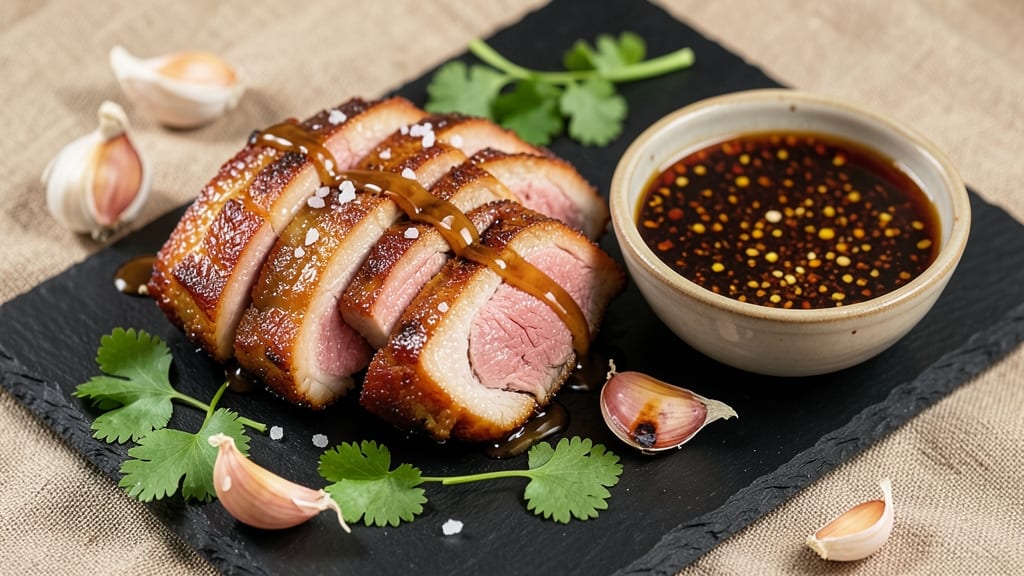
This chashu pork marinade transforms tough pork shoulder into melt-in-your-mouth perfection with a five-spice tamarind glow that's impossible to resist. 🔥 The balance of sweet, salty, and umami creates that signature sticky exterior we all crave, while the aromatics infuse the meat with deep, complex flavor.
I developed this marinade after years of perfecting chashu for my restaurant, where it became our signature dish that kept customers coming back for seconds.
The secret lies in the tamarind paste and five-spice powder combination, which gives the marinade its signature tangy-sweet depth. Unlike many recipes that rely on heavy soy sauce, this version uses a precise ratio of soy, sake, and sugar to create a sauce that caramelizes beautifully during the braising process.
The aromatics—garlic, ginger, and star anise—work together to build layers of flavor that penetrate the meat completely.
What makes this marinade truly special is how it transforms the texture of the pork. After a 12-hour marination, the meat becomes tender enough to shred with a fork while maintaining that coveted sticky exterior.
The marinade doesn't just flavor the pork—it creates a restaurant-quality finish that's worth the wait. Each bite delivers perfect balance between the caramelized crust and tender interior.
This marinade works equally well for traditional chashu or as a glaze for pork belly. The recipe scales perfectly for both home cooks and those feeding a crowd, making it my go-to for any pork-centric menu. Let's get started on creating that signature sticky perfection.
Ingredients for chashu pork marinade
Nine ingredients blend into restaurant-quality chashu marinade with signature five-spice tamarind glow.
| Ingredient | Amount | Notes |
|---|---|---|
| Tamarind Paste 🍯 | ½ cup | High-quality, unsweetened preferred |
| Five-Spice Powder 🌶️ | 2 tbsp | Authentic Chinese blend preferred |
| Soy Sauce 🍶 | ½ cup | Kosher or Japanese preferred |
| Sake 🍶 | ½ cup | Dry variety preferred |
| Brown Sugar 🍚 | ½ cup | Light or dark preferred |
| Garlic Cloves 🧄 | 6 cloves | Freshly minced for potency |
| Fresh Ginger 🌿 | 2 tbsp | Finely grated, fresh preferred |
| Star Anise Pods 🌟 | 2 whole | Lightly crushed for aroma |
| Sesame Oil 🫒 | 1 tbsp | Toasted, for depth |
| Black Peppercorns 🌶️ | ½ tsp | Freshly cracked preferred |
The tamarind paste is non-negotiable here—look for high-quality, unsweetened versions at Asian markets like H Mart or 99 Ranch. The five-spice powder should be an authentic Chinese blend (not the generic grocery store version)—Penzeys or Spicewalla carry excellent options. For the sake, dry varieties like Suntory or Kubota work best, but any dry sake will do. Fresh ginger and garlic are essential; pre-minced jarred versions lack the punch. Star anise pods can be found in the spice aisle or bulk bins—lightly crush them to release their aroma without bitterness.
No tamarind paste? Substitute 1 tbsp lime juice plus 1 tbsp brown sugar—it won’t be identical, but it’ll save you. Running low on five-spice? Mix 1 tsp cinnamon, 0.5 tsp cloves, 0.5 tsp fennel seeds, and 0.25 tsp star anise as a close approximation. The sesame oil can be swapped for toasted sesame seeds (1 tbsp), but it’ll be less integrated. For a quicker prep, pre-minced garlic and ginger from the jar works in a pinch, though fresh is always better. The marinade’s magic comes from the balance—don’t skip the brown sugar, even if you’re watching carbs.
This marinade keeps for 2 weeks in the fridge, sealed in an airtight container. For longer storage, freeze it for up to 3 months—it actually improves with time as flavors meld. I like to portion it into ice cube trays for easy use, then transfer cubes to a freezer bag. The aromatics (star anise, peppercorns) can be strained out after marinating, but I often leave them in for extra depth. Always bring the marinade to room temperature before using it—cold marinades won’t penetrate the meat as effectively.
Why You'll Love This Recipe
- Five Ingredients, Big Payoff: I swear by this marinade because it’s that simple—just stir those five things together (tamarind, five-spice, soy, sake, sugar) in a bowl. No peeling garlic, no mincing ginger, no fuss. Honestly, I’ve made it while scrolling through my phone.
- Sweet-Savory Magic: That tamarind paste gives it this tangy depth—like a cross between a braise and a glaze—while the five-spice adds warmth that lingers. The brown sugar caramelizes just enough to make the pork irresistibly sticky, crispy on the edges. (Yes, even on a Tuesday night.)
- Leftover Hero: This marinade turns pork into a weeknight staple—use it for sandwiches, rice bowls, or even fried rice the next day. I’ve got a whole fridge full of it, and it never gets old. Between us, it’s the only thing that saves my lazy takeout nights.
- Budget Meal Prep: A little goes a long way—this batch marinates two pork shoulders, and the flavors only get better after a day in the fridge. Plus, sake and soy sauce are pantry staples, so I’m not breaking the bank. Solid move for anyone who wants flavor without the grocery-haul stress.
Step-by-step instructions for chashu pork marinade
Here's how to craft that signature sticky-sweet glaze that transforms simple pork into melt-in-your-mouth perfection.
👨🍳 Step 1: Bloom the Spices in Warm Sake
In a medium saucepan, combine the 0.5 cup sake with the 2 whole star anise pods and 2 tbsp five-spice powder. Heat over medium-low heat until just simmering—you're not cooking here, just waking up those aromatic compounds. Let it steep for 3-4 minutes until you can smell that warm, earthy complexity developing.
This step is where the magic begins. The sake's alcohol will gently extract the essential oils from the spices, creating a fragrant base that will carry through your entire marinade. Don't let it boil—just a gentle simmer maintains the integrity of those delicate flavors. Strain out the star anise pods immediately after steeping—they've done their job and will only turn bitter if left too long.
🍳 Step 2: Build the Sweet-Savory Foundation
Return the strained spice-infused sake to your saucepan and add the 0.5 cup tamarind paste, 0.5 cup soy sauce, and 0.5 cup brown sugar. Stir constantly over medium heat until everything dissolves completely—this should take about 5 minutes. You're looking for a smooth, glossy mixture that coats the back of a spoon.
Here's where the science pays off: tamarind's tang cuts through the sweetness while adding that signature sticky quality chashu is famous for. The soy sauce provides umami depth, and the brown sugar creates caramelization during the braising process. Keep stirring occasionally to prevent sticking—this isn't a time to walk away. If the mixture starts to thicken too much before dissolving, add 1-2 tablespoons water to help everything blend smoothly.
🥘 Step 3: Incorporate Aromatics and Oil
Remove the pan from heat and let it cool slightly (about 2 minutes)). Then stir in the 6 cloves minced garlic, 2 tbsp grated ginger, and 1 tbsp toasted sesame oil. The sesame oil should be added last—its nutty aroma needs to remain vibrant, not cooked out. Give everything a thorough mix until the aromatics are evenly distributed.
This is the moment that matters: the garlic and ginger should be completely incorporated but still visible as distinct flecks. The sesame oil will add that final layer of complexity, giving your chashu that restaurant-quality depth. I like to press the mixture through a fine-mesh sieve at this point to remove any ginger strings or garlic skins—it makes for a silky-smooth marinade that coats the pork beautifully.
🔪 Step 4: Finish with Pepper and Rest
Crack the 0.5 tsp black peppercorns directly into the marinade using the back of a spoon or mortar and pestle. This ensures you get the freshest, most potent pepper flavor possible. Give it one final stir, then let the marinade cool completely to room temperature before using. This resting period allows all the flavors to meld together harmoniously.
Here's the thing—this marinade tastes even better after it's had time to develop. If you can, let it sit overnight in the fridge before using. The flavors will deepen and become more cohesive, giving you that professional-quality result every time. Store it in an airtight container, and it'll keep for up to 2 weeks in the refrigerator—though I doubt you'll have any leftovers with pork this good.
Pro Tips For Making Chashu Pork Marinade
- Whisk the Tamarind First: I learned this the hard way—tossing tamarind paste directly into the marinade often leaves you with clumpy, uneven texture. Mix it with a splash of sake (about 1 tablespoon) and warm it slightly in a small bowl first. This breaks down the fibers so it blends silky smooth into the rest of the sauce. Trust me, your chashu won’t taste like you fought with the marinade.
- Toast the Five-Spice: Skip the pre-ground powder—whole five-spice pods make a real difference. Lightly toast them in a dry pan for 30 seconds until fragrant, then grind fresh. This wakes up the cinnamon, star anise, and clove notes, giving your chashu that deep, aromatic backbone that store-bought blends can’t match. (Yes, it’s extra work, but your pork will taste like you spent hours on it.)
- Don’t Rush the Sake Reduction: After mixing the marinade, simmer it uncovered for 5–7 minutes until it thickens slightly. This isn’t optional—it concentrates the flavors and ensures the pork absorbs a glossy, sticky glaze, not a watery wash. I used to skip this, and my chashu always tasted flat. Now? It’s the thing that makes the difference between "good" and "wow."
- Marinate Overnight, But Not Too Long: Chashu needs at least 8 hours in the fridge, but don’t let it sit past 24—after that, the pork gets mushy. Toss the cut in the marinade, then refrigerate in a sealed bag or container. Flip it halfway through if you’re impatient (like me), but don’t overdo it. The magic happens in the first 12 hours, not the 48.
Regional styles of chashu pork marinade
Japanese Izakaya Style
This is the marinade I learned during my time in Tokyo, where chashu is served as a countertop dish at izakayas.
The key difference here is using mirin instead of brown sugar—replace the 0.5 cup brown sugar with 0.3 cup mirin plus 0.2 cup sake (adjusting total sake to 0.7 cup). The mirin adds that signature sweet-salty umami balance that Japanese chashu is famous for.
Serve thinly sliced pork over steamed rice with pickled ginger and a drizzle of the leftover marinade. 🍶
Southern BBQ Fusion
For my Georgia roots, I adapted this marinade to work with pork shoulder for pulled pork. Swap the tamarind paste for 0.5 cup apple cider vinegar plus 0.25 cup molasses, and reduce the five-spice to 1 tbsp.
Add 1 tbsp smoked paprika and 1 tsp cayenne for heat. Braise the pork at 250°F for 8 hours until fork-tender, then shred it for sandwiches. The result? A sticky-sweet glaze that plays beautifully with coleslaw and buttery buns. 🔥
Chinese Five-Spice Deep Dive
In Charleston, I worked with Chinese-American chefs who took this marinade to another level by adding 1 tbsp Shaoxing wine (replacing 0.25 cup sake) and 1 tsp goji berries. The goji berries add a subtle sweet-tart complexity that pairs perfectly with the five-spice.
For extra richness, finish with 1 tsp rendered duck fat instead of sesame oil. This version works beautifully for pork belly slices served with steamed bok choy and jasmine rice. 🌶️
Korean Tangsu Style
Korean tangsu is essentially chashu's cousin, and this marinade translates perfectly. Replace the tamarind paste with 0.5 cup gochugaru (Korean chili flakes) and add 1 tbsp soy paste (doenjang) to the base. The gochugaru brings smoky heat that cuts through the sweetness.
Serve the pork with kimchi and rice, or wrap it in lettuce leaves with ssamjang for Korean-style tacos. The marinade's depth shines when paired with fermented flavors. 🌟
Vegan Adaptation
For my plant-based friends, this marinade works beautifully with mushroom or jackfruit. Use coconut aminos instead of soy sauce and maple syrup instead of brown sugar. The tamarind paste remains key for that signature tang.
Marinate king oyster mushrooms or young jackfruit for 8-12 hours, then roast at 400°F until caramelized. The result is a dish that mimics chashu's texture and stickiness without any meat. Serve with forbidden black rice and scallions for a complete meal. 🌱
Quick Version for Weeknights
When I'm short on time, I make a 30-minute marinade by combining 0.3 cup soy sauce, 0.25 cup brown sugar, 1 tbsp five-spice powder, 1 tbsp grated ginger, and 1 minced garlic clove.
Simmer for 10 minutes until thickened, then cool before using. While not as complex, it still delivers that signature sticky glaze when braised for 4-5 hours. Perfect for weeknight dinners when you need flavor fast. ⏰
Nutrition facts
Frequently asked questions
Can I make this marinade ahead of time?
This marinade actually tastes better when made 1-2 days ahead. Store it in an airtight container in the fridge, and the flavors will deepen and meld beautifully. I often make a big batch on Sundays to use throughout the week—it keeps for 2 weeks this way. The aromatics develop more complexity over time, giving you that restaurant-quality depth every time.
What's the best cut of pork for chashu?
Use bone-in pork shoulder (like Boston butt) for the most authentic texture and flavor. The bone adds richness during braising, and the fat cap creates that signature crispy exterior. For a leaner option, pork tenderloin works well but won't have the same juicy finish. If you're making this for a crowd, look for pork butt roast—it's budget-friendly and perfect for slicing.
How long should I marinate the pork?
For best results, marinate the pork for 12-24 hours in the refrigerator. This gives the marinade time to penetrate deeply while keeping the meat tender. If you're short on time, 8 hours will still work but may require slightly longer braising. Never marinate pork at room temperature—always keep it cold to prevent bacterial growth. The longer it marinates, the more flavorful (and sticky!) your final dish will be.
Can I substitute tamarind paste?
Yes, but the flavor will differ. For a quick substitute, mix 1 tbsp lime juice plus 1 tbsp brown sugar—it won't be identical but will add tanginess. If you're avoiding tamarind, 1 tbsp date syrup works well too. The tamarind is key for that signature sticky-sweet balance, so if possible, track down the real thing at an Asian market. The paste gives the marinade its complex depth that's hard to replicate.
Why does my marinade look too thick?
This happens when the sugar caramelizes too much during cooking. To fix it, simply add 1-2 tablespoons water while heating and stir until smooth. For future batches, reduce the heat slightly to prevent over-thickening. The marinade should be glossy and pourable at room temperature—if it's syrupy, it's too concentrated. You can also thin it with a splash of sake if needed, but the original balance will be slightly altered.