
Main Courses
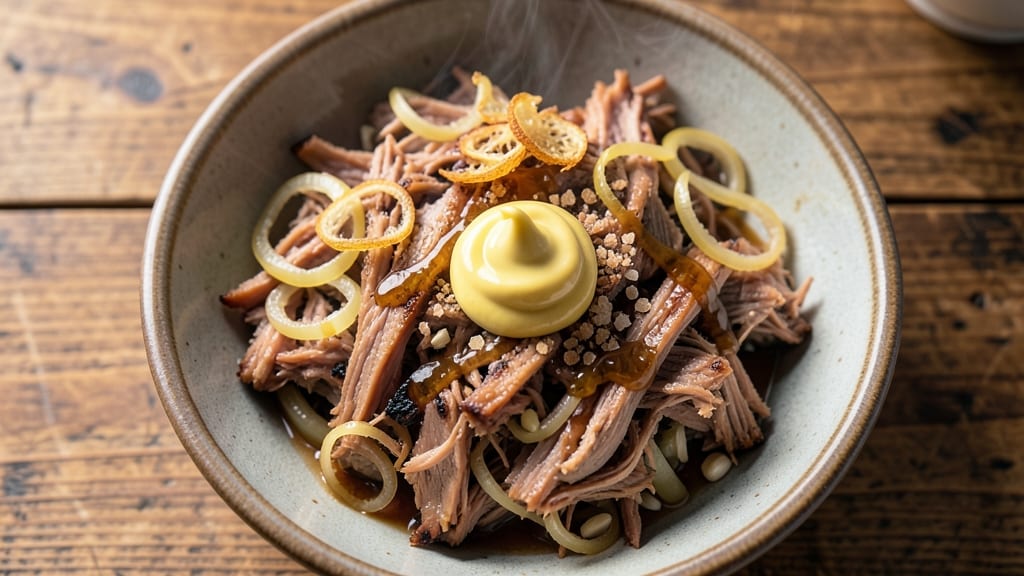
This American pulled pork recipe delivers the juicy, fall-apart tenderness that defines great Southern BBQ—smoked low and slow until the bark is crisp and the meat practically shreds with a fork.
I perfected this version after years of competing on the Southeast BBQ circuit, where the difference between good and championship-worthy pork comes down to temperature control and patience.
The secret isn't just time—it's the balance of heat, wood smoke, and a vinegar-based glaze that cuts through the richness without overpowering the meat.
What sets this recipe apart is the two-stage cooking process: we begin with a hot smoke to render fat and build that coveted bark, then shift to low and slow for maximum tenderness.
The pork shoulder (the only cut that delivers true pulled pork texture) transforms from tough to melt-in-your-mouth as connective tissues break down over hours.
I use a simple but robust dry rub that stands up to the smoke, and a tangy vinegar glaze that adds depth without masking the meat's natural flavor. This isn't just pulled pork—it's the kind that makes people ask for seconds before they've even finished their first plate.
The result is pork that shreds effortlessly, with a perfect balance of smoky flavor and tender texture—no dry, stringy bits here. The glaze caramelizes slightly as it cooks, creating pockets of sweet-tangy goodness in every bite.
Serve it on soft brioche buns with pickles and coleslaw for the full Carolina experience, or let guests build their own sandwiches. This recipe feeds a crowd with leftovers that taste just as good reheated, making it perfect for gatherings where everyone wants seconds.
Whether you're smoking for the first time or you're a seasoned pitmaster, this method delivers consistent, restaurant-quality results every time. The key is attention to temperature and timing—once you master those, you'll have pulled pork that rivals any competition BBQ.
Let's get started on creating pork that'll have your guests coming back for more.
Ingredients for american pulled pork
The perfect blend of smoky rub, sweet glaze, and tender pork shoulder for championship-worthy pulled pork.
| Ingredient | Amount | Notes |
|---|---|---|
| Pork Shoulder (Boston Butt) 🐖 | 8 lb | Bone-in for maximum flavor |
| Yellow Onion 🧅 | 2 whole | Yellow or red, sliced into wedges |
| Fresh Garlic 🧄 | 8 cloves | Peeled, whole for smoking |
| Yellow Mustard 🥫 | ¼ cup | Dijon preferred for depth |
| Apple Cider Vinegar 🍎 | ½ cup | For tangy glaze base |
| Brown Sugar 🍚 | ½ cup | Light or dark, packed |
| Smoked Paprika 🌶️ | 2 tbsp | For deep smoky flavor |
| Ground Black Pepper 🌶️ | 1 ½ tbsp | Freshly cracked preferred |
| Kosher Salt 🧂 | 2 tbsp | Diamond Crystal preferred |
| Granulated Garlic 🧄 | 1 tbsp | For rub consistency |
| Onion Powder 🧅 | 1 tbsp | Enhances dry rub flavor |
| Hickory Wood Chips 🌳 | 2 lb | Unsoaked for smoker |
| Apple Juice 🍏 | ½ cup | For spritzing during cook |
| Fresh Cilantro 🌿 | ¼ cup | Chopped, for garnish |
| Brioche Buns 🍞 | 12 whole | For serving, optional |
The pork shoulder is non-negotiable—bone-in delivers the best flavor and texture. Look for cuts with good marbling at Costco or your local butcher shop. The Boston butt is ideal, but a full shoulder works too. If you can't find bone-in, trim excess fat to about 1/4-inch thickness. For the rub, Penzeys or bulk bins at natural grocery stores have the best quality spices. The hickory wood chips? Store-brand works fine—no need to splurge on fancy brands unless you're doing this weekly.
No hickory chips? Cherry or pecan add sweetness that pairs well with the vinegar glaze. Substituting brown sugar? White sugar works at the same amount, but you'll lose some molasses depth. Fresh garlic is ideal, but granulated garlic in a pinch keeps the rub consistent. The mustard in the glaze? Dijon mustard adds complexity, but regular yellow works if that's what you've got. For the vinegar, apple cider vinegar is traditional, but white vinegar at half the amount gives similar tang. Always taste your glaze before applying—adjust sweetness or acidity as needed.
This pork keeps beautifully—3 days in the fridge or 3 months in the freezer. For reheating, low and slow is key: 300°F for 2-3 hours with a splash of apple juice to revive moisture. I portion mine into ziplock bags for easy storage, and it reheats perfectly for sandwiches all week. The buns? Toast them lightly before serving—Trader Joe's has great brioche buns, but any soft roll works. Leftovers make amazing tacos or nachos too—just shred and reheat.
Why You'll Love This Recipe
- Sweet-Savory Magic: That apple cider vinegar and yellow mustard glaze? It’s the secret sauce—tangy enough to cut through the richness while keeping it rich. The garlic and onions caramelize right into the meat, giving every bite layers of flavor that’ll have you reaching for seconds.
- Party in a Pan: This isn’t just for Sundays—it’s my go-to for game days, potlucks, or when my book club rolls in. Serve it on buns for sandwiches, pile it on sliders, or even toss it into tacos. The leftovers? Even better the next day, trust me.
- Budget Win, Big Time: A pork shoulder is one of the most affordable cuts, and this recipe stretches it across meals without breaking the bank. Honestly, I’ve fed a houseful of friends for under $20 with this—plus, the leftovers turn into breakfast hash or nacho toppings. Smart, right?
Step-by-step instructions for slow-smoked pulled pork
Here's how to transform an 8 lb pork shoulder into tender, flavorful pulled pork that falls apart at the touch.
Prepare the Pork Shoulder and Rub
Start by removing the pork shoulder from the fridge and letting it sit at room temperature for 1 hour. This ensures even cooking. Pat the meat completely dry with paper towels—this step is crucial for developing that perfect bark. In a small bowl, combine the 2 tbsp kosher salt, 1.5 tbsp ground black pepper, 2 tbsp smoked paprika, 1 tbsp granulated garlic, and 1 tbsp onion powder. Mix well to create a fine, even rub.
Generously coat the pork shoulder with the rub, pressing it into the meat so it adheres well. Don't be shy—you want that flavor to penetrate every inch. Place the rubbed pork on a wire rack set over a baking sheet to catch any drippings. Cover loosely with plastic wrap and refrigerate for at least 12 hours (or up to 24 hours). This dry-brining process enhances flavor and texture.
Set Up the Smoker for Low and Slow Cooking
Fill a smoker box with the 2 lb hickory wood chips and place it in your smoker. Preheat the smoker to 225°F, maintaining a steady temperature throughout the cook. You'll know it's ready when you see thin, blue smoke—this indicates proper combustion without excess moisture. Place the pork shoulder fat-side up on the smoker grates. This allows the fat to render slowly and baste the meat as it cooks.
Resist the urge to open the smoker lid frequently—each time you do, you lose heat and moisture. Instead, use a probe thermometer to monitor the internal temperature. Aim for 6-8 hours of cooking time until the internal temperature reaches 165°F. This low-and-slow method breaks down the collagen in the meat, transforming it into tender, juicy pulled pork.
Spritz and Monitor for Perfect Texture
Every 1-2 hours, remove the pork shoulder from the smoker and spritz it generously with a mixture of 0.5 cup apple juice and 0.5 cup apple cider vinegar. This keeps the meat moist and helps create a tender texture. Return the pork to the smoker and continue cooking. You'll notice the pork hitting "the stall" around 165-170°F—this is when the temperature plateaus due to evaporative cooling.
Don't panic if this happens; it's a normal part of the cooking process. Continue smoking until the internal temperature reaches 203°F. At this point, the pork should be fork-tender and ready to shred. The bark should be dark and crispy, while the meat inside should be so tender it practically falls apart with gentle pressure.
Rest and Shred the Pulled Pork
Once the pork reaches 203°F, remove it from the smoker and transfer it to a cutting board. Let it rest for 30-45 minutes before shredding. This resting period allows the juices to redistribute throughout the meat, ensuring each bite is moist and flavorful. While the pork rests, prepare a large bowl to catch the shredded meat and any accumulated juices.
Using two forks or a pair of tongs, shred the pork shoulder against the grain. You should be able to pull the meat apart easily with minimal effort. If the pork isn't quite tender enough, return it to the smoker for an additional 15-20 minutes. Once shredded, mix the pork with any juices from the cutting board and the 0.25 cup yellow mustard. This adds a tangy depth of flavor that complements the smoky, sweet notes from the rub.
Serve on Brioche Buns with Fresh Garnish
Warm the 12 whole brioche buns in the oven at 350°F for 5-10 minutes until they're toasted and slightly puffed. Spoon the shredded pulled pork onto the buns and top with the 0.25 cup chopped fresh cilantro. The cilantro adds a bright, fresh contrast to the rich, smoky pork. Serve immediately with any extra juices from the bowl for dipping.
Each bite should deliver a perfect balance of smoky, sweet, and tangy flavors with a tender, juicy texture that melts in your mouth. The brioche buns add a buttery, slightly sweet element that ties everything together beautifully. Enjoy your slow-smoked pulled pork with classic barbecue sides like coleslaw or baked beans for a complete meal.
Pro Tips For Making American Pulled Pork
- USE A MEAT THERMOMETER: I learned this the hard way—guessing doneness with pulled pork leads to either dry, overcooked meat or undercooked disaster. The real magic number is 195–203°F in the thickest part; anything lower and you’re fighting to shred later.
- CHAR THE ONIONS FIRST: Skip the raw onion chunks in your rub—sauté them in butter until deep brown and caramelized, then mix with garlic and mustard for the rub. That sweet, jammy depth makes a real difference, especially when braising.
- DON’T SKIP THE VINEGAR BATH: After pulling, toss the pork in a mix of apple cider vinegar + yellow mustard (about ¼ cup each) while it rests. Sounds weird, but it works—keeps the meat tender, cuts through richness, and adds a tangy brightness that balances the smokiness.
- LOW-AND-SLOW ISN’T LOW ENOUGH: Start your cook at 225°F, but if you’re in a hurry (or impatient like me), crank it to 250°F for the first 2 hours. The higher temp jump-starts the collagen breakdown without burning the exterior—just wrap tightly in foil after the first hour.
Storing and reheating this dish
Refrigerator Storage
Let your pulled pork cool completely before storing in an airtight container—I use glass Pyrex with snap lids—and refrigerate within 2 hours of cooking. The meat stays fresh for up to 3 days in the fridge, with flavors deepening as the spices meld.
To prevent a dry texture, press plastic wrap directly on the surface before sealing the container. 💫
Freezer Storage
For long-term storage, portion the pulled pork into quart-sized freezer bags, squeezing out excess air to prevent freezer burn. Label with the date—it keeps for 3 months at 0°F or below.
Thaw overnight in the fridge before reheating. I always double-check the seal to avoid any ice crystals forming during storage.
Reheating Methods
For the best texture, reheat pulled pork in a slow cooker on low for 2-3 hours with ½ cup apple juice to revive moisture. Avoid microwaving—it dries out the meat.
If using an oven, bake at 300°F for 1-2 hours until heated through. The apple juice helps restore that juicy, tender quality lost during initial cooking. 🔥
Reviving Leftovers
If your pulled pork tastes dry after reheating, mix in 1-2 tablespoons of apple cider vinegar or yellow mustard to restore moisture and tang. I also keep a small bowl of the glaze on the side for dipping—it adds instant flavor and juiciness.
For sandwiches, lightly toast the brioche buns and add a drizzle of glaze before assembling.
Portioning Tips
Divide the pork into individual meal-sized portions before freezing or storing. This makes it easy to grab just what you need without thawing the entire batch. I use ziplock bags for quick grab-and-go meals, and they reheat perfectly in 3-5 minutes on the stove.
Store portions flat in the freezer to save space and prevent freezer burn. ✨
Serving Suggestions
Reheated pulled pork works perfectly in tacos, nachos, or loaded baked potatoes—just add a sprinkle of fresh cilantro and a drizzle of glaze. For sandwiches, warm the buns and add a layer of pickles to cut through the richness.
The key is keeping everything warm and moist until serving to maintain that restaurant-quality texture. 🥪
Nutrition facts
Frequently asked questions
Can I use a regular oven instead of a smoker for this recipe?
Yes! If you don't have a smoker, use a meat thermometer and cook the pork in a 300°F oven on a rack over a tray with ½ cup apple juice and ½ cup apple cider vinegar at the bottom. Add 2 tbsp hickory wood chips to the pan for smoky flavor. Cook until it reaches 203°F (about 6-8 hours). The key is patience—low heat breaks down the collagen for that perfect texture.
What's the difference between pork shoulder and Boston butt?
Both work for pulled pork, but they're different cuts. Boston butt (the smaller, top portion) is leaner and more tender, while pork shoulder (the larger, bottom portion) has more fat and connective tissue. The recipe calls for 8 lb Boston butt because it delivers the best balance of flavor and tenderness. If you must use pork shoulder, trim excess fat to ¼-inch thickness for even cooking.
Why does the recipe call for resting the pork before shredding?
Resting for 30-45 minutes after cooking is critical—it lets the juices redistribute so every bite stays moist. Skipping this step causes the meat to dry out when shredded. The pork's internal temperature will drop about 10°F during resting, but it stays safe at 193°F. Think of it like letting cake cool before slicing—patience prevents dry, stringy results.
Can I make the dry rub ahead of time?
Store the dry rub in an airtight container for up to 2 weeks at room temperature. For best flavor, use it within 1 week of mixing. The spices blend better over time, but avoid humidity—moisture makes the rub clump. I keep mine in a glass jar with a tight seal in my pantry for convenience.
What if my pulled pork turns out too dry?
Don't panic! Mix in 1-2 tablespoons of apple cider vinegar or yellow mustard to restore moisture and tang. For sandwiches, add a thin layer of glaze between meat and bun. If reheating, use a slow cooker on low for 2 hours with ½ cup apple juice instead of microwaving. The key is moisture—never let it dry out completely.