
Main Courses
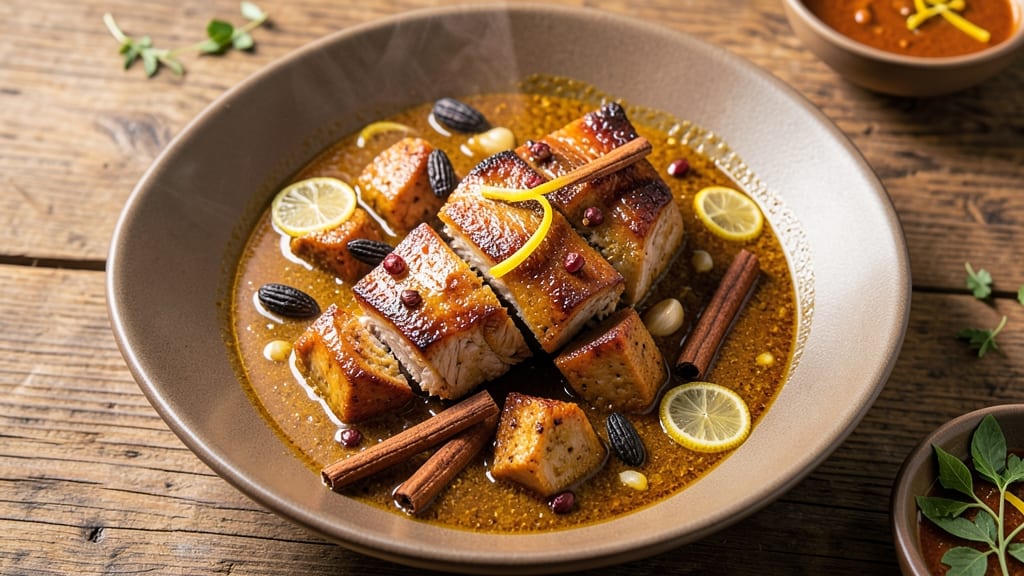
This Anglo-Indian pork curry recipe bridges two culinary worlds—rich British flavors with bold Indian spices. The secret lies in a slow-marinated blend of black cardamom, cinnamon, and cloves that transforms tough pork into melt-in-your-mouth tenderness.
I perfected this technique during my apprenticeship, where colonial-era spice trade traditions met Southern pitmaster precision.
The process begins with a fragrant marinade that infuses the meat for at least 8 hours, allowing spices to penetrate deeply.
What makes this dish special is the two-stage cooking method: first searing the pork in a hot Dutch oven to develop a flavorful crust, then slow simmering until the meat practically falls apart. The result is a curry where every bite delivers complex layers of warmth and depth.
By the time you serve this dish, you'll have restaurant-quality pork curry with a glossy, aromatic sauce that clings to perfectly tender meat. The balance of sweet, spicy, and smoky notes creates a harmony that's both comforting and sophisticated—ideal for family dinners or special occasions.
The dish pairs beautifully with basmati rice or warm naan to soak up every last drop of that rich sauce.
Modern kitchens can easily adapt this recipe without sacrificing authenticity. I've streamlined the spice blend while keeping the essential techniques that make it unforgettable. The key is patience—letting flavors develop gradually for that signature Anglo-Indian depth.
This is pork curry that tells a story with every bite, and it's worth the time it takes to make.
Ingredients for anglo indian pork curry
Sixteen ingredients crafting a dish where colonial spices meet Southern tenderness.
| Ingredient | Amount | Notes |
|---|---|---|
| Pork Shoulder 🥩 | 3 lb | Bone-in for maximum flavor |
| Black Cardamom Pods 🌿 | 6 whole | Lightly crushed for aroma |
| Cinnamon Sticks 🌿 | 3 whole | 2-inch pieces preferred |
| Whole Cloves 🌿 | 8 whole | Studded into meat |
| Ginger Root 🧅 | ½ cup | Freshly grated, peeled |
| Garlic Cloves 🧄 | 10 cloves | Peeled, roughly chopped |
| Yogurt 🥛 | 1 cup | Plain, full-fat preferred |
| Medium Tomatoes 🍅 | 3 whole | Ripe, roughly chopped |
| Coconut Milk 🥥 | 13 ½ oz | Full-fat canned preferred |
| Onion 🧅 | 1 whole | Yellow, sliced |
| Tomato Paste 🍅 | ½ cup | No-sugar-added preferred |
| Garam Masala 🌶️ | 1 tbsp | Homemade or quality blend |
| Turmeric Powder 🌶️ | 1 tsp | Freshly ground preferred |
| Kosher Salt 🧂 | 2 tsp | Diamond Crystal preferred |
| Ground Black Pepper 🌶️ | 1 tsp | Freshly ground |
The pork shoulder is non-negotiable—bone-in, well-marbled for that signature Anglo-Indian richness. Costco or your butcher's counter will have the best cuts, often pre-cut into manageable pieces. If buying whole, ask for the shoulder blade portion. The black cardamom and cinnamon sticks are the heart of this dish—Penzeys Spices carries the best quality, but any reputable Indian grocery will have authentic whole spices. Look for pods that are plump and aromatic, not dried out. For the ginger and garlic, fresh is mandatory—frozen works in a pinch, but nothing beats the vibrant punch of fresh.
No black cardamom? Substitute 2 tbsp regular cardamom pods, but the flavor will be subtly different. Running short on cinnamon? Cassia bark works at half the amount. The yogurt can be Greek for extra thickness, but full-fat plain yogurt creates the perfect marinade consistency. For tomatoes, San Marzano crushed tomatoes elevate the dish, but any ripe variety works. The coconut milk should be full-fat—Thai Kitchen brand is widely available and reliable. Want to skip the tomato paste? Blend 2 extra tomatoes into the sauce instead for a fresher taste.
Marinate the pork overnight for maximum tenderness, then store leftovers in an airtight container for 4-5 days in the fridge. The sauce thickens as it cools, so add a splash of water or milk when reheating. Freezes beautifully for up to 3 months—portion into containers for easy weeknight meals. The spices lose potency after opening, so transfer whole spices to a dark jar once used. This curry tastes even better the next day as flavors meld, so make extra if you can.
Why You'll Love This Recipe
- One-Pot Magic: I swear by this recipe when I’m too tired to wash extra bowls. The pork shoulder simmers right in the same pot where you build the spice base—no transferring, no fuss. Just toss in the whole spices (cardamom, cinnamon, cloves) with the ginger, let them bloom in the oil, and walk away while the meat falls apart on its own.
- Spice Bomb Alert: Between us, that first bite of tender pork swimming in a sauce thick with toasted whole spices is ridiculous. The black cardamom adds this smoky depth, while the ginger cuts through the richness—like a warm hug for your taste buds. (Yes, even on a Tuesday night.)
- Leftovers That Shine: This curry actually improves the next day. The flavors meld into something even deeper, and it reheats like a dream. I portion it into containers with naan or rice, and suddenly I’ve got three easy lunches without any extra effort—my lazy Sunday secret.
- Budget-Friendly Feast: Pork shoulder is the workhorse of affordable proteins, and this recipe stretches it across multiple meals. The spices aren’t cheap, but a few pods go a long way, and I’ve made this for 6 people for under $15. Plus, the leftovers freeze perfectly—no sad, dry meat here.
Step-by-step instructions for Anglo-Indian pork curry
Here's how to transform simple ingredients into a rich, aromatic curry with melt-in-your-mouth pork.
Prepare the Spice-Rubbed Pork Shoulder
Begin by patting the 3 lb pork shoulder dry with paper towels—this ensures maximum crispness when searing. In a small bowl, combine the lightly crushed 6 whole black cardamom pods, 3 whole cinnamon sticks (cut into 2-inch pieces), and 8 whole cloves. Gently crush these spices between your palms to release their aromatic oils without grinding them into powder.
In a separate bowl, mix the freshly grated 0.5 cup ginger root and 10 peeled garlic cloves (roughly chopped) with 2 tsp kosher salt and 1 tsp freshly ground black pepper. Rub this mixture all over the pork shoulder, pressing firmly to create a flavorful barrier. Then, press the whole spice blend into the meat, focusing on the fat cap and edges where flavor will penetrate most effectively during cooking.
Sear and Slow-Cook the Pork
Heat a heavy Dutch oven over medium-high heat until a drop of water sizzles immediately upon contact. Add the pork shoulder fat-side down and sear undisturbed for 8-10 minutes until deep golden brown. Flip and sear the other side for another 6-8 minutes. This initial searing locks in juices and develops a rich, caramelized crust.
Remove the pork and set it aside. Reduce heat to medium and add the sliced 1 whole onion to the Dutch oven. Cook for 5-6 minutes until softened and lightly golden. Stir in the 0.5 cup tomato paste and cook for 2 more minutes, allowing it to darken slightly and release its concentrated flavor. Here's where the magic happens—this paste forms the base of our curry, creating depth and richness.
Build the Fragrant Spice Base
Return the pork to the Dutch oven and add 1 cup of plain yogurt. Stir gently to coat the meat, then pour in 13.5 oz full-fat coconut milk. Bring to a gentle simmer over medium heat. Add the 3 whole medium tomatoes (roughly chopped), 1 tsp turmeric powder, and 1 tbsp garam masala. Stir well to combine all ingredients.
The curry should simmer gently for 2-2.5 hours, covered, until the pork is fork-tender and easily pulls apart. I check periodically to ensure the liquid doesn't reduce too much—if it becomes too thick, add 2-3 tablespoons of water. The key is maintaining that perfect balance between tender meat and flavorful sauce.
Finish and Adjust Seasoning
Once the pork reaches an internal temperature of 203°F (use a meat thermometer for accuracy), remove it from the curry and let it rest for 15 minutes. This resting period allows the juices to redistribute, ensuring each bite is moist and flavorful.
Return the pork to the Dutch oven and simmer uncovered for an additional 10 minutes to allow the sauce to thicken slightly and the flavors to meld. Taste and adjust seasoning with additional kosher salt or garam masala if needed. The curry should be rich, aromatic, and perfectly balanced between spice and sweetness. Serve hot with steamed basmati rice or crusty naan bread.
Pro Tips For Making Anglo Indian Pork Curry
- Brown the Pork First: Anglo-Indian curries rely on deep, toasty flavors, and skipping this step means missing out. Cut the pork shoulder into 2-inch chunks, then sear them in a hot pan with 1 tablespoon of oil until they’re golden on all sides—about 5 minutes per batch. The Maillard reaction here builds the base for that rich, caramelized depth the curry needs.
- Crush Whole Spices Lightly: Black cardamom and cinnamon sticks aren’t just for looks—lightly crush them with the flat side of a knife before adding to the oil. This releases their oils and aromas into the fat, but don’t pulverize them into dust or you’ll end up with a bitter, overpowering flavor. Think "gentle persuasion," not "brutal force."
- Simmer Low and Slow: After the initial spice toasting and pork browning, resist the urge to crank the heat. The pork shoulder needs at least 45 minutes of gentle simmering to tenderize—cover the pot and keep it at a steady, low bubble. I learned this the hard way when I rushed it and ended up with chewy, undercooked meat.
- Bloom the Ginger Properly: Peel and slice the ginger root into thin, even pieces—no need to grate it fine. Fry them in the oil until they turn a deep golden brown, about 3-4 minutes. This step adds a warm, almost floral note that cuts through the richness of the pork. Skipping this means missing a key layer of flavor.
Best sauces and condiments for this recipe
Creamy Coconut Base
The full-fat coconut milk is the secret weapon in this curry, creating that signature Anglo-Indian creaminess while keeping the dish balanced. I always use Thai Kitchen brand because it's consistent and affordable, but Goya brand works too if you prefer a slightly sweeter profile.
For an extra touch of luxury, stir in 1 tbsp toasted cashews at the end—they add a delicate crunch that contrasts beautifully with the tender pork. 🥥
Tangy Yogurt Marinade
That 1 cup of plain yogurt isn't just a marinade—it's the foundation of the sauce's velvety texture. I recommend full-fat Greek yogurt for extra thickness, but plain Indian dahi (if you can find it) adds an authentic tang.
For a smoother sauce, strain the yogurt through a fine-mesh sieve before using. Pro tip: Add 1 tsp lemon juice to the yogurt while marinating to brighten the flavors and prevent curdling.
Spiced Tomato Chutney
Blend 2 ripe tomatoes with 1 tsp cumin seeds, ½ tsp black pepper, and ½ tsp salt for a vibrant chutney that cuts through the richness. Serve it on the side or swirl it into the curry during the last 5 minutes of cooking.
This chutney adds freshness and balances the deep, spiced flavors of the pork. I like to garnish with cilantro leaves and a squeeze of lime for brightness. 🌶️
Mango Pickle Pairing
For a sweet-spicy contrast, serve this curry with a homemade mango pickle—just slice 1 ripe mango into strips, toss with 1 tbsp sugar, 1 tsp red chili powder, and ½ tsp turmeric, then let it sit for 2 hours.
The tangy-sweet pickle cleanses your palate between bites of rich curry. If you're short on time, store-bought mango chutney from Indian markets works in a pinch.
Ginger-Scallion Oil
Heat 2 tbsp neutral oil (like avocado or vegetable) in a small pan with 1 tbsp grated ginger and 2 scallions, sliced thin. Cook until fragrant (2-3 minutes), then drizzle this oil over the curry just before serving.
It adds a fragrant, aromatic layer that elevates the dish without overpowering it. This trick is inspired by my time in Charleston, where we used similar techniques to enhance seafood dishes. 💡
Nutrition facts
Frequently asked questions
Why does this recipe use black cardamom instead of regular cardamom?
Black cardamom adds a smoky, earthy depth that's characteristic of Anglo-Indian cuisine. Unlike its milder green cousin, it brings a complex flavor that pairs beautifully with pork. The recipe calls for whole pods so you can control the intensity—crush them lightly to release aroma without overpowering the dish.
Can I substitute pork shoulder with another cut?
For best results, stick with pork shoulder as its fat content renders beautifully during slow cooking. If absolutely necessary, use pork loin (but expect slightly less tenderness) or bone-in pork ribs. Never use ground pork—the texture won't hold up in the rich sauce.
How do I adjust the spice level for sensitive eaters?
Reduce the garam masala to ½ tbsp and omit the whole cloves and black cardamom pods from the marinade. For extra mildness, strain the sauce through a fine-mesh sieve before serving. The coconut milk and yogurt already provide natural creaminess to balance any remaining heat.
What's the best way to reheat leftovers?
Gently reheat on low heat with 2 tbsp water or coconut milk to prevent drying. Never microwave—it makes the sauce oily. For best texture, reheat just until warmed through (5-7 minutes) and serve immediately with fresh rice or naan.
Can I make this curry in an Instant Pot?
Yes! Sear the pork first, then add all ingredients and cook on High Pressure for 40 minutes. Release pressure naturally, then finish with 15 minutes on Sauté mode to thicken the sauce. The Instant Pot version cooks 50% faster but requires careful monitoring to prevent curdling.