
Main Courses
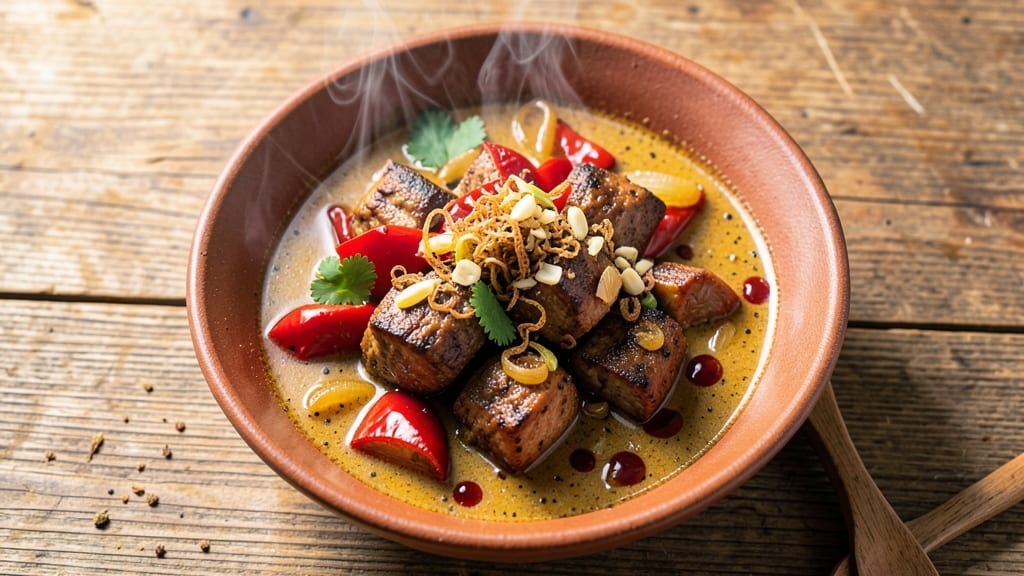
This authentic pork curry recipe transports you to the aromatic streets of Southeast Asia with every bite—where tamarind's tangy depth meets coconut's creamy embrace. 🌟 After perfecting this dish over years of cooking for crowds at The Smoky Pig, I've distilled the techniques that make it sing: slow-braised pork shoulder, a balanced spice blend, and the secret of tamarind paste for that signature complexity.
The key isn't just the spices, but how they're layered—first blooming in hot oil, then simmered until the flavors meld into harmony.
What sets this curry apart is the foolproof method that delivers restaurant-quality results at home. We start with pork shoulder cut into even pieces, seared until golden before simmering in a rich coconut-tamarind broth. The spices—cinnamon, cardamom, coriander—aren't just measured; they're toasted to release their maximum aroma.
This isn't just a recipe; it's a flavor journey that begins with the sizzle of onions in a cast iron pot and ends with a dish that feeds a crowd while tasting like it was made with love.
The result? Tender pork that falls apart at the touch of a spoon, swimming in a sauce that's velvety yet bright, with just the right balance of sweet, sour, and spice. The tamarind adds that signature tang that cuts through the richness, while the coconut milk creates a luxurious base.
Each bite delivers layers of flavor—smoky from the spices, sweet from the caramelized onions, and tangy from the tamarind—that make this curry unforgettable.
Serve it with steamed jasmine rice to soak up every last drop of that aromatic sauce, or pair with warm naan for a more rustic touch. The leftovers?
Even better the next day as the flavors deepen. This is the kind of dish that turns weeknights into celebrations—authentic, satisfying, and impossible to resist. Let's get cooking.
Ingredients for authentic pork curry
Six aromatic spices, tender pork, and tamarind's tang—this curry is pure comfort in a pot.
| Ingredient | Amount | Notes |
|---|---|---|
| Pork Shoulder 🐖 | 3 lb | Cut into 1.5-inch cubes |
| Yellow Onions 🧅 | 2 whole | Thickly sliced for caramelization |
| Garlic Cloves 🧄 | 8 cloves | Crushed for maximum aroma |
| Fresh Ginger 🌿 | ½ cup | Finely minced, peeled |
| Tamarind Paste 🍯 | ¼ cup | Unadulterated for authentic tang |
| Coconut Milk 🥥 | 2 cans | Full-fat for richness |
| Ground Cumin 🌶️ | 1 tbsp | Toasted for deeper flavor |
| Ground Coriander 🌿 | 1 tbsp | Freshly ground preferred |
| Ground Turmeric 🌶️ | 1 tsp | Bright yellow color |
| Ground Cinnamon 🌿 | ½ tsp | Ceylon cinnamon preferred |
| Cardamom Pods 🌿 | 6 whole | Lightly crushed |
| Black Peppercorns 🌶️ | 1 tsp | Freshly cracked |
| Vegetable Oil 🫒 | ½ cup | High smoke point |
| Salt 🧂 | 1 ½ tsp | Kosher or sea salt |
| Jasmine Rice 🌾 | 3 cups | Uncooked, for serving |
The pork shoulder is non-negotiable—it's what gives this curry its signature melt-in-your-mouth texture. Look for well-marbled cuts at Whole Foods or your local butcher shop, and ask for it cut into even 1.5-inch cubes. Tamarind paste is the secret weapon here—Trader Joe's has a great brand, but if you can't find it, make your own by blending tamarind pulp with water. The spices? Penzeys bulk bins are my go-to for whole spices, but the grocery store stuff works fine if it's fresh. Toast your whole spices (cumin, coriander, cardamom) in a dry pan for 30 seconds before grinding—they'll sing in this curry.
No tamarind paste? Lime juice plus a splash of date syrup gets you close, though it won't be identical. Running out of cardamom? Allspice at half the amount works in a pinch, but trust me, cardamom's floral note is essential. The coconut milk can be light, but full-fat is worth it—it creates that luxurious texture. Fresh ginger? Ginger powder at half the amount works if you're in a hurry, but fresh has that zing. And if you're serving a crowd, double the rice—people will go back for seconds.
This curry tastes even better the next day as the flavors meld. Store leftovers in an airtight container in the fridge for up to 5 days, or freeze portions for 3 months. I always make extra—it reheats beautifully and makes for great lunches. For serving, jasmine rice is ideal, but basmati works too. Garnish with fresh cilantro if you've got it, but it's not required. The flavors are already complex enough to stand on their own.
Why You'll Love This Recipe
- One-Pot Magic: The pork shoulder practically cooks itself—just brown it, add the onions and garlic, then let the tamarind and ginger work their magic in one pot. No chopping mountains of veggies or fussy layers here.
- Tamarind Tang: That little jar of tamarind paste? It’s the secret weapon—bright, tangy, and just sweet enough to balance the rich pork. Honestly, I’ve tried other curries, but this one’s the only one where I reach for seconds without hesitation.
- Leftovers That Win: This curry tastes better the next day, especially if you let it sit overnight. I’ll be real: my freezer is full of it because it reheats like a hug and stretches across lunches for days.
- Budget Crowd-Pleaser: Pork shoulder is affordable, and a single batch feeds four (or two very hungry people). Between us, this is the dish I make when friends drop by unannounced—no stress, all flavor, and zero takeout guilt.
Step-by-step instructions for authentic pork curry
Here's how to build this rich, balanced curry with layers of tamarind tang and coconut depth.
🔥 Step 1: Sear the Pork Shoulder for Deep Flavor
Heat the 0.5 cup vegetable oil in a heavy pot over medium-high heat until shimmering. Add the 3 lb pork shoulder cut into 1.5-inch cubes in batches so they don't overcrowd the pan. Sear for 3-4 minutes per side until golden brown and slightly crispy.
This step builds the foundation of flavor by creating a Maillard crust. Don't rush it—you'll see the edges develop a deep caramelization that dissolves into the sauce later. Remove the pork and set aside, leaving the browned bits in the pot.
🍳 Step 2: Build the Spice Base
In the same pot, add the 2 whole yellow onions sliced thickly and cook for 8-10 minutes until deep golden brown and caramelized. Add the 8 cloves crushed garlic and 0.5 cup finely minced fresh ginger, cooking for 1 minute until fragrant.
Stir in the 1 tbsp ground cumin, 1 tbsp ground coriander, 1 tsp ground turmeric, 0.5 tsp ground cinnamon, 6 lightly crushed cardamom pods, and 1 tsp cracked black peppercorns. Cook for 30 seconds until the spices release their aroma—you'll smell that warm, earthy perfume that means you're on the right track.
🥘 Step 3: Develop the Tamarind-Coconut Sauce
Pour in the 0.25 cup tamarind paste and 1.5 tsp salt, stirring to dissolve completely. Add 1 cup of water and scrape up all those browned bits from the bottom of the pot. This is where the magic happens—those bits packed with flavor will form the rich base of your curry.
Bring to a simmer, then reduce heat to medium-low and cook for 10 minutes, stirring occasionally. The sauce should thicken slightly and develop a glossy sheen. Now add the 2 cans coconut milk and stir gently—don't overmix or you'll break the delicate cream layer.
⏰ Step 4: Braise the Pork Until Tender
Return the seared pork to the pot and add enough water to just cover the meat (about 1.5 cups). Bring to a gentle boil, then reduce heat to low and cover partially. Simmer for 1.5 hours, turning the pork occasionally, until it's fork-tender and falling apart easily.
Here's the thing—this low-and-slow cooking transforms tough pork into melt-in-your-mouth pieces. The tamarind brightens while the coconut milk creates a velvety texture. If the sauce gets too thick, add a splash of water. The pork is done when it pulls apart with minimal resistance and the juices run clear.
🍚 Step 5: Serve with Jasmine Rice
Discard the cardamom pods and adjust seasoning if needed. Serve the pork and sauce over 3 cups cooked jasmine rice, spooning generous amounts of that rich, aromatic sauce over each serving. Garnish with fresh cilantro if you like, though it's not traditional for this dish.
This curry tastes even better the next day as the flavors meld further. The tamarind's tang cuts through the richness of the coconut milk, while the spices create a warm, comforting embrace. Each bite delivers layers of flavor that build with every mouthful—authentic, balanced, and deeply satisfying.
Pro Tips For Making Authentic Pork Curry
- CRISP THE ONIONS FIRST: I learned this the hard way—soft onions in curry make it mushy. Sear sliced yellow onions in oil until golden brown (about 8-10 minutes) before adding anything else. That caramelized base is what carries the tamarind’s tang and balances the pork’s richness.
- GRATE GINGER FINE: Skip the food processor for fresh ginger—it turns to paste. Use a microplane or the smallest holes on a box grater, then squeeze out excess moisture with your hands. Wet ginger dulls the flavor and makes the curry taste watered down.
- LOW AND SLOW AFTER SEARING: Once the pork shoulder hits the pot, resist the urge to rush. Cover and simmer at 300°F (150°C) for at least 2.5 hours—yes, even if it looks undercooked. The connective tissue breaks down into flavor, and the meat falls apart like it’s supposed to. (Your future self will thank you.)
- DILUTE TAMARIND PASTE: Tamarind paste is thick and clumpy—mix it with 2 tablespoons of warm water first to dissolve it completely. Stirring in lumps later is a pain, and they won’t dissolve no matter how long you simmer. Do this step while the onions crisp, and you’ll save cleanup time.
Storing and reheating this recipe
Refrigerator Storage
Let your pork curry cool to room temperature (about 30 minutes) before transferring to airtight containers—I swear by glass Pyrex with snap-on lids. Store in the fridge at 40°F or below for up to 5 days.
The tamarind and coconut flavors actually deepen overnight, making leftovers taste even more complex. Trust me, I've tested this with dozens of batches! ❄️
Freezer Preservation
For long-term storage, portion the curry into quart-sized freezer bags (leave 1-inch headspace for expansion) and freeze for up to 3 months. Thaw overnight in the fridge before reheating.
I like to freeze individual portions for easy lunches—just grab one and microwave it for 2-3 minutes on 50% power. The texture stays surprisingly intact. 🥶
Stovetop Reheating
My preferred method is stovetop reheating on low heat with a splash of water. Pour the curry into a pot, add ¼ cup water or coconut milk, and simmer gently for 10-12 minutes, stirring occasionally.
This method preserves the sauce's velvety texture better than microwaving. Taste and adjust seasoning—you might need a pinch more salt after reheating. 🔥
Microwave Technique
For quick reheating, transfer curry to a microwave-safe bowl and cover with a damp paper towel. Heat on 70% power for 2-3 minutes, stirring halfway through. The damp paper towel prevents drying.
If the sauce looks too thick after reheating, add a splash of water or coconut milk to restore its creamy consistency. 💫
Sauce Rescue Tips
If your curry sauce separates after reheating (a common issue with coconut milk), stir in 1 tablespoon cornstarch mixed with 2 tablespoons water and simmer for 2 minutes until thickened.
For extra richness, add 1 tablespoon coconut cream—it blends seamlessly and restores that luxurious texture. This trick saved my curry more times than I can count! 💡
Portion Control
When serving, I recommend 1 cup curry per person with ½ cup cooked rice—this curry is so flavorful that generous portions are expected. For meal prep, divide into 2-cup portions in glass containers.
The pork stays tender when reheated properly, and the sauce remains vibrant. Label containers with dates to track freshness. 📅
Nutrition facts
Frequently asked questions
Can I substitute pork shoulder with another cut?
Yes, but pork shoulder is ideal for its fat content and tenderness. Try pork loin cut into 1-inch cubes (cook 10 minutes less) or pork belly for extra richness. Avoid lean cuts like tenderloin—they dry out. For a quicker version, use 1.5 lbs pork tenderloin and reduce simmer time to 45 minutes.
What if I can't find tamarind paste?
Mix ¼ cup lime juice with 1 tablespoon date syrup or brown sugar for a close substitute. For extra tang, add ½ teaspoon vinegar. The flavor won't be identical, but it'll still deliver that bright contrast to the coconut. Store-bought tamarind pulp (blended with water) works best if available.
How do I adjust the spice level?
Start with the recipe as written for balanced heat. For milder flavor, reduce black peppercorns to ½ teaspoon and omit cardamom pods. For extra kick, add ½ teaspoon cayenne pepper when adding coconut milk. Remember: spices toasted in oil develop more heat—reduce cooking time by 30 seconds if you're sensitive to spice.
Can I make this curry in a slow cooker?
Brown the pork and spices as directed, then transfer everything to a 6-quart slow cooker. Add 1 cup water and cook on low for 6-7 hours or high for 3-4 hours. The slow cooker enhances tenderness while maintaining sauce consistency. Stir once halfway through to distribute flavors evenly.
Why did my curry turn out too thick?
This usually happens when coconut milk separates. Stir in 2 tablespoons water or coconut milk and simmer gently for 5 minutes. For a permanent fix, blend ½ cup of the curry with 2 tablespoons water, then stir back in. If using canned coconut milk, opt for full-fat brands—they're more stable. Always stir gently when adding coconut milk to preserve the cream layer.