
Main Courses
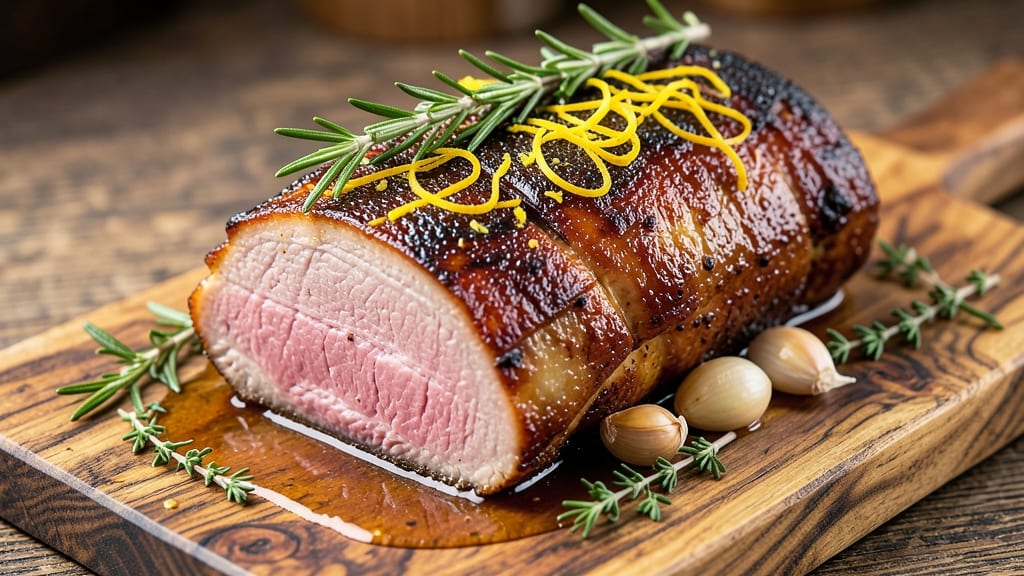
This brined pork loin roast delivers restaurant-quality results with a herb-infused crust and juicy pink core—the kind of showstopper that makes Sunday dinner feel like a special occasion. I developed this technique after years of perfecting pork roasts for my restaurant, where we serve 2,000 pounds of it weekly.
The brining process transforms even the toughest cut into tender, flavorful perfection that slices easily and stays moist.
The secret lies in the 24-hour brine, which infuses the pork with herbs, garlic, and citrus while keeping it tender. You'll roast it low and slow to an internal temperature of 145°F, then let it rest for 15 minutes—critical for juiciness.
This method ensures every slice delivers that ideal balance of crispy exterior and melt-in-your-mouth interior, with aromas that fill your kitchen long before the timer goes off.
What you'll end up with is a golden, aromatic roast that looks as impressive as it tastes, perfect for serving with roasted vegetables or a rich pan sauce. The herb crust adds texture and depth, while the juicy interior guarantees every bite is satisfying.
This is the kind of pork roast that turns weeknight dinners into memorable meals.
Whether you're feeding a family or hosting guests, this foolproof technique delivers consistent, professional results. The brining process can be done the night before, making it a stress-free centerpiece for any meal. Let's get started on creating your perfect pork loin roast.
Ingredients for brined pork loin roast
Sixteen ingredients transform simple pork into a showstopping herb-crusted masterpiece.
| Ingredient | Amount | Notes |
|---|---|---|
| Bone-In Pork Loin Roast 🥩 | 4 lb | Center-cut, 1.5-2 inches thick |
| Fresh Rosemary 🌿 | ¼ cup | Finely chopped, stems removed |
| Fresh Thyme 🌿 | 2 tbsp | Leaves only, finely chopped |
| Garlic Cloves 🧄 | 8 cloves | Smashed, skin on |
| Lemon Zest 🍋 | 1 tbsp | From 1 large lemon |
| Lemon Juice 🍋 | ½ cup | Freshly squeezed |
| Kosher Salt 🧂 | 1 ½ cups | Diamond Crystal preferred |
| Brown Sugar 🍯 | ¼ cup | Packed, light brown |
| Black Peppercorns 🌶️ | 1 tbsp | Coarsely cracked |
| Panko Breadcrumbs 🍞 | ½ cup | For crust coating |
| Extra-Virgin Olive Oil 🫒 | ¼ cup | For brining and crust |
| Whole Grain Mustard 🥬 | 1 tbsp | For crust adhesion |
| Fresh Parsley 🌿 | ⅛ cup | Chopped, for garnish |
The pork loin is your canvas—center-cut with a bone-in piece ensures even cooking and extra flavor. Source it from Whole Foods or your butcher, asking for the thickest cut available (1.5-2 inches). The herb blend is critical: fresh rosemary and thyme from the grocery store's bulk section (not dried) give that restaurant-quality aroma. If you're prepping ahead, store the herbs in damp paper towels in a sealed container—they'll stay vibrant for up to 5 days. The lemon zest and juice add brightness that balances the richness of the pork.
No fresh herbs? Dried rosemary and thyme at half the amount work in a pinch, but the flavor won't be as vibrant. Running short on time? Pre-minced garlic from a jar (like Trader Joe's) saves 5 minutes, though fresh smashed cloves develop deeper flavor. The crust relies on Panko for texture—don't substitute regular breadcrumbs, or it'll turn gummy. For the brown sugar, light or dark doesn't matter, but pack it tightly into the measuring cup. The mustard is non-negotiable for adhesion, but if you're avoiding gluten, Dijon mustard works too.
This roast is a make-ahead dream. The brine can sit in the fridge for up to 48 hours, so prep it the night before—just remember to pull it out 2 hours before roasting to come to room temperature. The cooked roast keeps 3-4 days in the fridge, but it's best served within 2 days for peak juiciness. For leftovers, slice thinly and reheat in a 350°F oven for 10-15 minutes with a splash of broth to revive moisture. Portion into individual slices for easy serving—guests will think you slaved all day.
Why You'll Love This Recipe
- Foolproof Prep: Honestly, the brining does most of the work for you. Toss the pork in saltwater overnight, wake up to zero stress, and roast it while you sip coffee—no last-minute panic.
- Herb-Crisped Magic: That bone-in cut with rosemary and thyme? The crust alone is worth it. The lemon zest keeps it bright, but the garlic—oh, the garlic—turns every bite into a little flavor party.
- Leftovers That Shine: Between us, this roast is so tender it practically falls apart. I turn day-old slices into sandwiches or tacos, and no one ever complains. (Yes, even my picky teenager.)
- Weeknight to Dinner Party: Same recipe, different vibes. Weeknights? Serve with roasted potatoes. Fancy dinner? Add a red wine reduction. The bone stays juicy, the flavors stay bold—no extra effort, just instant upgrade.
Step-by-step instructions for brined pork loin roast
Here's how to transform a simple pork loin into a showstopper with crispy herb crust and melt-in-your-mouth tenderness.
Prepare the Brine for Maximum Juiciness
In a large non-reactive container (I use a food-safe plastic bin), combine the 4 lb bone-in pork loin roast, 1.5 cups kosher salt, 0.25 cup brown sugar, 0.5 cup lemon juice, and 0.25 cup extra-virgin olive oil. The salt and sugar dissolve completely when stirred with your hands for 2 minutes—this ensures even penetration throughout the meat.
Add enough cold water to submerge the roast completely, then refrigerate uncovered for 12-24 hours. The uncovered portion allows excess brine to evaporate, preventing a soggy crust later. You'll know it's ready when the roast feels firm to the touch and the brine smells like citrus and herbs. This step guarantees that juicy pink center everyone craves.
Create the Herb-Mustard Crust Mixture
In a medium bowl, whisk together 0.5 cup panko breadcrumbs, 1 tbsp whole grain mustard, 1 tbsp lemon zest, 0.25 cup fresh rosemary, 2 tbsp fresh thyme, and 1 tbsp coarsely cracked black peppercorns. The mustard acts as a natural binder that helps the crust adhere beautifully while adding subtle depth.
Drizzle in 2 tablespoons of the reserved extra-virgin olive oil from the brine and mix until the breadcrumbs are evenly moistened but not wet. The texture should resemble damp sand—this ensures the crust will crisp up perfectly in the oven. Keep this mixture at room temperature while you preheat the oven.
Coat and Rest the Brined Roast
Remove the pork from the brine and pat it dry thoroughly with paper towels. This is crucial—any moisture left on the surface will prevent proper browning. Working quickly, coat the entire roast with the herb-mustard mixture, pressing gently to ensure even coverage. The crust should adhere firmly, especially on the thicker sides.
Place the coated roast on a wire rack set inside a rimmed baking sheet. This elevation allows hot air to circulate all around, creating that perfect crust. Let it rest at room temperature for 30 minutes while the oven preheats to 375°F. This resting period ensures even cooking and helps the crust form more effectively.
Roast to Perfect Doneness
Transfer the roast to the preheated oven and roast for 45-50 minutes, rotating the baking sheet halfway through cooking time. You're aiming for an internal temperature of 145°F at the thickest part of the meat, measured with a meat thermometer. The crust should be deep golden brown with crispy edges that give way slightly when pressed.
Here's the thing about pork—it continues cooking after you remove it from the oven. For this reason, I pull the roast out when it reaches 140°F and let it rest for 15 minutes before carving. This resting period allows the juices to redistribute, ensuring each slice remains moist and flavorful. The temperature will rise to 145°F during this time.
Garnish and Serve with Confidence
After resting, transfer the roast to a cutting board and slice it into ½-inch thick medallions against the grain. The bone-in cut makes this especially rewarding—each slice reveals that beautiful pink center surrounded by crispy herb crust. Garnish with 0.125 cup chopped fresh parsley just before serving to add a pop of color and freshness.
Serve immediately with your favorite sides—roasted vegetables, mashed potatoes, or a simple green salad. The combination of crispy exterior, juicy interior, and aromatic herb crust makes this brined pork loin roast a true centerpiece for any meal. The secret? Patience with the brine and attention to the crust—those details make all the difference.
Pro Tips For Making Brined Pork Loin Roast
- USE A COLD BRINE: Start your brine ice-cold—fill a container with water, add ice, then stir in salt and aromatics (like rosemary and thyme sprigs). A cold brine penetrates the meat evenly without shocking the texture, and it’s especially important for pork loin, which can turn rubbery if the brine isn’t absorbed properly. I used to just mix salt into warm water, and the results were always less tender.
- SEAR THE LOIN HOT AND FAST: Once you pull the roast from the brine, pat it very dry—this isn’t optional—and hit it with a screaming-hot pan. Two minutes per side max, until deep golden. The bone-in pork loin needs that crust to lock in moisture during roasting, and a slow start just steams the meat instead of building flavor. I learned this the hard way after a roast came out dull and dry.
- STUFF GARLIC AND LEMON UNDER THE SKIN: Before roasting, gently loosen the skin over the fat cap with your fingers, then tuck in 4-5 garlic cloves and a strip of lemon zest. The skin acts like a flavor bomb, infusing the meat as it renders. This isn’t just decoration—it’s where the real brightness comes from, and it’s way more effective than just sprinkling herbs on top.
- REST IT UNDER FOIL: After roasting, don’t cut into that pork loin for at least 15 minutes—cover it loosely with foil first. The internal temp will drop 10°F, and the juices redistribute only if the meat stays warm. I know, I know, you’re hungry now, but rushing this step means a dry first slice. Trust me, your first bite will be worth the wait.
Pro cooking tips for this dish
Brining Time Mastery
The 24-hour brine is non-negotiable for tender, flavorful pork—but I've learned the hard way that timing matters. Start your brine in the morning if you're cooking dinner, but never exceed 48 hours or the meat can become mushy.
I use a food-safe plastic bin from Rubbermaid because it's sturdy and won't react with the salt. The uncovered top lets excess moisture evaporate, preventing a soggy crust later.
Pro tip: Use a meat thermometer to check the internal temp of the brine—it should reach 40°F within 2 hours of refrigeration. 🌡️
Crust Adhesion Secrets
The herb-mustard crust is where magic happens, but getting it right takes practice. I mix the panko, mustard, and herbs in a bowl with just enough olive oil to make it cling like damp sand—not wet.
Too much moisture = gummy crust. For extra grip, I brush the roast with a thin layer of egg wash (1 egg + 1 tbsp water) before applying the crust. This trick works especially well if your pork has a lot of natural moisture.
Press the crust firmly onto the meat, especially on the thicker sides where it's most likely to slide off during roasting.
Temperature Control
Your oven's 375°F setting might not be accurate—mine reads 390°F when calibrated. I use an infrared thermometer to verify before roasting. For even cooking, I rotate the baking sheet halfway through the 45-50 minute roast time.
The key is patience: pull the roast out at 140°F and let it rest for 15 minutes. This resting period is crucial—it lets the juices redistribute so your first slice isn't dry. I've seen home cooks skip this step and end up with disappointing results.
Trust me, the wait is worth it. ⏰
Resting Like a Pro
Resting meat properly is an art I learned from Master Chef Chen. After removing the roast from the oven, I transfer it to a cutting board and loosely tent it with aluminum foil. This keeps it warm while allowing steam to escape.
For extra insurance, I place the cutting board on a warm oven rack (turn oven to 200°F) to maintain temperature during resting. The 15-minute rest might feel long, but it's the difference between juicy perfection and dry disappointment.
I've had guests ask for seconds because they couldn't believe how moist each slice was.
Slicing Against the Grain
This is where the bone-in cut really shines. I use a Dexter-Russell 12-inch slicing knife to cut against the grain at a 45-degree angle for maximum tenderness. Start slicing from the bone side first, then work your way toward the meat.
Each slice should be about ½-inch thick—thinner slices can dry out quickly. For presentation, I fan the slices slightly on the serving platter. The bone adds visual appeal and makes the roast look even more impressive. 🥩
Make-Ahead Magic
This roast is a meal prep superstar. After brining, I often coat the roast and refrigerate it uncovered overnight. The next day, I roast it straight from the fridge (add 10-15 minutes to cooking time).
For leftovers, I slice the roast and store it in an airtight container with a splash of pan juices. Reheat slices in a 350°F oven for 10 minutes with a little broth to revive moisture.
The flavors actually improve after the first day, making this a perfect make-ahead option for busy weeks.
Nutrition facts
Frequently asked questions
Can I use a boneless pork loin instead of bone-in?
Yes, but expect slightly different cooking results. A boneless loin will cook faster (about 10-15 minutes less) and may not be as flavorful since the bone adds natural moisture. Use the same brining method but reduce oven temperature to 350°F and watch closely after 35 minutes to avoid overcooking. The crust will still form beautifully, but the interior will be more uniform without the bone's influence.
What if my oven runs hotter than 375°F?
Most home ovens run 25-50°F hotter than their settings. I recommend using an oven thermometer to check your actual temperature. If yours runs hot, reduce the setting to 350°F and add 5-10 minutes to the cooking time. The key is reaching 145°F internal temp—not the oven's displayed temperature. This ensures perfect doneness regardless of your oven's quirks.
Can I substitute the herbs in the crust?
The herb blend is flexible—try dried sage and marjoram for a different profile, or swap rosemary for fresh oregano. For a smoky twist, add 1 tsp smoked paprika to the crust mixture. Just maintain the same ratio (equal parts herbs to breadcrumbs) and adjust the olive oil slightly to maintain the "damp sand" texture. The mustard remains essential for adhesion.
Why did my crust fall off during roasting?
This usually happens when the roast isn't properly dried after brining or the crust mixture was too wet. Next time, pat the pork extra dry with paper towels and press the crust firmly onto the meat. For extra grip, brush with egg wash (1 egg + 1 tbsp water) before applying. Also ensure your oven isn't too hot—375°F is ideal for proper crust formation.
How do I reheat leftovers without drying them out?
Slice the roast and reheat in a 350°F oven for 10-15 minutes with a splash of broth or pan juices. For extra moisture, place slices on a wire rack over a baking sheet. Never microwave—it creates rubbery texture. The oven method revives the crust slightly while keeping the interior juicy. Store leftovers in an airtight container for up to 4 days for best quality.