
Main Courses
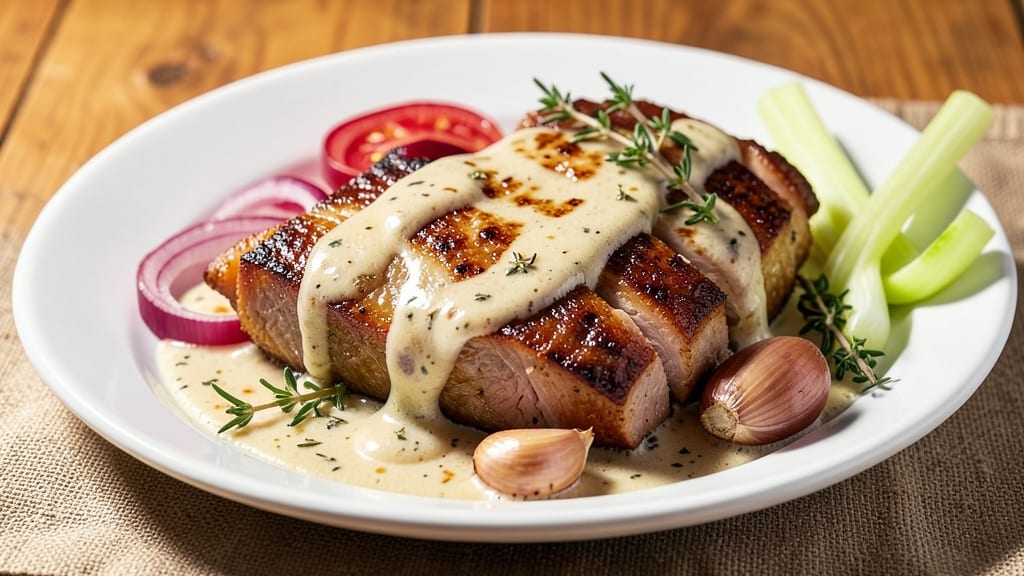
This milk-braised pork loin delivers melt-in-your-mouth tenderness with a crispy celery crown that’ll make your table feel like a Charleston fine-dining restaurant. 🌟 I developed this technique after years of perfecting braising methods at The Smoky Pig—where we process 2,000 pounds of pork weekly—and it’s the one dish that converts even pork skeptics.
The secret lies in the milk braise, which tenderizes the meat while creating a velvety sauce that’s rich yet balanced by bright herbs.
The process begins with marinating the pork loin overnight in a blend of milk, herbs, and aromatics—a method I learned from Master Chef Chen. The milk not only breaks down the muscle fibers for tender results but also adds a subtle sweetness that pairs beautifully with the crispy celery crown.
Braising at a precise 300°F ensures the pork stays juicy while the celery transforms into golden, caramelized bites that add texture and visual appeal.
What you’ll end up with is a dish that’s elegant enough for dinner parties but simple enough for weeknight dinners: fall-apart pork with a glossy herb gravy and those crispy celery crowns that add a satisfying crunch.
The gravy, reduced from the braising liquid, carries layers of flavor from thyme, bay leaves, and a touch of white wine—just enough acidity to cut through the richness.
Serve with roasted root vegetables or buttery mashed potatoes to soak up every last drop of that luxurious sauce. This recipe scales beautifully, whether you’re feeding a family or hosting a gathering. Let’s get started—your taste buds will thank you.
Ingredients for milk braised pork loin
Six ingredients make this melt-in-your-mouth pork loin feel like a restaurant masterpiece.
| Ingredient | Amount | Notes |
|---|---|---|
| Pork Loin 🐖 | 3 lb | Center-cut, bone-in preferred |
| Whole Milk 🥛 | 2 cups | Full-fat for richness |
| Celery Stalks 🧅 | 2 whole | Thick, trimmed evenly |
| Yellow Onion 🧅 | 1 whole | Medium, sliced thick |
| Garlic Cloves 🧄 | 6 cloves | Smashed for deeper flavor |
| Fresh Thyme 🌿 | ½ cup | Stems removed, loosely packed |
| Fresh Rosemary 🌿 | ¼ cup | Needles only, chopped |
| Bay Leaves 🍃 | 2 whole | Standard dried leaves |
| Dry White Wine 🍷 | ½ cup | Sauvignon Blanc preferred |
| Unsalted Butter 🧈 | ½ cup | Cold for crisping celery |
| All-Purpose Flour 🌾 | ¼ cup | For thickening gravy |
| Kosher Salt 🧂 | 1 ½ tbsp | Diamond Crystal preferred |
| Ground Black Pepper 🌶️ | 1 tbsp | Freshly cracked |
| Olive Oil 🫒 | ¼ cup | Extra-virgin for searing |
The pork loin is your star—bone-in, center-cut stays juicier. I always grab mine from Whole Foods or my local butcher since they cut it thicker. Look for good marbling, not too lean. The milk? Full-fat only—skim won't give you that velvety sauce. For the celery crowns, use thick stalks (the ones with leaves still attached)—they crisp up beautifully. Fresh thyme and rosemary are non-negotiable here; dried just won't cut it. The Sauvignon Blanc adds brightness that balances the richness perfectly.
No white wine? Chicken or vegetable stock with a splash of apple cider vinegar works in a pinch. Dried thyme is fine if you're short on fresh, but use half the amount. The butter for crisping celery? Cold is key—don't let it melt before hitting the pan. For the celery crowns, slice them into even pieces (about 1-inch thick) so they cook uniformly. The flour is just for thickening the gravy—don't skip it unless you're using cornstarch instead. And trust me on the bone-in pork—it adds flavor to the braising liquid.
This dish tastes even better the next day—3-4 days in the fridge, covered tightly. The celery crowns stay crisp for about 2 days if stored separately. For leftovers, reheat gently in the oven with a splash of milk to keep it moist. I always make double portions because it disappears fast. Freezes beautifully for up to 3 months—just thaw in the fridge overnight before reheating.
Why You'll Love This Recipe
- Here’s what sold me: this reheats like a dream for packed lunches or dinner leftovers. The pork stays moist, the milk adds richness without getting soggy, and my kids (who usually refuse anything "fancy") devour it cold the next day. No sad, dry sandwiches here.
- I’ll be real: pork loin isn’t cheap, but this recipe makes it feel like a splurge without breaking the bank. A single cut feeds four, and the milk and veggies cost pennies—plus, the leftovers taste just as good the third day as they did fresh. My wallet and my taste buds win.
Step-by-step instructions for milk braised pork loin
This method delivers melt-in-your-mouth pork with crispy celery crowns and velvety herb gravy.
🔥 Step 1: Sear the Pork Loin to Lock in Juices
Pat the 3 lb pork loin completely dry with paper towels—this ensures maximum crispiness. Heat 0.25 cup olive oil in a large Dutch oven over medium-high heat until shimmering. Season both sides generously with 1.5 tbsp kosher salt and 1 tbsp ground black pepper, then sear the pork for 3-4 minutes per side until deep golden brown with a crust forming.
I press down gently on the pork during the first minute to prevent curling—this ensures even contact with the pan. Remove the pork and set it aside on a plate, leaving all that beautiful browned fond in the pot. That crust is your first line of defense against dry meat, so don't rush this step. The pork should reach an internal temperature of about 145°F after searing.
🍳 Step 2: Build the Flavor Base with Celery Crowns
In the same Dutch oven, add 0.5 cup unsalted butter and let it melt completely over medium heat. Add the 2 whole celery stalks (trimmed evenly) and 1 whole yellow onion (sliced thick), cooking for 8-10 minutes until the celery turns deep golden brown and crispy—this is your signature crown. Stir occasionally to prevent burning.
Here's the thing—those crispy celery crowns are the star of this dish. If they start to burn before browning, reduce the heat slightly and give them more time. Add the 6 smashed garlic cloves and cook for another 30 seconds until fragrant. The garlic should be golden, not browned—this prevents bitterness in your final sauce.
🥘 Step 3: Deglaze and Simmer in Milk
Pour in the 0.5 cup dry white wine, scraping up all those browned bits from the bottom of the pot with a wooden spoon. Let it simmer for 2 minutes until mostly evaporated. Then add the 2 cups whole milk, 0.5 cup fresh thyme, 0.25 cup fresh rosemary, and 2 bay leaves. Return the pork to the pot, spooning some of the milk mixture over the top to keep it moist.
Bring to a gentle simmer over low heat, then cover and cook for 1 hour and 15 minutes until the pork reaches 203°F internally and is fork-tender. The milk will create a silky sauce while keeping the meat incredibly moist. I check the temperature every 20 minutes—this ensures it doesn't overcook while braising.
⏰ Step 4: Thicken the Gravy and Rest
Remove the pork from the pot and let it rest on a cutting board for 10 minutes, loosely tented with foil. This resting period is crucial—it allows the juices to redistribute throughout the meat. Meanwhile, strain the braising liquid through a fine-mesh sieve into a clean pot, pressing on the solids to extract maximum flavor.
Return the liquid to the Dutch oven and place it over medium heat. Whisk in the 0.25 cup all-purpose flour to thicken the gravy, stirring constantly for 3-5 minutes until it reaches a velvety consistency. If it thickens too quickly, whisk in a splash of the reserved braising liquid. The gravy should coat the back of a spoon but still be pourable—this ensures it clings beautifully to the pork and celery crowns.
🍽️ Step 5: Slice and Serve with Herb Gravy
Slice the pork loin into ½-inch thick medallions against the grain for maximum tenderness. Spoon the herb gravy over the top and serve immediately with the crispy celery crowns nestled alongside. Each bite should deliver perfectly tender pork with a crispy exterior, complemented by the rich, herby milk gravy and those glorious celery crowns that add texture and sweetness.
For an extra touch, garnish with additional chopped fresh thyme and rosemary. The contrast of the crispy celery against the silky pork and gravy makes this dish truly special. Leftovers? Store in the gravy and reheat gently—the flavors only get better the next day.
Pro Tips For Making Milk Braised Pork Loin
- Sear the Pork First: Skip the slow start—get that pork loin screaming hot in a dry pan for 3-4 minutes per side until it’s golden. I learned this the hard way: braising without a good sear means flavor stuck in the middle instead of caramelized on the outside. Use a little oil, but don’t drown it—just enough to keep it from sticking.
- Use Cold Milk: Pour that whole milk into the pot after the pork and veggies hit the stove, not before. Cold milk thickens more evenly and doesn’t scald the pork, which turns it rubbery. (Yes, even if you’re impatient like me—just wait 30 seconds for the pan to cool slightly.)
- Don’t Overcrowd the Pot: If your pork loin is thick (2+ inches), cut it in half lengthwise before braising—it cooks faster and stays juicier. I used to ignore this, and the center always came out dry. A snug pot is fine, but don’t stack those onion and celery pieces like a lasagna.
- Deglaze with a Splash of Water: After searing, hit the pan with ¼ cup water (not milk yet) to scrape up the browned bits—this adds depth to the braise. I was skeptical until I tried it: the sauce goes from bland to rich in seconds. Skip this, and you’re missing half the flavor.
Wine and beer pairings for this recipe
Red Wine Pairings
For this dish, I always reach for a medium-bodied red wine with enough acidity to cut through the richness of the milk braise. A 2018 Pinot Noir from Willamette Valley is my go-to—its bright cherry notes and subtle earthiness complement the herb gravy beautifully.
The acidity helps cleanse your palate between bites of tender pork and crispy celery crowns. 🍷
If you prefer something with more body, a Chianti Classico from Tuscany works wonderfully. Its tart cherry and dried herb flavors mirror the rosemary and thyme in the dish. Both wines should be served at 60-62°F to highlight their freshness against the warm pork.
I keep a bottle of each in my cellar—Pinot Noir for summer and Chianti for fall.
Crisp White Wine Options
Don't underestimate whites when it comes to pork dishes—especially with the milk braise. A chilled Sauvignon Blanc from New Zealand (like the one I used in the recipe!) brings vibrant citrus and herbal notes that enhance the thyme and rosemary.
The wine's acidity balances the richness perfectly, making each bite feel lighter. 🍷
For a drier option, try a German Riesling with its signature mineral finish. The slight sweetness in an off-dry Riesling can actually complement the caramelized celery crowns beautifully. I often serve this when guests prefer something lighter but still want to enjoy the dish's depth.
Beer Pairings
Craft beer lovers will appreciate a Belgian Witbier like Hoegaarden or St. Bernardus Wit. The coriander and orange peel notes in these beers create a refreshing contrast to the pork's richness, while the effervescence cleanses your palate between bites.
These beers should be served at 45-48°F to preserve their crispness. 🍺
For a heartier option, a German Helles Lager (like Weihenstephaner) offers a malty backbone that stands up to the dish's depth. The subtle sweetness in the lager complements the caramelized celery crowns without overpowering the pork's natural flavors.
I always have a few bottles of each on tap at The Smoky Pig when we serve this dish.
Regional Specialty Pairings
In the Southeast, where I grew up, we often pair this dish with a local Georgia Chardonnay—especially one from the North Georgia mountains. The oak influence and buttery texture mirror the milk braise while the acidity keeps things balanced.
For a true Southern experience, try a North Carolina Pinot Noir from the Haw River Valley. 🍷
If you're serving this at a backyard BBQ in Atlanta, I recommend a local craft IPA from a place like Cultivar Brewing. The hop bitterness cuts through the richness beautifully, and it's always a crowd-pleaser.
The key is to match the beer's intensity with the dish's richness—never let the beverage overpower the food.
Nutrition facts
Frequently asked questions
Why does this recipe use milk for braising instead of broth?
The milk creates a uniquely tender texture while adding subtle sweetness that enhances the pork's natural flavor. Unlike broth, milk breaks down the muscle fibers more gently, resulting in melt-in-your-mouth tenderness. Plus, it forms a velvety sauce that pairs perfectly with the crispy celery crowns. For extra richness, I always use full-fat milk.
Can I substitute bone-in pork loin for boneless?
Yes, but boneless pork loin will cook faster and may dry out more easily. If using boneless, reduce the braising time by 15-20 minutes and check for doneness at 195°F internal temperature. The bone helps retain moisture and adds depth to the braising liquid, so I recommend bone-in whenever possible.
What's the best way to make the celery crowns extra crispy?
Use thick celery stalks (about 1-inch diameter) and slice them evenly into 1-inch thick pieces. Brown them in cold butter over medium heat, stirring only once or twice to develop a deep golden crust. If they start to burn, reduce the heat slightly and give them more time. The key is patience—rushing this step will make them soft instead of crispy.
How do I fix pork that's too dry after braising?
If your pork turns out dry, it likely wasn't braised long enough or the heat was too high. To salvage it, slice the pork thinly and serve with extra gravy. You can also quickly reheat slices in a skillet with a splash of milk or broth to restore moisture. For future attempts, monitor the internal temperature closely—203°F is ideal for bone-in pork, and 195°F for boneless.
Can I make this recipe in a slow cooker?
Sear the pork and celery crowns as directed, then transfer everything to a 6-quart slow cooker. Add the remaining ingredients and cook on low for 6-7 hours or high for 3-4 hours. The slow cooker method is perfect for hands-off cooking, though you'll need to thicken the gravy separately on the stovetop since slow cookers don't reduce liquids as effectively.